How to Keep (and Thin Out) Your Child's Artwork Without Drowning in Paper
By the Scribblie team · Published · 9 min read
In this guide
- The keeper rule: pick a number before you pick a drawing
- Let the child in on it, within reason
- The photo archive does most of the work
- A book is better than a box for the best of it
- When the guilt shows up
- Display: rotate, do not accumulate
- The right box and the right paper: what acid-free means
- Starting from a mountain
- Rescue plans for the awkward stuff
- Gifts, and giving it away
- Common questions
A child who draws most days can easily produce a thousand pages in a year, and no flat in the world has room for that. So the question is not how to keep it all. It is what the smallest, kindest system looks like, one that keeps what matters and lets the rest go without a fight.
We think that system has four parts: a limit, a photo archive, a place to show things off and one good box. None of it is complicated. The hard part is being brave about the limit, so we will begin there.
The keeper rule: pick a number before you pick a drawing
Decide how much space you are willing to give. A box, a portfolio folder or a shelf. Treat it as a hard limit, not a target. When it is full, something comes out for something to go in.
Without a limit, you will keep the first fifty things and resent the next five hundred. With one, each choice has some weight, and you tend to pick well. A common form is one box per child per year, with the box labelled with the year, but pick what fits your home.
What goes in? Skip the "best" and look for the "most them." A sophisticated drawing is lovely, but the one with the wobbly signature and the odd dog may say more about who they were at five. Drawings with a story attached ("this is the day we went to the sea") are worth more than those without. Anything with your child's own handwriting, spelling mistakes included, is a fine keeper. And the first of something counts: the first person with arms, the first house with a path.
Let the child in on it, within reason
Children can be fiercer curators than their parents. A child who kept a drawing on purpose may be devastated to find it recycled, and the same child may toss something you would have framed. Ask, lightly, "which of these should we keep forever?" and see what they say.
Pressure is not helpful. A very young child may say "all of it" and mean it, and there is no need to argue the point. In that case, let a few more go into the box, and manage the overflow at a quieter time. Older children, perhaps around seven or eight and up, often enjoy a sort-out with a mug of something warm, and are surprisingly decisive.
As for secret recycling, we would be careful. Many parents quietly clear the pile when the child is at school, and lots of children never notice. But some do, and the discovery can sting. Our rule is that it is fine to let go of a pile of scribbles quietly, and wrong to bin something your child has called special. If it is on the fridge, leave it.
The photo archive does most of the work
A photo is what lets you part with the paper. Take a picture of anything you would hate to lose and then recycle it. A clean photo is easy (we wrote a short guide to photographing a child's drawing), and a rushed one is better than none.
Put every photo into one folder, named with the year, and give each file a short title. If you have the energy, ask your child what the drawing is called and type their words. That tiny habit, repeated, will make the archive far more precious than an unlabelled stack of thumbnails.
Back it up in two places. A single phone is a fragile home for ten years of memories, and phones get lost, dropped and replaced. Use a cloud folder you trust and a drive at home, and look at both once a year.
The photo archive also feeds the next stage. Once you have a good picture, you can order a printed book, make a gift (ideas here) or send a few favourites to relatives without handing over the paper.
A book is better than a box for the best of it
Boxes are where things go to be forgotten. A book gets opened. Once a year, choose twenty or thirty photos from the archive and put them into a printed photo book, with the date and the child's own title for each page. Print-on-demand services make this easy, and the quality varies from one service to the next, so check a sample page if you can.
Then take it off the shelf, put it on the table and let your child page through it. Many children enjoy seeing their younger selves, and take their old drawings more seriously once they are bound in a book. The same book is a good thing for grandparents to have on their own shelf.
You do not need a new book every year. A single book for the early years, then another for school age, is a perfectly good rhythm. Even one book is far more than most families manage.
When the guilt shows up
Nearly every parent who does a clear-out hits the same wall: a pang that says you are throwing away your child's childhood. It helps to name what you are actually keeping. You are keeping a sample, chosen on purpose, plus photos. The paper that goes in the recycling was never going to be looked at again, and a smaller collection that gets opened beats a large one that sits in a cupboard.
If a particular drawing feels impossible to let go, that is useful information. Put it in the box. The rule is meant to serve you, not to win arguments with you.
Display: rotate, do not accumulate
A wall of artwork is a joy, and it is also the first step to a wall of faded paper. Rotation solves both. Choose a display that makes swapping easy, so that you actually do it.
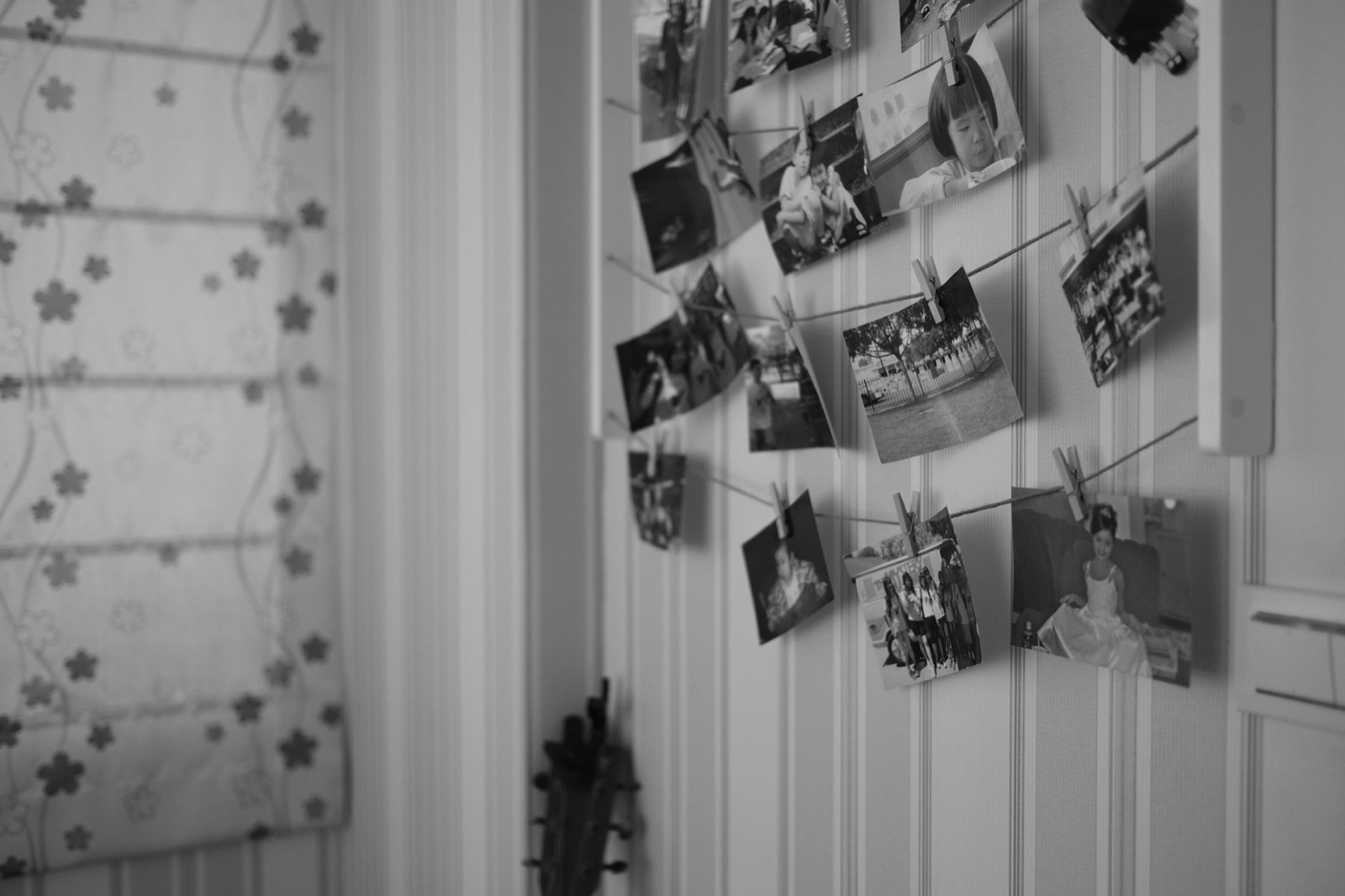
String with small pegs or clips across a wall is cheap and quick, and children can hang their own pieces. A cork board or a row of magnetic strips does the same job. A frame with a front that opens, so you can slip a new piece in without taking it apart, suits one special spot, such as the hall or the child's bedroom.
Swap the pieces every few weeks, or whenever a new favourite appears. The old ones go into the keeper box or the recycling, depending on their rank. That one habit of swapping means the display is never full for long, and every new drawing has somewhere to go when it arrives.
Keep valued pieces out of direct sunlight. Felt-tip and marker colours can fade with long exposure, and the fading is not reversible.
The right box and the right paper: what acid-free means
For the pieces you want to last decades, the material they sit in matters. Ordinary cardboard boxes, newspaper and some folders give off acids that slowly yellow and weaken paper. Acid-free (sometimes called archival) boxes and folders are made to avoid this, and they cost a bit more than a shoebox, but not a lot.
A flat storage box, a portfolio or a large envelope, of the sort sold by craft and stationery shops, will do. Lay the drawings flat, and slip a sheet of acid-free tissue between pieces that have thick paint or pastel, which can smudge. Avoid rolling or folding if you can, because creases never quite come out.
Write the child's name and the date in soft pencil on the back, in a corner, and not in pen, which can bleed through. Avoid sticky tape and glue, which yellow and are hard to remove. Do not laminate originals, because it cannot be undone. And store the box somewhere stable, such as a wardrobe shelf or under a bed, not in an attic, a garage or a damp cellar, where heat, cold and moisture do the damage.
Chalk, pastel and charcoal drawings smudge easily. A sheet of tissue between each is a sensible precaution, and some families use a light spray fixative, which is something only an adult should handle, in a well-ventilated space.
Starting from a mountain
If the pile already exists, do not try to sort it all in a day. You will give up by the second hour and the pile will be exactly where it was, plus a mess. Work in sessions of twenty or thirty minutes, one stack at a time, and stop when the timer rings.
Do one pass with just two piles: obvious keepers and obvious recycling. Be ruthless about the second one. Duplicates, half-finished sheets, practice pages and anything with no story fall there. What is left after that pass is the middle, and the middle is the hard part. Leave the middle for another day, and you will find that some of it has already made its mind up for you.
A single bag of things that you cannot yet decide about is allowed. Give it a date, three months ahead, and write it on the bag. If you have not opened it by then, you probably will not miss it.
Rescue plans for the awkward stuff
Not everything is flat. Collage, clay, painted paper plates and cardboard models resist the box. For these, photograph them, keep your favourite one or two and let go of the rest, unless the child cares fiercely. A small shelf or a shoebox for 3D items works as a limited museum.
Giant sheets, such as the long painting from a nursery wall, can be folded once or cut with permission, or photographed and recycled. Photograph the piece with the child standing beside it, and you have a record of how big it was and how big they were.
Class work arrives in a rush at the end of term. Do a triage the same day: a keeper pile, a display pile and a pile for the recycling, and a photo of anything borderline. Piles that wait for a free weekend do not get dealt with, and they grow.
Gifts, and giving it away
Grandparents often love real drawings, and they have wall space, which is why a drawing sent in an envelope can start a conversation over a video call. (If grandparents are nearby, drawing together is another way to share them.) If you have a duplicate or a spare, a drawing in an envelope is a good use. A drawing sent in the post, with a short note on the back about what it is, may be treasured far longer than the paper suggests. Our guide to gifts goes further.
And some drawings simply go. A scribble that took thirty seconds, a practice page, a sheet of the same circle for the tenth time. We have a gentle view on this: the drawing did its job when it was made, and you do not owe every piece a permanent home. Understanding how children's art changes over the years, as in the stages of child art development, can also help you choose which pieces mark a change.
If you want a first step this week, pick one box or folder, write the year and the child's name on it and set a limit. Then take the pile from the kitchen counter, choose what goes in and let the rest be photographed or recycled. One sitting, one pot of tea, and you will have a system.
Common questions
How do you store kids artwork?
Keep a small number of originals flat in an acid-free box or folder, labelled with the child's name and the date in pencil on the back. Photograph the rest, and keep the photos in one folder or a photo book. Store the box somewhere cool and dry, not in an attic or a damp garage.
How do you decide what to keep of your child's artwork?
Many parents use a simple limit, such as one box per child per year, and choose the pieces that feel most like that age or that child. When the box is full, something has to come out. Ask the child, too, because their favourites are often not yours.
Is it okay to throw away kids drawings?
Yes. Most families have to, and a drawing's job is done when it has been seen, talked about and enjoyed. Take a photo of anything you will regret losing, then recycle the rest, ideally while the child is not watching if they are sensitive about it.
What is the best way to display kids artwork?
A rotating display works well: a string with clips, a corkboard, magnetic frames or a frame with an opening front. Swap the work every few weeks, and the walls stay fresh and the old pieces are not lost.
What does acid-free mean for artwork storage?
Acid-free paper, folders and boxes are made so they will not slowly yellow and damage the artwork inside them. Ordinary cardboard and newspaper can discolour paper over the years, so for long-term keeping, acid-free is worth the small extra cost.
Keep reading
How to Photograph a Child's Drawing So It Looks Like the Real Thing
Window light, a flat table and a straight-down phone beat any gadget. Here is the setup, the fixes for shadows and glare, and what to do with big or bumpy artwork.
9 min read
Turn a Child's Drawing Into a Gift Grandparents Will Keep
A child's drawing makes a gift nobody can buy. Here is what suits each format, how to prepare the file, and what to check before you order.
9 min read
Grandparents and Grandchildren Activities: Drawing Together From Far Away
Ways for grandparents and grandchildren to draw together across cities and time zones: mailed art, video-call games, a shared storybook and a few tips for the call itself.
9 min read