Stages of child art development, from first marks to realistic drawing
By the Scribblie team · Published · 9 min read
In this guide
- Where this map comes from, and how much to trust it
- Stage one: scribbles, from about 18 months
- Stage two: named scribbles and the first shapes
- Stage three: early symbols and the "tadpole" person
- Stage four: the schema years
- Stage five: the wobble toward realism
- What the stages cannot tell you
- Small things that help at every stage
- Try this tonight
- Common questions
Children's drawing changes in a fairly predictable order: first marks and scribbles, then named scribbles, then simple shapes and symbols, then a personal set of repeated pictures, and finally (for many kids, somewhere in the later primary years) a push toward making things look the way they look. The ages attached to each stage are loose. Think of them as weather forecasts for a particular season, not train times.
This guide walks through that order, says what each stage tends to look like on the kitchen table, and, just as usefully, tells you what not to worry about at each point.
Where this map comes from, and how much to trust it
Two names come up constantly when people write about how children's art develops: Viktor Lowenfeld, who described a sequence of stages in the mid-twentieth century, and Rhoda Kellogg, who spent years collecting and sorting enormous numbers of children's scribbles and early shapes. Both are worth reading if you like the topic. Both also wrote about particular groups of children in a particular era, so we use their frameworks as a vocabulary, not as a rulebook.
What holds up is the general direction. Marks come before shapes. Shapes come before pictures of things. Pictures of things come before pictures that look like things. Nobody skips the first step, and nobody can be hurried through it.
What does not hold up is any claim that a child at "age four" should be at "stage three". Kids who love drawing sprint ahead on some things and stall on others. Kids who prefer building with blocks may draw very little until a teacher hands them a reason to. Neither pattern means much on its own.
Stage one: scribbles, from about 18 months
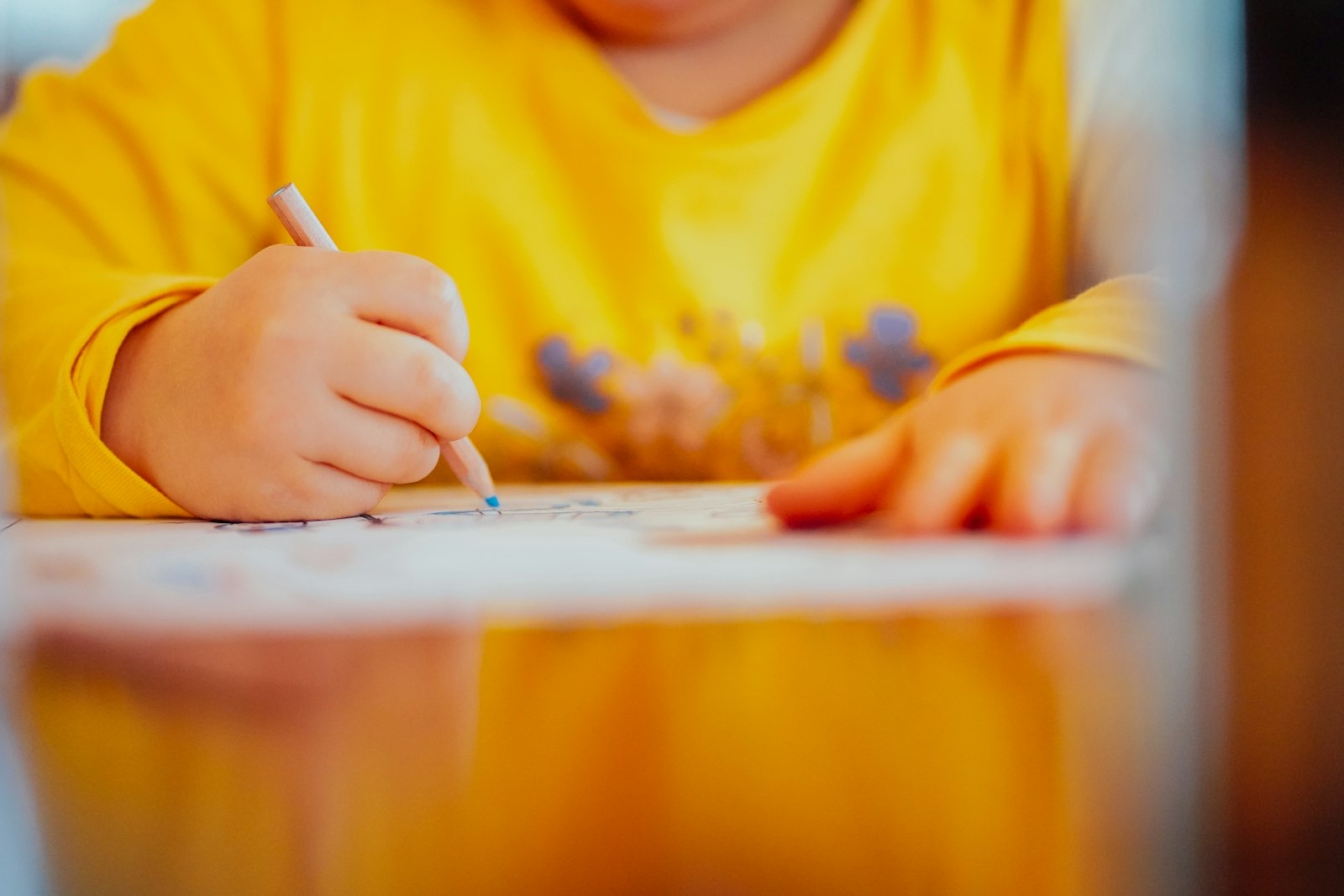
The first marks are accidents. A child holds a crayon in a fist, moves their whole arm, and a line appears on the paper (or the wall, or the sofa). Somewhere around two, many children discover that the line is theirs, that their arm made it, and that they can make another one on purpose. That small discovery is the whole stage.
Over months, the scribbles shift from big, random sweeps to marks the child can aim: back-and-forth lines, loops, dots, a stab of the crayon that goes tock on the page. If you want the full tour of this phase, including grips and what to do about the walls, we wrote a separate piece on the toddler scribble stage.
The only advice we would add here is a boring one. Do not ask what it is. A scribble is not yet a picture of anything. It is a record of a movement, and a child who is pressed to name it will often invent something to please you, which is a fine skill but not the one they are practising.
Stage two: named scribbles and the first shapes
Sometime between two and four, there is a moment most parents remember. Your child finishes a mass of loops, looks at it, and announces "that's Daddy" or "dog". The marks look exactly the same as they did yesterday. What changed is the child's idea of what a mark can stand for.
Soon after, closed shapes begin to appear, and the circle arrives first and in force. Round and round the hand goes until the line finally meets itself. If you have wondered why circles dominate everything at this age, see our piece on why children draw circles first. Crosses and rough squares tend to come a little later, and a diagonal line is notoriously hard for small hands for quite a while.
A few things you will see in this stretch:
- Pictures narrated aloud while they are being made, with the story changing halfway through
- A drawing named after the fact, which may bear no resemblance to the name
- Colour chosen for fun, not accuracy (a purple dog is a perfectly good dog)
- Proud insistence that every single mark is exactly where it should be
None of this is sloppy. A child at this stage is connecting three things at once, the thing in their head, the word for it and the mark on the paper. That is a lot of wiring for one crayon.
It also explains why the same scribble can be "a train" at breakfast and "my birthday" by lunch. The child is not being inconsistent. The meaning lives in their head and in the telling, and the telling is the real artwork at this age. If you can, write down what they say in the corner of the page, word for word, with the date. Those captions turn into the funniest things you own.
Stage three: early symbols and the "tadpole" person
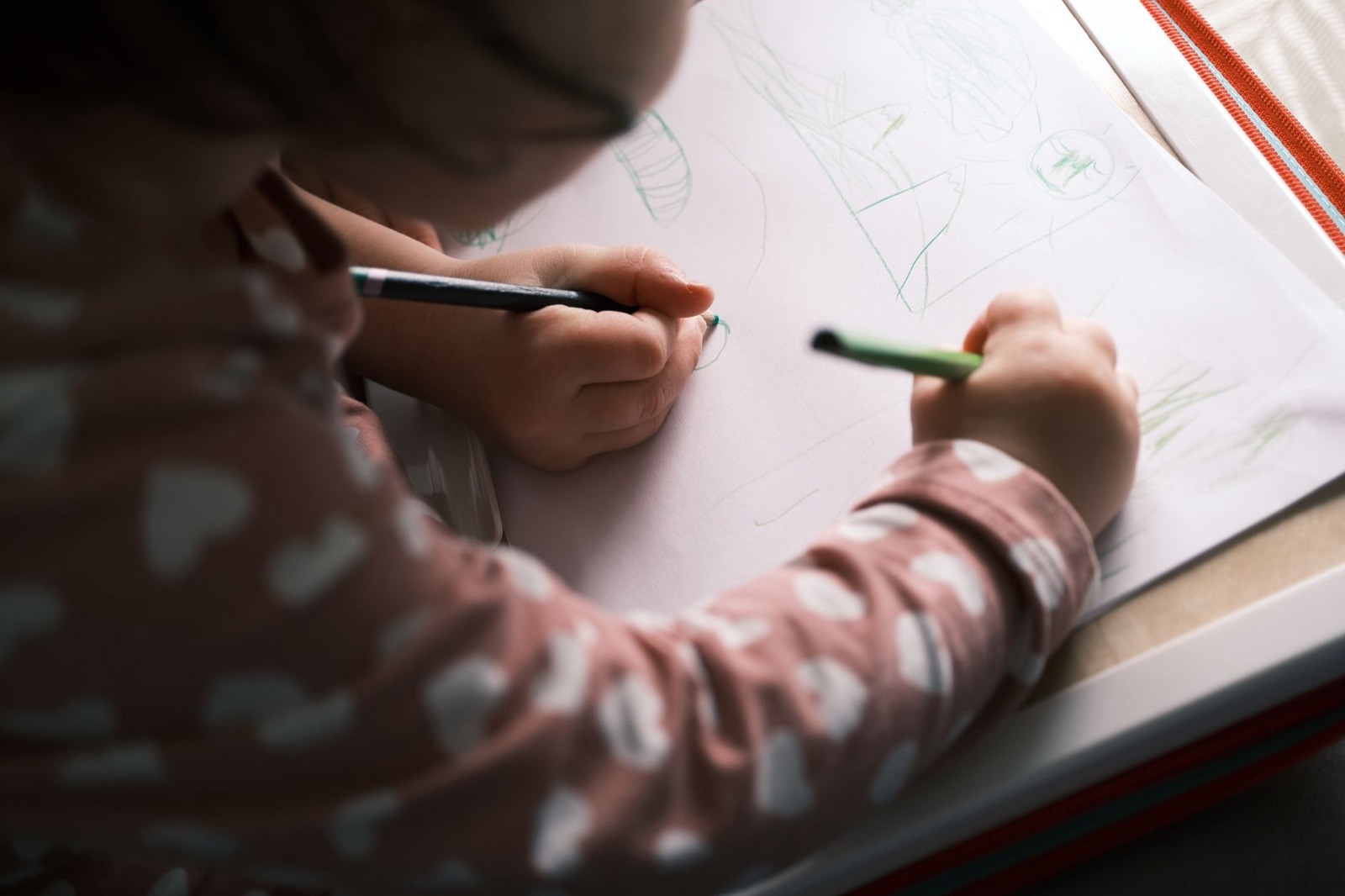
Between about three and five, many children arrive at their first recognisable symbol for a person: a circle for a head with lines coming straight off it for legs, and sometimes arms. The body is missing, and nobody seems bothered. Adults call these tadpole figures. We dedicated a whole guide to them, how kids learn to draw a person, because they deserve it.
A child draws what they know and find important, not what they see. The face matters, so the face is big. Legs matter for moving around, so they stay. The torso is, to a four-year-old, not very interesting. When it eventually joins the picture, it usually arrives all at once and the child is quietly thrilled with themselves.
This is also when drawings begin to carry a story. The sun gets a smile. The cat is bigger than the house because the cat is what the picture is about. If you ever find yourself reading something sinister into proportions at this age, please stop and read what children's drawings do and do not mean first.
Stage four: the schema years
From roughly five or six into the early primary years, children settle into what writers call a schema: a personal, repeatable way of drawing each important thing. A house is a square with a triangle on it, a door in the middle, two windows, a chimney that sometimes has smoke. A tree is a trunk with a cloud of leaves or a lollipop. A person has a head, a body, two arms, two legs, and (at last) fingers, in whatever number the child considers sufficient.
The drawing is now a little language. Because the schema is reliable, the child can spend attention on the story: who is outside the house, what is the weather doing, why is the dog flying. There is also a lot of pleasure in the repetition itself. If your child has drawn the same dragon forty times, that is not a rut, it is practice with a purpose.
Other things that tend to turn up at this age:
- A ground line, a strip of grass or a strip of floor along the bottom of the page where things stand
- A strip of blue sky along the top, with a gap of white paper in between that the child sees as perfectly reasonable air
- "X-ray" pictures, where you can see the people inside the house or the dinner inside the tummy
- Things drawn in a row, not in depth, so that everyone is standing in a queue for the picture
Those quirks are the stage working as it should. Nothing needs fixing. The sun-and-house pictures that arrive on the fridge in huge numbers have their own explanation, and we cover it in why every kid draws the same things.
Stage five: the wobble toward realism
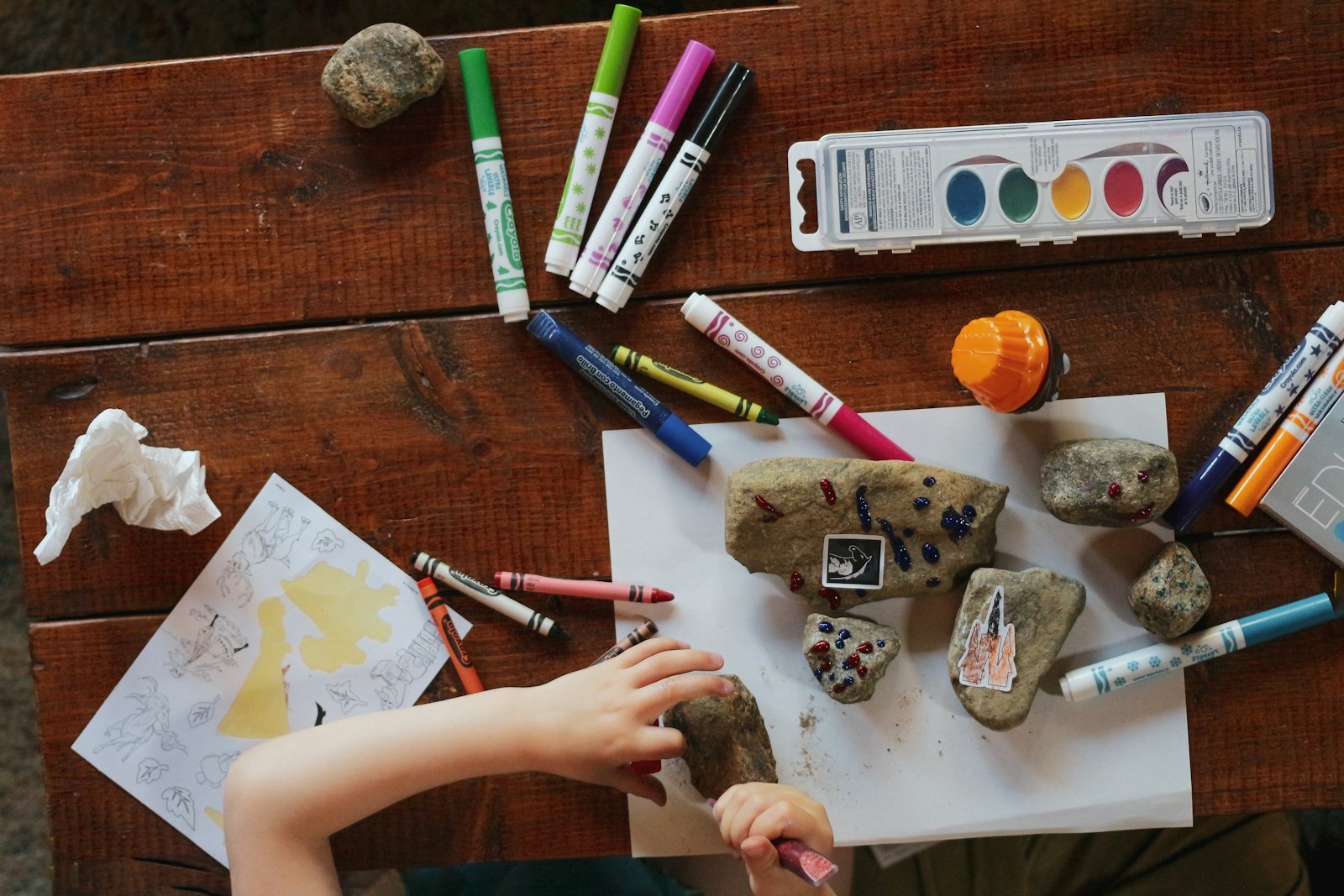
Somewhere around eight to ten, sometimes earlier, sometimes later, a lot of children start to notice a gap. They can see that their drawing of a horse does not look like a horse. They begin to prefer drawings that look "right" and to compare their work with classmates or with photographs. Details multiply. Overlapping, shading, and a sense of things being in front of or behind each other start to appear. Some children love this phase and spend hours on it. Others lose their nerve.
This is the point where a child who happily drew all through infant school suddenly says they are rubbish at it. It is common, it is painful to watch, and it is not a sign that they lack talent. We wrote about it separately in when your child says "I can't draw", and the short version is to take the pressure off looking real, and keep the rest of the drawing life alive.
A note on what "realistic" means, because it is a slippery word. Most adults cannot draw realistically either, and many of the most interesting drawings do not try to. Realism is one stage among others, not the finishing line. A child who stops at a confident, expressive, stylised way of drawing has not failed to graduate.
What the stages cannot tell you
It is tempting to turn a sequence like this into a checklist and score your child against it. We would gently suggest you do not.
The stages describe what happens on average, in children who have paper and time and someone nearby who cares. They do not describe motivation, which varies wildly. They do not account for left-handers fighting smudges (see left-handed kids and drawing), for children who find fine motor work tiring, or for the child whose real talent is telling you the entire plot of a picture rather than drawing it. They also cannot diagnose anything. A drawing alone proves nothing about development, personality or intelligence.
If you have a worry that goes beyond drawing, such as trouble holding a pencil at all, a loss of skills the child once had, or a general sense that something is off, talk to your child's doctor or teacher. They can look at the whole child. A picture of a lopsided cat is the wrong place to look for answers.
Small things that help at every stage
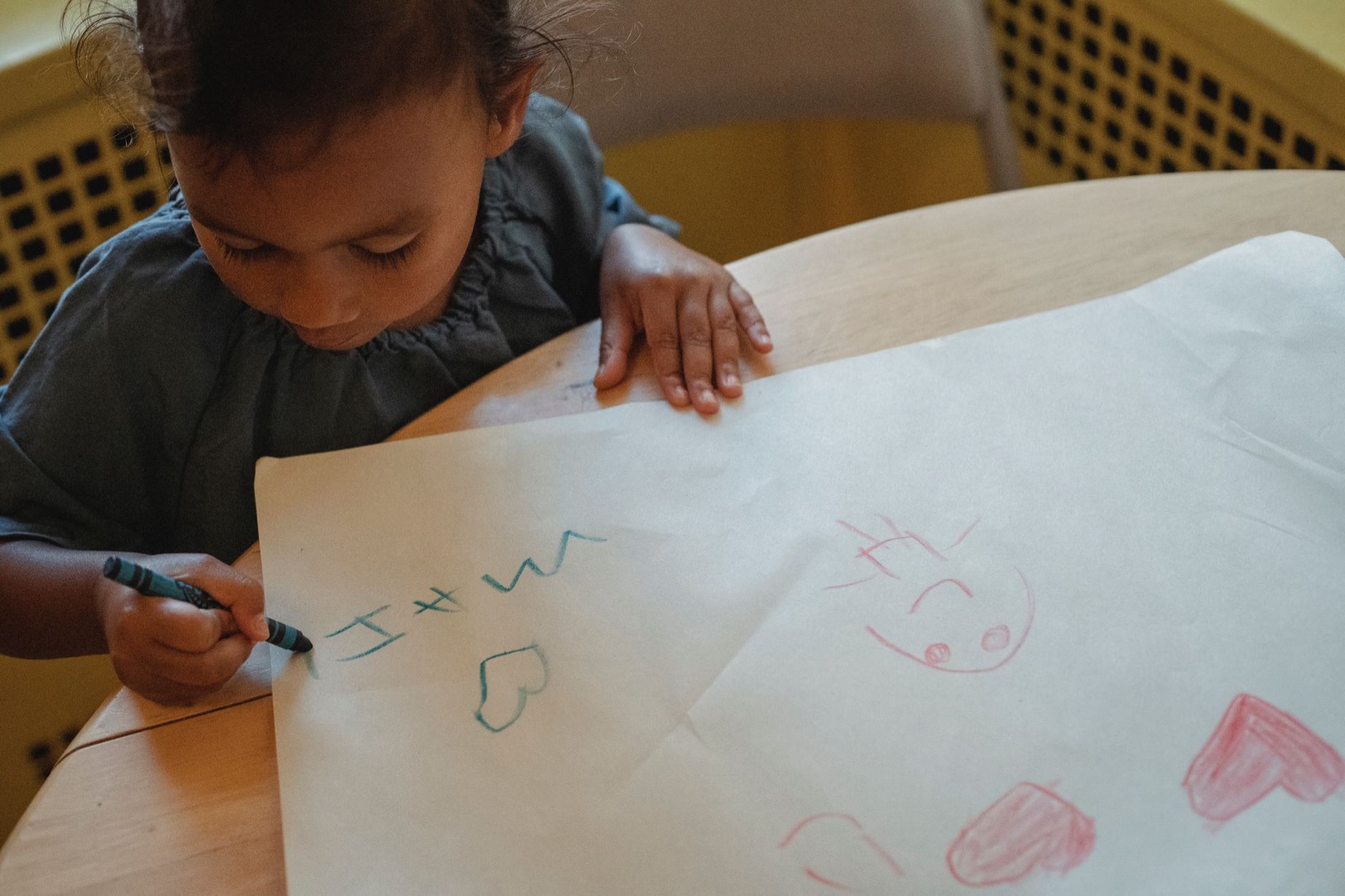
You do not need an art degree or a drawer full of supplies. Across all of these stages, the same few habits do most of the work:
- Leave paper and a few fat crayons or pencils where the child can reach them without asking
- Sit nearby and do something of your own, ideally drawing something badly
- Ask about the story, not the subject, and be fine with "I don't know"
- Display a few pictures at the child's eye level, not yours
- Keep a quiet pile of work somewhere, so that you can see the change over a year
That last one is where the stages start to feel real. Pull out drawings from six months ago and set them next to this week's. The leap is usually bigger than you remember.
Try this tonight
Tape a long strip of paper (the back of old wrapping paper is perfect) to a table and put out three crayons. Draw one thing yourself, unambitiously, in the corner, and say nothing about it. Let your child join in or not.
When they do, resist the urge to correct or even to name what they are making. Afterwards, write the date on the back in pencil and put it in a drawer.
Common questions
What are the stages of child art development?
Writers on children's art, notably Viktor Lowenfeld and Rhoda Kellogg, describe a broad sequence: scribbling, then early symbols and shapes, then a "schema" stage of repeated, personal pictures, then a push toward more realistic drawing. The labels and ages differ between authors, so treat them as a rough map rather than a schedule.
At what age do children start drawing recognisable pictures?
Many children begin naming their marks somewhere around age two to three and make shapes people can recognise between about three and five. Plenty of perfectly healthy children get there earlier or later, and a drawing that looks like nothing to you can be a very clear picture to them.
Is my child behind if they only scribble at four?
One drawing habit alone tells you very little. Children vary a lot in how much they draw, how much they like it and which skills they work on first. If you are worried about hands, speech or play more broadly, mention it to your child's doctor or teacher, who can look at the whole child.
Do the stages happen in a strict order?
Roughly, yes, but children wander back and forth. A six-year-old who draws a careful house may also happily scribble a storm for ten minutes, and that is not a step backward. Treat the stages as tendencies, not gates.
Should I teach my child to draw realistically?
Not in the early years. Children usually reach for realism themselves when they start comparing their pictures with the world, often in the later primary years. Until then, time, paper and interested company do more than lessons.
Keep reading
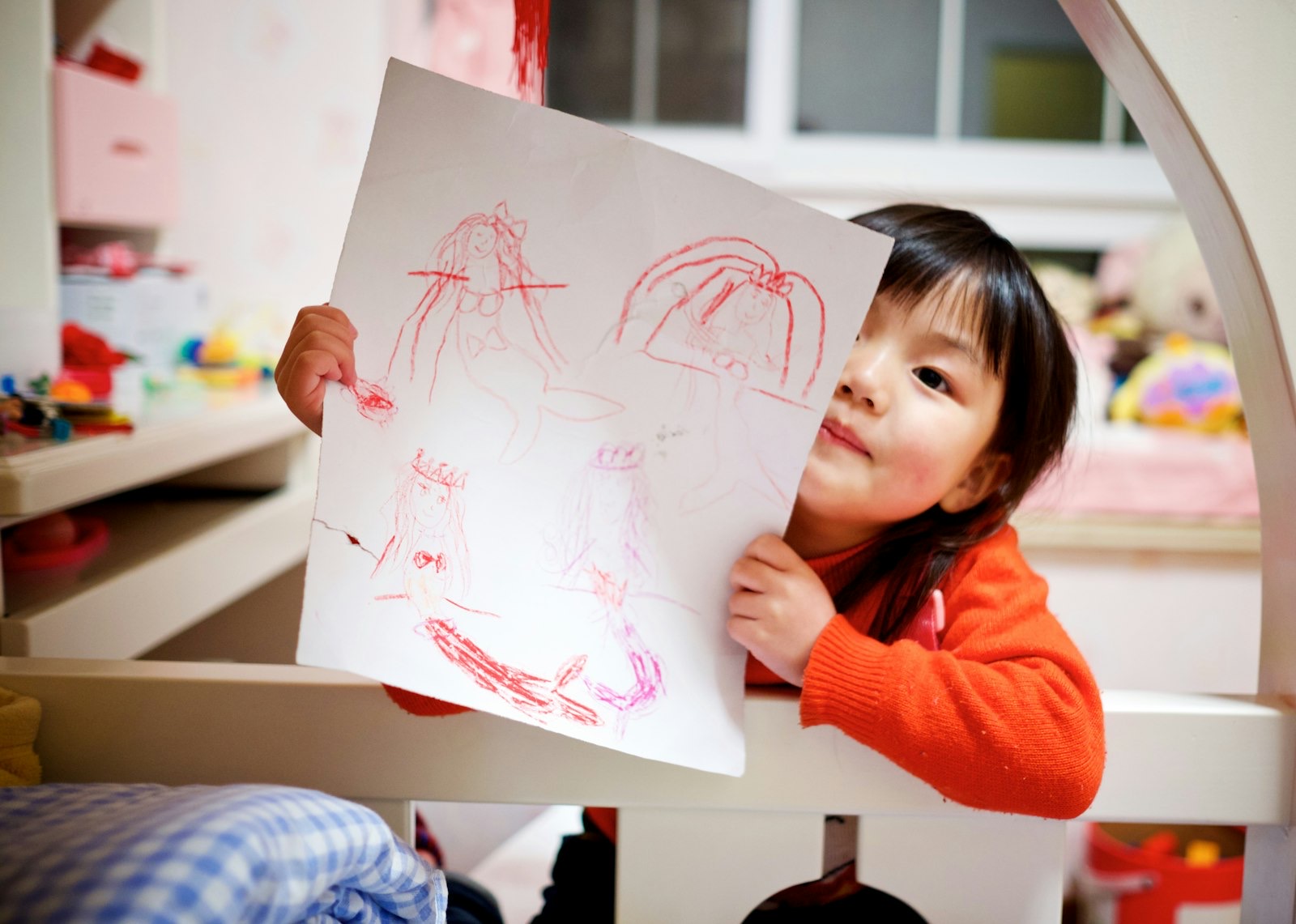
Houses, suns and rainbows: why every kid draws the same things
Square house, triangle roof, smiling sun. Why children everywhere settle on the same little set of symbols, and how to open up the repertoire without nagging.
8 min read
Left-handed kids and drawing: grip, smudges and setup
Smudged hands, hooked wrists and scissors that fight back. A practical setup guide for left-handed kids who draw, and why you should not try to switch them.
8 min read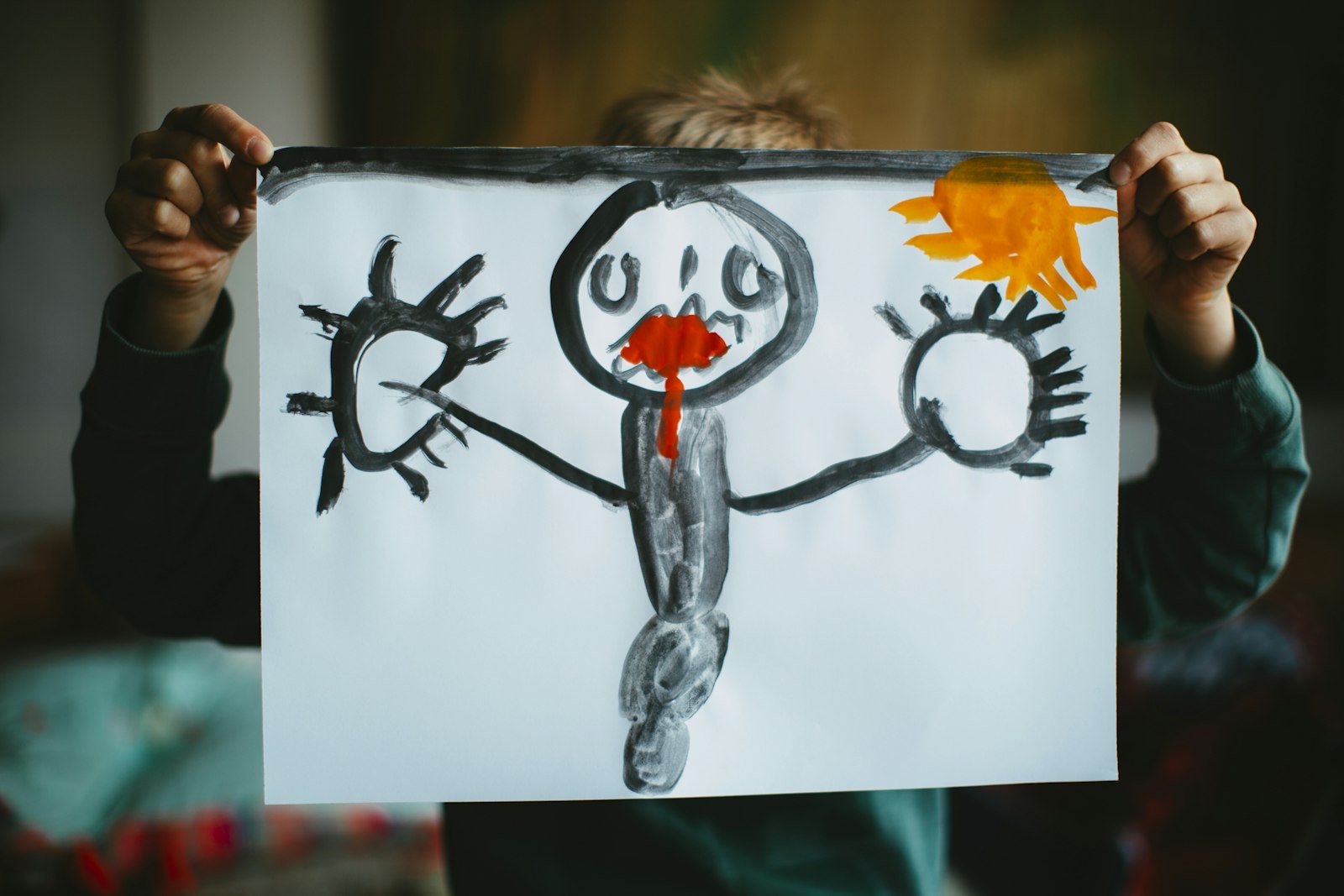
Tadpole people: how kids learn to draw a person
The head-with-legs figure is a milestone, not a mistake. Here is the usual route from tadpole people to full figures, and what to say along the way.
8 min read