Grandparents and Grandchildren Activities: Drawing Together From Far Away
By the Scribblie team · Published · 9 min read
In this guide
- Start with the envelope
- Mail art, a bit more deliberately
- A drawing duel on a video call
- Setting up the call so it does not fall apart
- A story that travels between two houses
- Photos of drawings, and a note on privacy
- For the grandparent who says they cannot draw
- What to say, and not say, about a drawing
- Keeping it going when interest dips
- A postcard to write this week
- Common questions
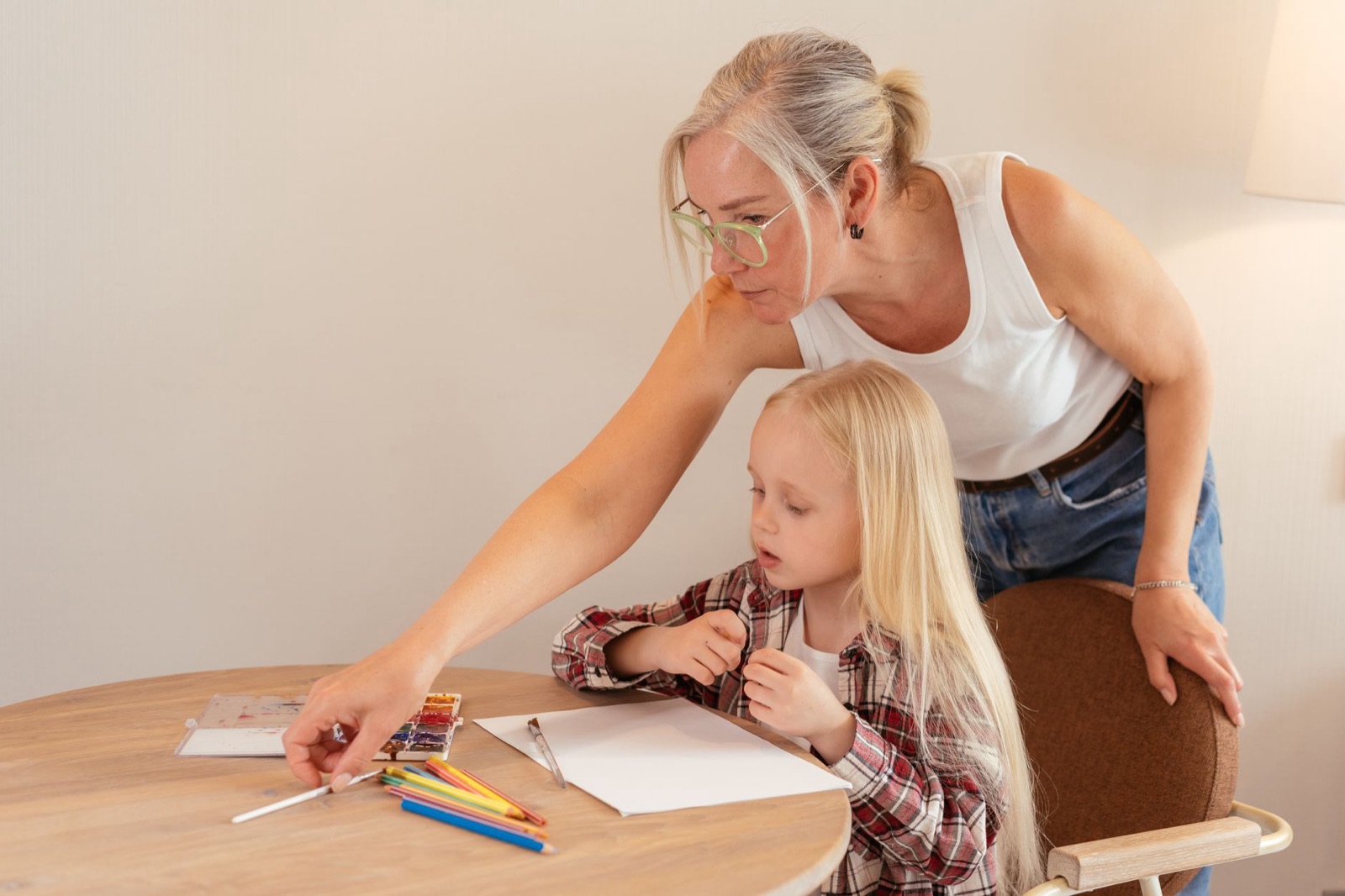
Picture a grandmother in one city and a seven-year-old in another who cannot meet for months, so they swap drawings in envelopes and on screens instead. That scene is invented, but plenty of families live something very like it, and the same few ideas tend to work: mailed art, short drawing games on a video call, and a story that moves between two houses. This guide is built around those three, with a few practical tips on the call itself and on sending photographs of drawings.
If you only do one thing, send a drawing in an envelope. A child who gets something back in the post has a different relationship with the whole exercise.
Start with the envelope
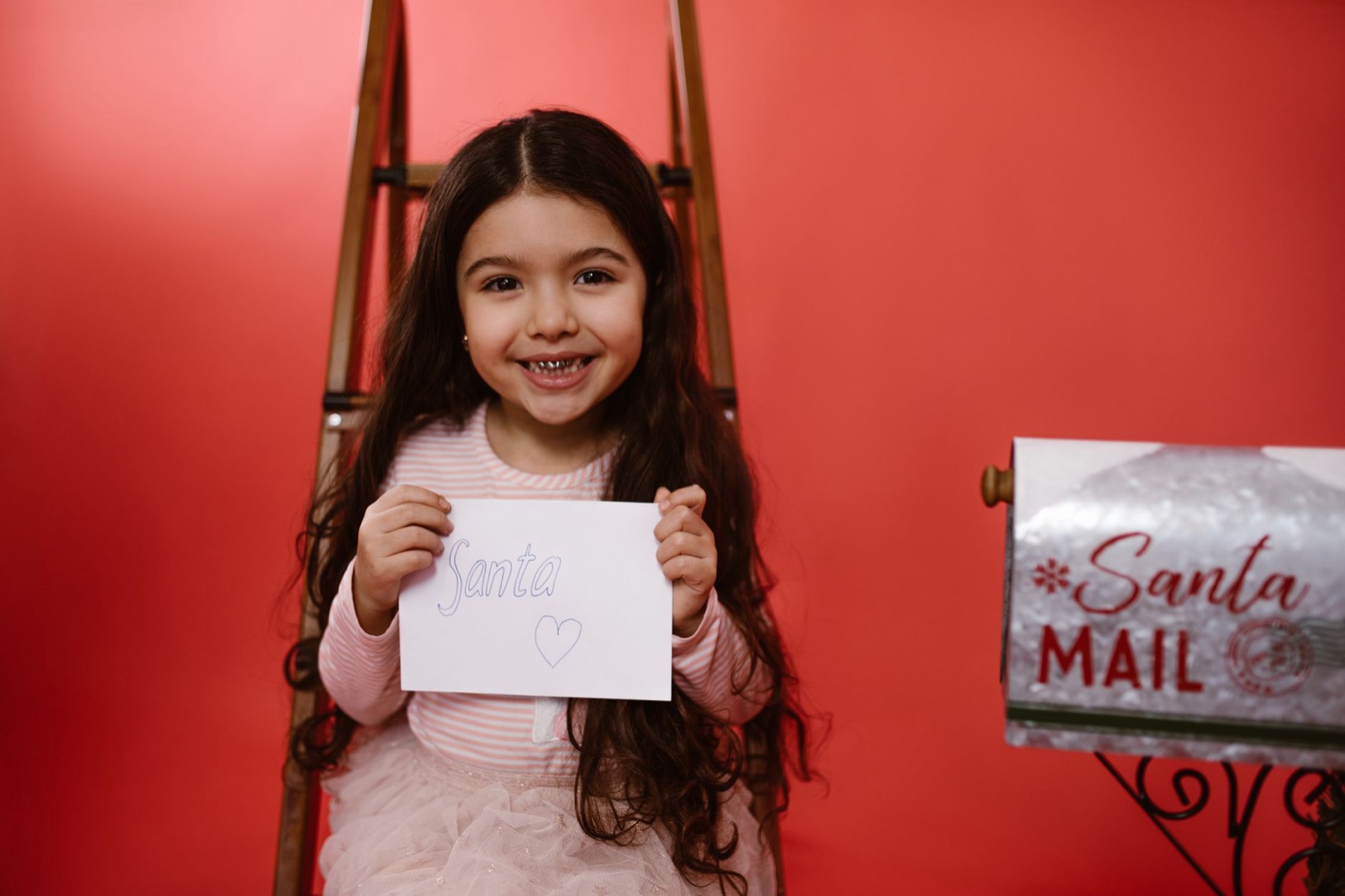
The oldest approach is still the best. A child draws a picture, folds it into an envelope, and a few days later something comes back. There is a small delight in post that email does not reach, partly because the child gets a thing they can hold and keep.
Practical points. Use a flat envelope so the drawing does not get creased. For a bigger picture, roll it in a tube. Write on the back: the name, the date and one sentence from the child about what it shows. Let the child draw on the envelope too, so the postman has something to look at.
A grandparent's reply does not need to be a drawing. A short note ("Your dog looks as if he has just eaten something he should not have") works nicely. Or the grandparent can draw half of a picture and leave the other half for the child to finish and send back. That makes the child's reply part of a shared piece.
Stamps, postal boxes and the walk to the letterbox are also a chunk of the fun. If your child is old enough, give them the job of choosing the stamp.
Mail art, a bit more deliberately
Mail art is simply art made to be sent. Families who like it often set a simple pattern: one drawing a week, always in the same size of paper, so the pile builds into something worth keeping.
A few formats that work well:
- The half-and-half. One person draws the top of a creature, the other draws the bottom.
- The postcard story. Each card continues a story, ending on a small problem for the next person to solve.
- The "things I saw" card. The child draws three things from the week and the grandparent guesses where they were.
- The recipe card. A grandparent draws a favourite dish or a childhood house, with a few words, and the child draws their own version.
If you want, keep the whole sequence in a binder or a folder. Our guide on keeping and storing kids' artwork has ideas for doing this without taking over a room.
Grandparents, please date the drawing. Children grow, and a stack of unmarked pictures is hard to sort a few years on.
A drawing duel on a video call
Video calls with young children can be stiff. The child shuffles, the grandparent asks too many questions, and after five minutes both are looking at the clock. A shared task fixes most of this.
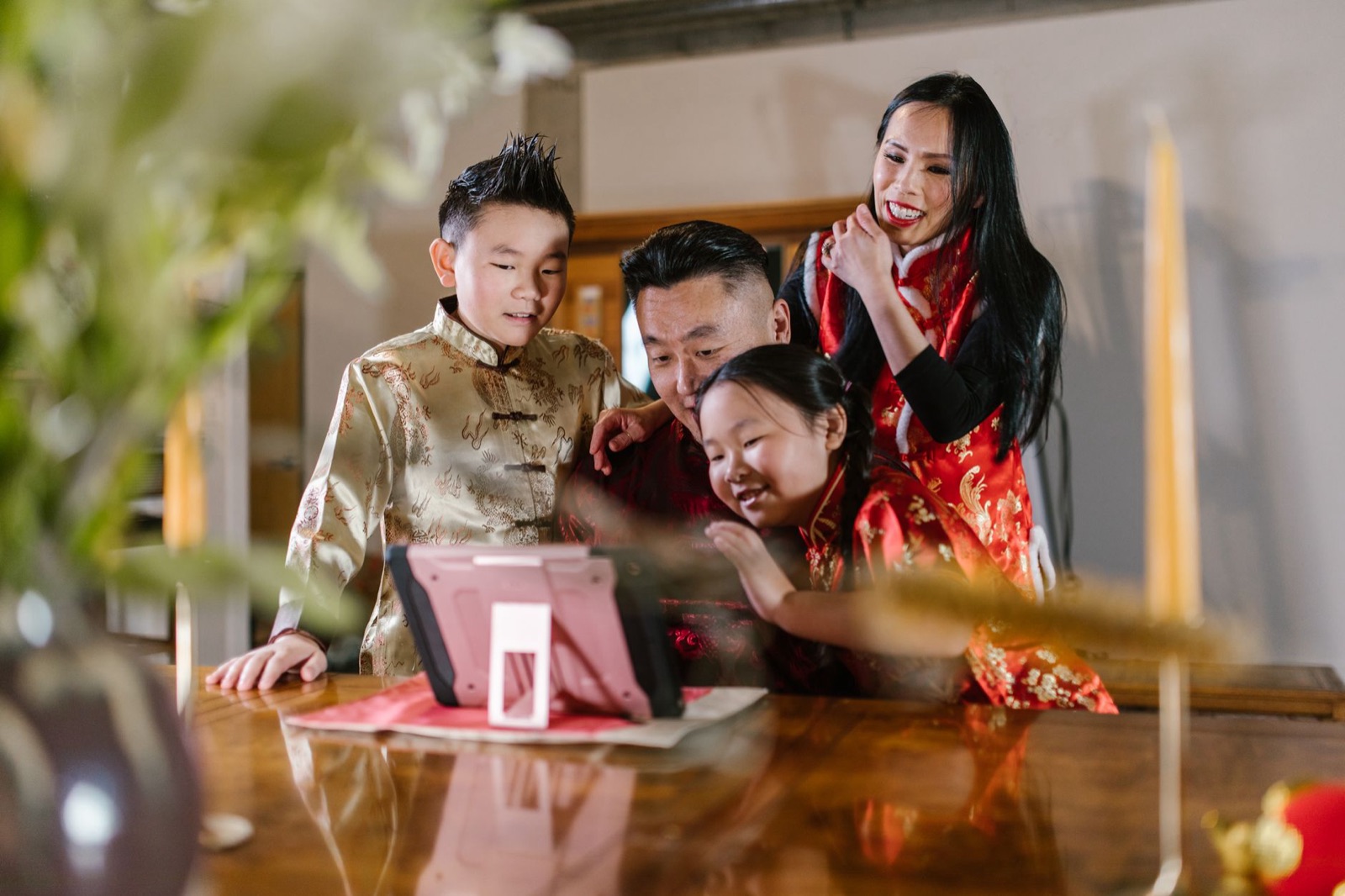
Here is a simple drawing duel. Each person has a sheet of paper and a pencil, and a one-minute timer. One of them calls out a subject, such as "a very tired elephant". Both draw. When the timer goes, both hold the picture up to the camera and say something nice about the other person's. There is no winner.
Variations, depending on age:
- Draw each other's faces. Hold the paper close to the camera so the other person can see it as you go.
- Draw one thing in the room, and let the other guess what it is.
- One person draws something without showing it, and describes it in words while the other draws what they hear.
- Both draw the same character, and compare who has given it a hat.
These take five to ten minutes each. Our guide to family drawing games has more, and several of them work well on a call.
Keep calls short for young children. Around fifteen to twenty minutes is plenty for many under-sevens, and ending on a high note matters more than reaching a time. Agree a signal for the end, such as a wave and a blown kiss.
Setting up the call so it does not fall apart
The technical side is where many grandparent calls stumble, so a small amount of preparation is worth it.
Place the device on something steady, such as a pile of books, rather than holding it. Point it at the table so the paper is visible, or use a second device on the table if you have one. Make sure the light falls on the paper and not behind it. Writing in dark pencil, or using a felt-tip rather than a pale crayon, shows up much better on camera.
At the grandparent's end, a parent or neighbour can sometimes help set things up before the call. A large-print card by the device with the steps ("press the green button, wait for the picture") can save a lot of frustration. Do not make the grandparent feel foolish. Many people are perfectly good at drawing and unsure about screens, and it should be easy to join.
Check that the sound is on and that nobody is on mute. A child who says their whole story to a silent screen will not try again.
If the grandparent is in a different time zone, pick a time that suits the older person's energy rather than the child's bedtime. A morning call for one is often an evening call for the other, and a tired child at the end of a long day will not be at their best.
A story that travels between two houses
A shared story gives the relationship a thread that continues between calls. The simplest structure is a character who lives in both houses. A child draws a rabbit on Monday and names it. A grandparent adds a hat on Wednesday. The child adds a friend on Friday. By the end of the month there is a small cast, and everyone has opinions about what the rabbit would do next.
Some families turn this into a booklet. Each page is a different drawing, and each has a sentence or two from either person. Staple them at the end of the month. The finished booklet makes a good gift, and our guide on turning kids' drawings into gifts covers other ways to do that.
If the child is stuck, story starter drawing prompts can supply a first line. If the grandparent is stuck, the question "And then what happened?" will carry a long way. For more on helping a child keep a story going, see how to help your child tell stories.
Grandparents often have stories of their own, and a drawing is a lovely way to hear them. "What did your street look like when you were my age?" is a question that can produce a surprising page of drawing from both sides.
Photos of drawings, and a note on privacy
If you cannot post the original, a photograph is the next best thing. Take it in daylight near a window, with the paper flat, and shoot straight down so the edges are not skewed. Our guide on photographing kids' drawings goes through the steps.
A child's drawing can reveal more than you expect, such as a name, a school, a street or a family detail written in the corner. Share photos only with people you have chosen, crop out anything personal that is not needed, and avoid posting drawings in public places. This is also a good moment to talk with older children about what is and is not shared outside the family.
Some families use a shared album that only the relatives can see. That is a reasonable choice, as long as everyone knows who has access. Keep an eye on it from time to time, and remove anything that no longer needs to be there.
For the grandparent who says they cannot draw
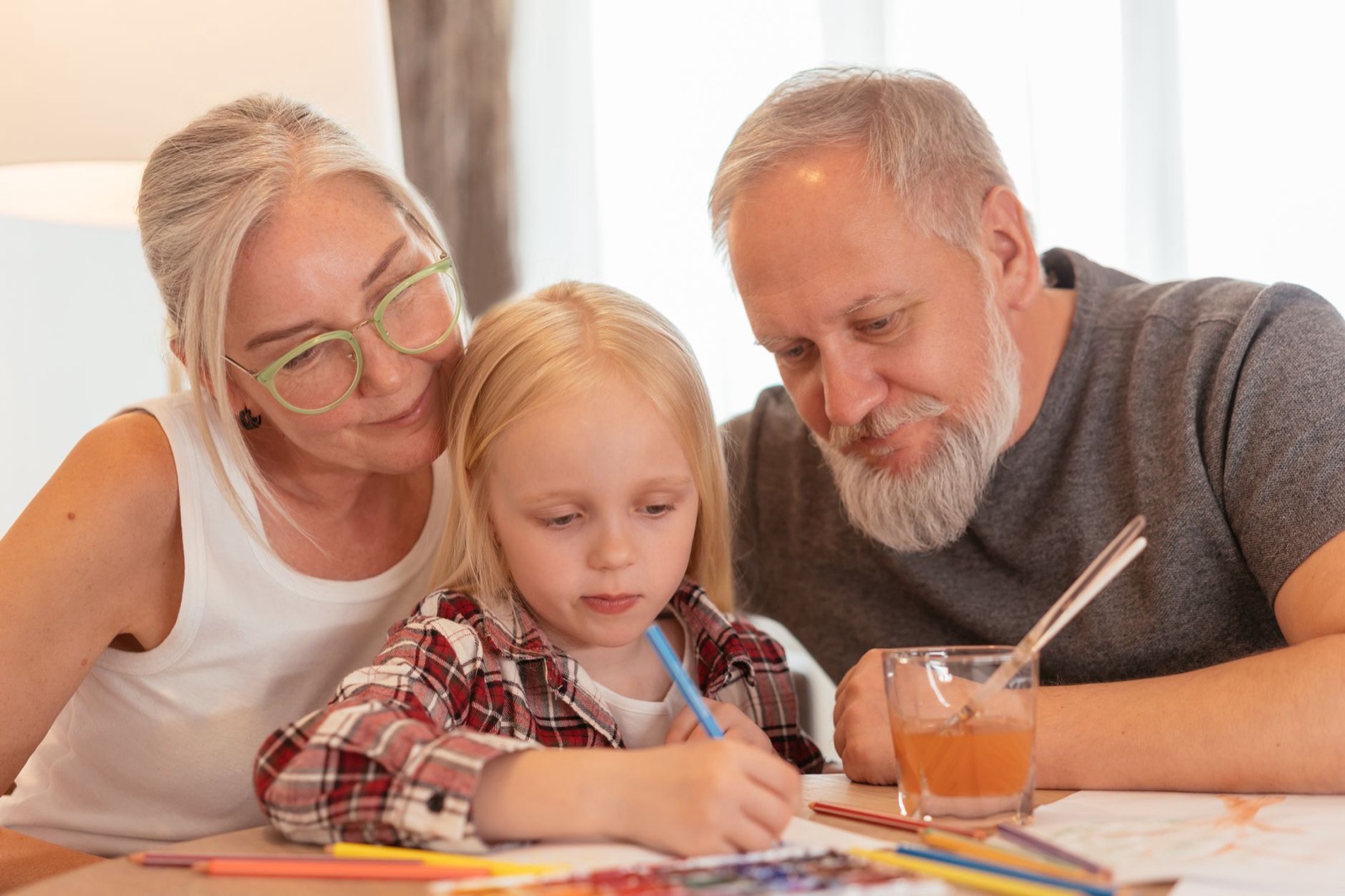
Many grandparents decline at this point, and it is worth a gentle push. A child will take a drawing that came from you over a perfect one, and a wobbly line has more character than a tidy one.
A few ways in. Draw with a thick felt-tip, which hides shaky lines and makes everything look bold. Draw only simple shapes (a house is a square with a triangle), and let the child supply the details. Trace around a hand, a cup or a leaf. Or describe something in words and let the child draw it, which makes the grandparent the storyteller and the child the illustrator.
If hands are stiff or eyesight is poor, a larger pen and larger paper make a difference, and a drawing board on the lap helps. Short sessions are fine. A grandparent who draws one small thing a week is doing plenty.
Some grandparents turn out to be natural at this, and are surprised to find they enjoy it. Others are happiest writing captions. Either way, the child sees someone willing to join in, which is the main point.
What to say, and not say, about a drawing
Grandparents often worry about what to say. "It's beautiful!" feels safe, but children usually see through it. A specific remark works better. "I like the way the dog's tail goes off the page" tells a child you looked. A question works even better: "What is the dog thinking?"
Avoid asking what the drawing is meant to be. Many children take that as a sign that it does not look like anything. "Tell me about this one" is gentler. Our guide to conversation starters about a child's drawing lists a few questions that work well and a few to leave out.
It also helps to say something about the process: "You must have worked hard on that blue." Children enjoy being noticed for their effort and their choices.
Keeping it going when interest dips
Children lose enthusiasm for any routine. A grandchild who wrote every week for a month may go quiet for three. That is normal and does not mean the relationship is cooling.
When it happens, change the format. If the child is tired of letters, try a short video call with a drawing duel. If calls are a struggle, send a small package with a few stickers, a blank postcard and a stamped return envelope. Do not nag. A single postcard that says "Thinking of you, no need to reply" often sparks a reply a week later.
Sometimes the best thing a grandparent can do is simply keep sending. A small weekly drawing, even a poor one, is like a lighthouse: the child may not look at it every day, but they know it is there.
A postcard to write this week
Find a postcard-sized piece of paper. On one side, draw the thing you can see from the window right now. On the other, write the child's name, the address and one question for the person at the other end. Post it tomorrow. Do not wait for it to be good.
Common questions
What can grandparents and grandchildren do together on a video call?
Short, concrete games work best: a drawing duel with a one-minute timer, drawing each other's faces, or taking turns adding to a shared story. Keep the call under about twenty minutes for young children, and give them something to hold or make while they talk.
How do I keep a young child interested on a call with a grandparent?
Give the call a task. A child who has been asked to show their picture or finish a drawing with grandma's help will stay longer than one who is asked how school was. Props such as a stuffed toy or a pencil case also help.
How can grandparents who are not tech-savvy take part?
Mailed art needs no technology at all. For calls, a parent can set up the link, prop the screen and handle the camera, so the grandparent only has to answer. A large-print note of the steps taped near the device often helps.
How do we send a child's drawing to a grandparent safely?
Posting the original or a photocopy is simplest. If you send a photo, share it only with the family members you choose, and think about cropping out anything that shows your address or a school badge. We would not post a child's drawings in a public place.
What is mail art?
It is simply art made to be sent: postcards, folded letters, drawings with a short note. A child draws, a grandparent replies with a drawing of their own, and the sheets travel back and forth. Some families keep the whole run together in a scrapbook.
Is it okay if the grandparent cannot draw well?
Yes. Children rarely care about skill, and a clumsy drawing from a grandparent can be the best part of the exchange. A grandparent saying plainly that they are bad at it often makes a child more relaxed about their own work.
Keep reading
How to Keep (and Thin Out) Your Child's Artwork Without Drowning in Paper
You cannot keep everything, and you should not try. A simple keeper rule, a photo archive, a rotating display and the right box will do.
9 min read
Turn a Child's Drawing Into a Gift Grandparents Will Keep
A child's drawing makes a gift nobody can buy. Here is what suits each format, how to prepare the file, and what to check before you order.
9 min read
Christmas Drawing Ideas for Kids That Are Not Just a Tree
Ten Christmas drawing ideas that go beyond the tree, from cards and an advent of tiny pictures to snow-free scenes for children who celebrate in the sun.
9 min read