How to Make a Flipbook With Kids (A Sticky-Note Version That Works)
By the Scribblie team · Published · 8 min read
In this guide
- What you need (it is a short list)
- Start from the back, which feels wrong but works
- The ball that bounces: a first project that never lets you down
- Using the see-through trick so nothing wanders
- Ideas that work, and ideas we would skip
- Pacing: how fast, how many, how long
- When it goes wrong: the usual four problems
- Who draws what when you do it together
- Stepping it up: a book with a story
- The long game: keeping them
- Common questions
You can make a working flipbook in about twenty minutes with a pad of sticky notes and a pen. Draw a simple picture on the last note, then draw it again on each earlier note with one small change. Hold the sticky edge in one hand and flick the pages with the other thumb, and the picture moves.
That is all there is to it. But most first flipbooks fail in three predictable ways, and the failures are what discourage children, so most of this guide is about getting around them.
What you need (it is a short list)
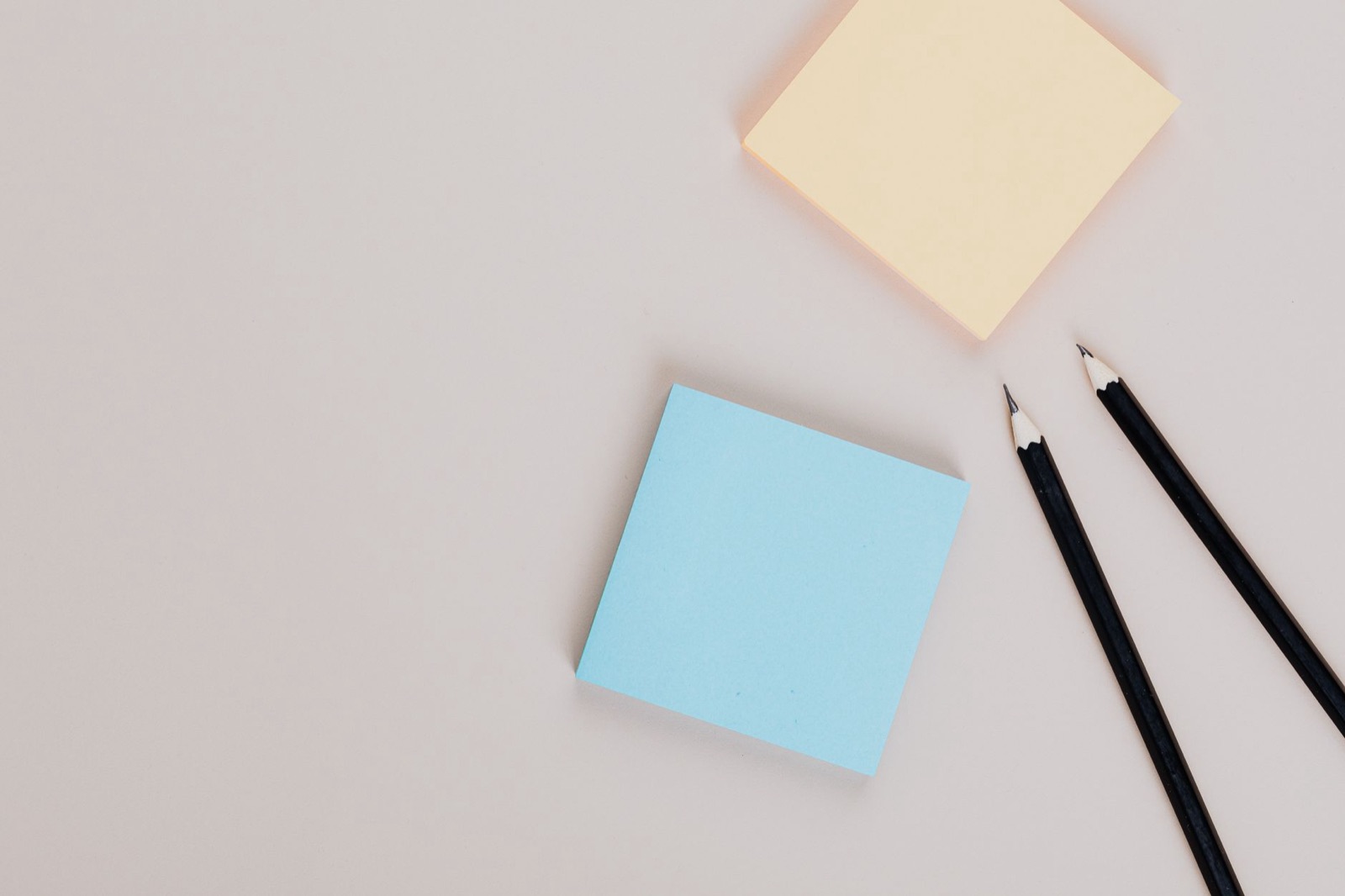
A pad of sticky notes, ideally the square kind around 7 or 7.5 cm across, with plenty of sheets. The sticky strip is doing a job: it holds the pages firmly along one edge, so the stack flicks without needing a stapler or clips. A plain pad of paper can work, but it will slip and spread.
One fine marker or felt tip that does not bleed through. A pencil is fine for planning, though it looks faint when flicking quickly. A ballpoint pen will leave dents in the next page that confuse the next drawing, so keep it for writing, not drawing.
A hard surface to lean on. And, if you can, a second pad, because someone will want to start again.
That is the whole kit. We have seen elaborate flipbook kits with binder clips and printed templates, and we would skip them for a first try.
Start from the back, which feels wrong but works
Everyone gets this part backwards. When you flick a flipbook, you start with the first page of the story at the back and release pages toward the front. So the first drawing goes on the last sheet at the bottom of the pad. Beginning on the top note leads to a book that plays in reverse, which is funny once and confusing after.
Leave the notes stuck in the pad and hold it with the sticky strip along the left edge, the way you would hold a small book. Flip to the very last sheet and draw there. The sticky strip stays on the left so your right thumb can riffle the free edge.
Keep the drawing in the middle or the right of the note, away from the strip and away from your thumb. Thumbs hide more drawing than you expect.
The ball that bounces: a first project that never lets you down
Start with a ball, and not a fancy one. A circle with a stripe is enough. On the last sheet, draw the ball sitting low on the right. On the next sheet up, draw it a little higher and a little further left. Keep going with small steps until it reaches the top of its arc, then bring it down on the way back.
The distances should be small, around the width of a fingertip between pages at first. The ball should also not change size, so decide how big it is and keep to it. If you like, make the ball slightly squashed on the bottom page, just before it lifts off. That one tweak is a famous animator's trick, and children grasp it at once, because it looks right.
Ten pages of this are enough to see the effect. Fifteen make it smooth.
Using the see-through trick so nothing wanders
The most common flaw is that the drawing wobbles around the note from page to page. Sticky notes are thin, so you can see the page below through the page you are drawing on. Use that. Lay the new sheet on top, trace the shape of the previous drawing with your eyes, and shift it just a little.
If your pad is thicker paper, hold it up against a window or a lit phone screen. A bright window is a free light box, though we would tape nothing to the glass and leave the tape out of it.
This also solves the other great problem, which is a character that changes shape. Tracing means the dragon keeps its horns. For a first flipbook, though, picking a subject with no horns at all is kinder.
Ideas that work, and ideas we would skip
Good first subjects share one quality: they change by position or size, not by detail. A sun that rises. A flower that grows from a dot. A fish swimming across the page. A snail that moves about as fast as a snail should. A face that opens its mouth. A rocket that takes off with a dot-dot-dot trail.
We would skip people walking. A walking figure needs legs to alternate and arms to swing in opposition, and a six-year-old's first flipbook is not the place to learn it. If your child insists, make the figure a stick person and have it simply slide across the page. Sliding looks silly. But it is silly in a good way, and the child gets a finished result.
We would also skip anything the child has already put an hour of work into. A treasured drawing deserves a clear photo (here is how), not twenty redraws. If they want to animate that exact character, a cut-out puppet or a stop-motion shot with the original is kinder to the original.
Pacing: how fast, how many, how long
A flipbook with ten pages plays in about a second if you flick it briskly. That is fine. A short flick is how it is supposed to feel, and you can play it again and again.
If you want something longer, aim for twenty pages and a story in two beats: the ball bounces, then rolls off the edge. More than about thirty pages tends to be a lot for a child, and a lot for your thumb.
For a slower result, add duplicates. Draw the same picture on two notes in a row, and the picture will pause for a flicker. That is how real animators manage speed, in broad terms. Holding a drawing for two frames makes it slower and gentler, and it halves the drawing you need to do. For a small child, that is a great trade.
When it goes wrong: the usual four problems
It flickers. The picture is jumping between pages. Make the movement smaller, and check that the drawing sits in the same part of each note. Large jumps look like a bad lamp.
It goes backwards. You started at the top. Turn the pad over and begin again, or just flick in the other direction, because the child may like the reversed version better.
The pages slip out of the pad. The sticky strip wears out, especially on cheap pads or after a lot of flicking. Fold a piece of tape over the edge, or clip the pad with a bulldog clip at the spine side.
The child gets cross at page seven. Stop at page seven, flick it, and celebrate. A seven-page flipbook is a flipbook. They can add more tomorrow, and often they do.
Scissors and staplers are not needed, so safety is simple, but a stapler is an easy way to build a bigger book, so keep it in the grown-up's hands for younger children.
Who draws what when you do it together
A flipbook is a good shared project because the jobs split naturally. The child can own the first and last drawings, the ones that decide what the story is, and a grown-up can fill in some of the pages between. The trick is to do it in the child's style. If your ball looks like a tidy printed circle and theirs looks like a potato, the book will flicker for the wrong reason, because the shapes do not match.
So copy them. Draw the potato. Children notice this and are usually flattered, and the flicking ends up looking like one hand made it. If your child would rather you stayed out of it, fair enough: sit nearby with your own pad and make a second flipbook. Two books side by side is a better game than one book with a supervisor.
A small warning about helping too much. When a grown-up quietly redraws a child's wobbly page to make it smoother, the child tends to feel the book is no longer theirs. Wobbly is fine. Wobbly flipbooks have a charm that tidy ones do not, and the wobble reads as life.
Showing it off
Flipbooks are shy objects. They only work when someone holds them, so the performance is part of the fun. Let your child do the flicking while you film, or let them hold it up to a visitor and say what it is before flicking, which turns a small trick into a little show.
For a video, put the phone on a stack of books and aim it down at the pad from above, near a window. Flick slowly first, so the camera catches each page, and then fast. Both are worth keeping, and children enjoy the slow version more than you would expect, because they can see the drawings they made one by one.
Stepping it up: a book with a story
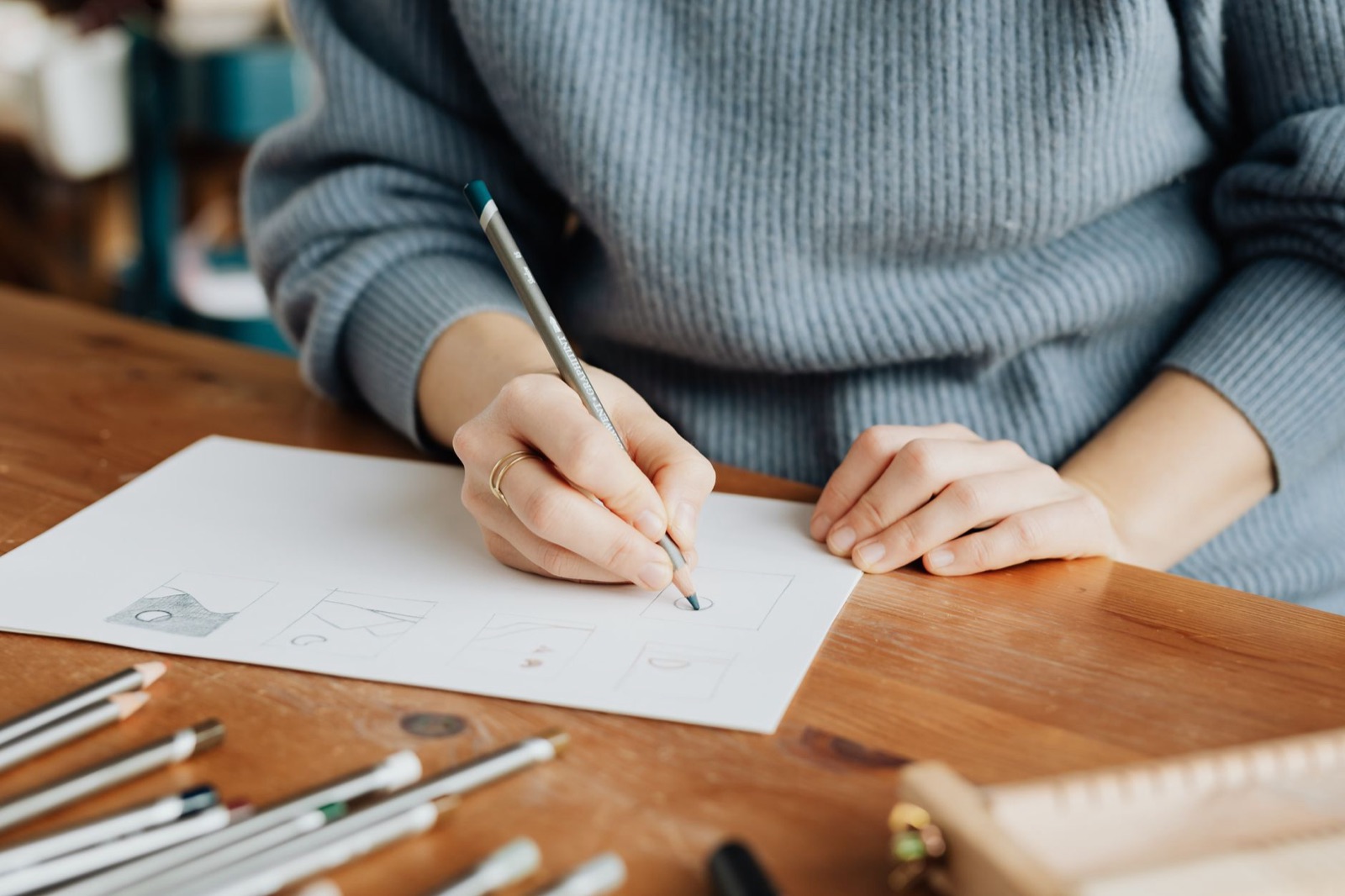
Once your child has one bouncing ball behind them, a second project could have a beginning and an end. A seed becomes a flower. A cloud grows, drops rain and gets smaller. A cat sits, stretches and walks off. Draw a rough plan on the first page of a separate pad, three little boxes, and then divide the pages between boxes.
Some children like to draw the first and last pages, then the middle one, then the pages between those. That is exactly what professional animators do with key moments and in-betweens, and you can mention it casually. It also shares the work in a natural way: a child draws the keys, a grown-up helps with the in-betweens, or the other way round.
If this clicks, take a look at what comes next in the family of ideas: our stop-motion starter guide uses the same small-steps rule with a phone camera, and how a drawing gets animated explains the thinking behind it.
The long game: keeping them
Flipbooks are strangely nice to keep. They are small, they stack and they need no power. A rubber band around three of them makes a gift for a grandparent, who will flick them a lot more than you would predict. We talk about turning artwork into keepsakes in our gift guide, and the storage side is in the guide to keeping artwork.
A video of the flicking also makes a charming record of the age your child was when they first discovered the trick. Prop the phone on the table and film the flipbook from above while they flick, with the sound on, because the sound of the pages is half the charm.
So here is the next step: put a sticky pad and a pen on the table and draw a ball at the bottom of the last note, where your child can see you doing it. Then see who asks what you are making.
Common questions
How do you make a flipbook with sticky notes?
Draw a simple picture at the bottom of the last note, then work backwards so each earlier note shows the picture moved slightly. Keep the sticky strip along one edge, stack the notes tightly, and flick the pages with your thumb from the back to the front.
How many pages does a flipbook need?
Ten to twenty notes is a good first target. Fewer than about eight passes in a blink, and more than thirty is a lot to ask of a child. A pad with 50 or 100 sheets gives you room to start again.
What should I draw in a flipbook?
Pick something simple that changes position in small steps, like a bouncing ball, a growing flower, a sun rising or a worm wriggling. Avoid detailed characters, because redrawing them every page is tiring and they will look different each time.
Why does my flipbook look jerky or flicker?
The picture is probably moving too far between pages. Make each step smaller, trace the previous page, and keep the drawing in the same spot on the note. Flicking too slowly also makes it look choppy.
What age can kids make flipbooks?
Many children around six or seven can finish a short one with some help, while younger children may enjoy flicking a flipbook an adult drew. Every child differs, and a grown-up drawing alongside helps a lot.
Keep reading
How a Drawing Gets Animated, a Plain-English Explainer for Curious Parents and Kids
Still pictures that move are built from a few simple ideas: frames, key poses, joints and puppets. Here they are in everyday words, with a bit for kids to read aloud.
8 min read
Stop-Motion at the Kitchen Table, a First Project for Kids
A phone, a few books and a paper cut-out are enough for a first stop-motion film. Here is the setup, the maths in kid terms, and the fixes for a shaky first try.
9 min read
How to Keep (and Thin Out) Your Child's Artwork Without Drowning in Paper
You cannot keep everything, and you should not try. A simple keeper rule, a photo archive, a rotating display and the right box will do.
9 min read