Houses, suns and rainbows: why every kid draws the same things
By the Scribblie team · Published · 8 min read
In this guide
- Pictures children carry in their heads
- The house: a face with a roof
- The sun: circle plus lines
- The rainbow: all the colours at once
- The tree: trunk plus cloud
- Why the same things keep turning up
- When the symbols start to change
- A walk that changes the house
- Nudging variety without nagging
- Leave the classic alone
- Common questions
Children draw the same houses, suns, rainbows and trees because those pictures work. Each one is a small recipe (a square with a triangle on top, a circle with rays) that a child can repeat almost without thinking, which leaves their attention free for the more exciting job of telling a story. The repetition is not a lack of imagination. It is a way of getting good at something and then putting it to use.
If you have a fridge covered in near-identical houses, you are in excellent company. Here is why it happens, what each of the favourite symbols is doing, and how to give a child's repertoire a gentle shove without taking the fun out of it.
Pictures children carry in their heads
Ask a five-year-old to draw "a house" and you will rarely get the house they live in. Even a child in a tall block of flats will usually produce a house with a pitched roof, a central door, two square windows and a chimney.
That house came from the child, who has built a mental symbol for "house" out of picture books, cartoons, other children's drawings and the general feeling of what a house is. People who write about children's art call these personal, repeatable pictures schemas. The point of a schema is efficiency. Once you have a house that works, you do not have to solve "house" again, and you can concentrate on who is standing outside and what the weather is doing.
This is neither copying nor observing. A child's house is a concept of a house, which is why the same house can be found in drawings from children in very different places. Writers on children's art have often noted how similar early symbols look from one child to the next, and we think the explanation is simply that young hands and young minds face the same problem and find similar solutions. (The wider developmental arc is in our overview of how children's art develops.)
The house: a face with a roof
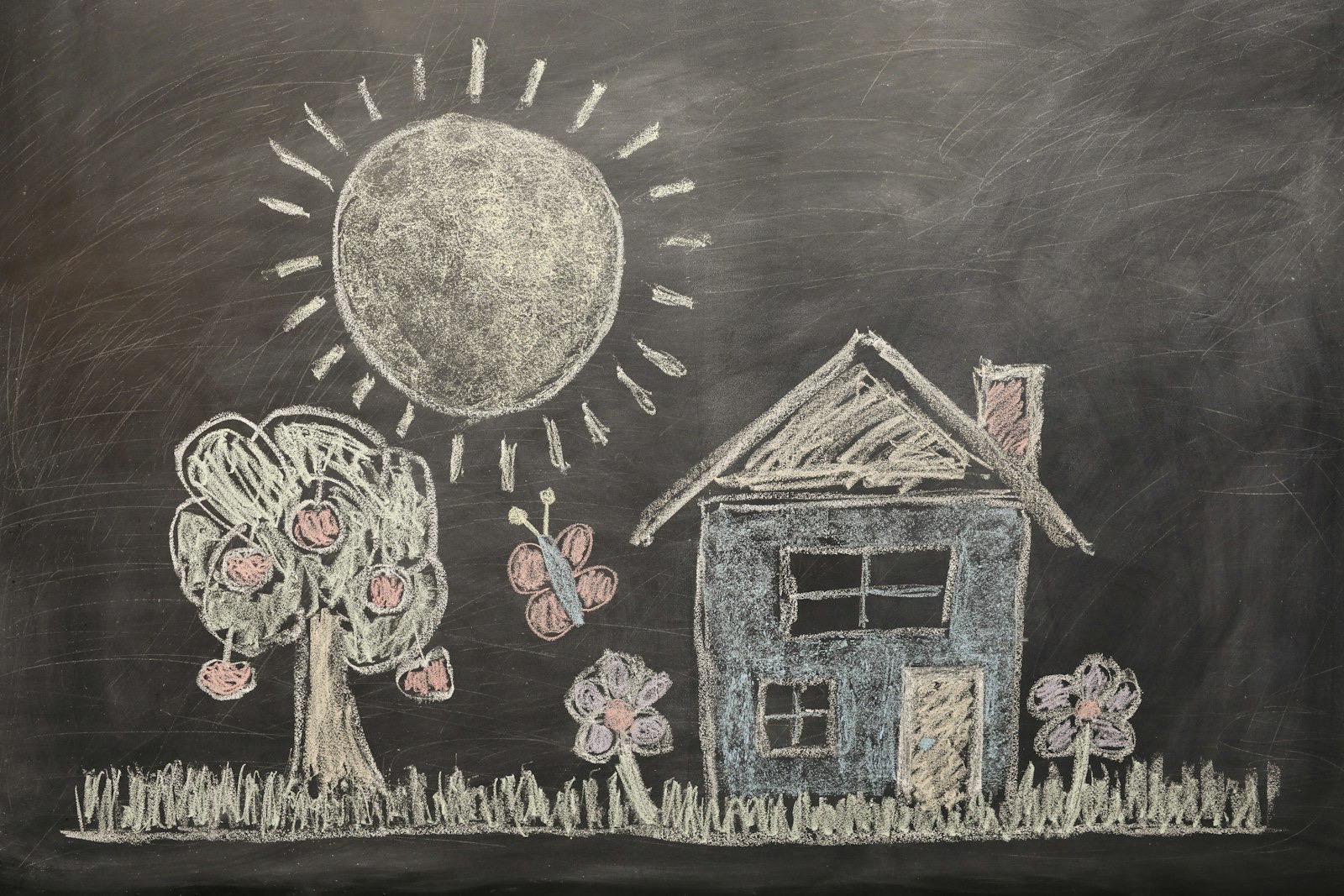
A typical child's house is a square, topped with a triangle, with a door and windows. Sometimes there is smoke curling out of a chimney. Sometimes there is a path, usually curving gently to the door, and often a patch of grass.
You may spot something that looks like a joke: the house is a bit like a face, with two eyes (windows) and a mouth (door). It is probably not on purpose, but it is a very natural way to lay it out, because children know how to draw faces and the same arrangement is easy to repeat.
There is also a good deal of shape-learning going on. The square is a hard shape, as is the triangle. A house is a good workout for corners and straight lines, which is why children often draw it with huge concentration, and a little tongue-tip poking out.
Websites offering house "interpretations" attach significance to the number of windows, the size of the door and the presence of a chimney. We would give them no weight at all. A child who leaves out the door has probably just not got round to it. If you are curious, ask the child to tell you who lives inside. We explain the broader problem with decoding in what your child's drawings mean, and what they don't.
The sun: circle plus lines
We covered the sun's roots in our piece on why children draw circles first, so briefly here: a circle and a set of lines pointing out, requiring nothing a child does not already know. It lives in the top corner, it is usually yellow or orange, and it very often has a face.
Children give faces to things that matter to them. The sun is big, it is warm, it appears every day, and it is easily the most important thing in the sky. Adding a smile to it is the natural thing to do. We have seen no good reason to treat a sun without a face as anything other than a sun without a face.
The sun also persists because it is a quick win. A sun takes ten seconds, fills an empty corner, and instantly makes a picture look finished. If you have ever tried to rescue a dull piece of work by adding a flourish, you know the instinct.
The rainbow: all the colours at once
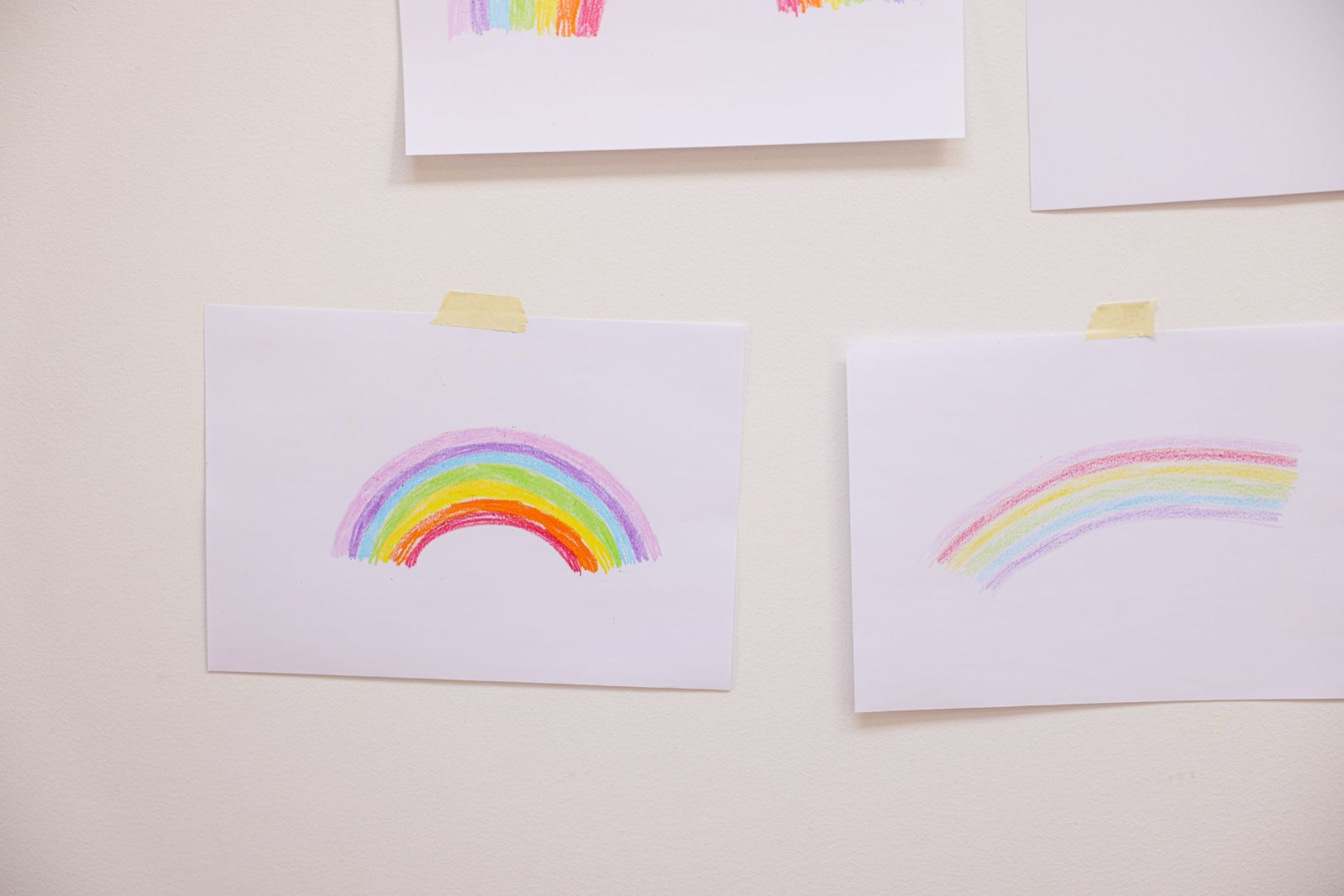
A rainbow is a feast for a child with a full set of pens. Arc after arc, in a more or less standard order (a child can often tell you off if you get it wrong), each one a different colour, from a plain line to the huge, drippy bands you get with chunky crayons.
It is a drawing that is also a colour lesson, a pattern and a small performance of knowing the sequence. Rainbows are everywhere in children's lives: on stickers, in songs, on T-shirts, on windows. Of course they turn up on paper.
A rainbow mostly means the child likes rainbows. We cannot find a sensible reason to read more into it, and we would be suspicious of anyone who does. If your child has drawn fifteen in a row, they have probably found one they enjoy and are showing off how many colours they own.
The tree: trunk plus cloud
The tree has two common versions. In one, a straight brown trunk with a big green cloud on top. In the other, a lollipop: a line with a round blob. Later on, branches appear, then apples, then a bird, then a swing.
Trees are the third member of the usual quartet (house, sun, tree, and some sort of flower or rainbow), and they pop up for much the same reason: they are easy to draw, easy to recognise, and easy to repeat. The trunk is a vertical line, the crown is a circle. Everything a child needs, they already have.
Why the same things keep turning up
Put the four symbols together and you can see what they have in common:
- They are built out of shapes the child has mastered (squares, triangles, circles, lines)
- They are instantly recognisable, so the child gets the satisfaction of "it looks like it"
- They are everywhere in the child's world, in books, on screens and in other children's pictures
- They are reliable, so the child can concentrate on telling a story
There is a quiet social side as well. Children copy each other. In a classroom, one child's house with a particularly good chimney can spread across the room by break time. The repertoire is partly a shared vocabulary, and sharing a vocabulary is rather lovely.
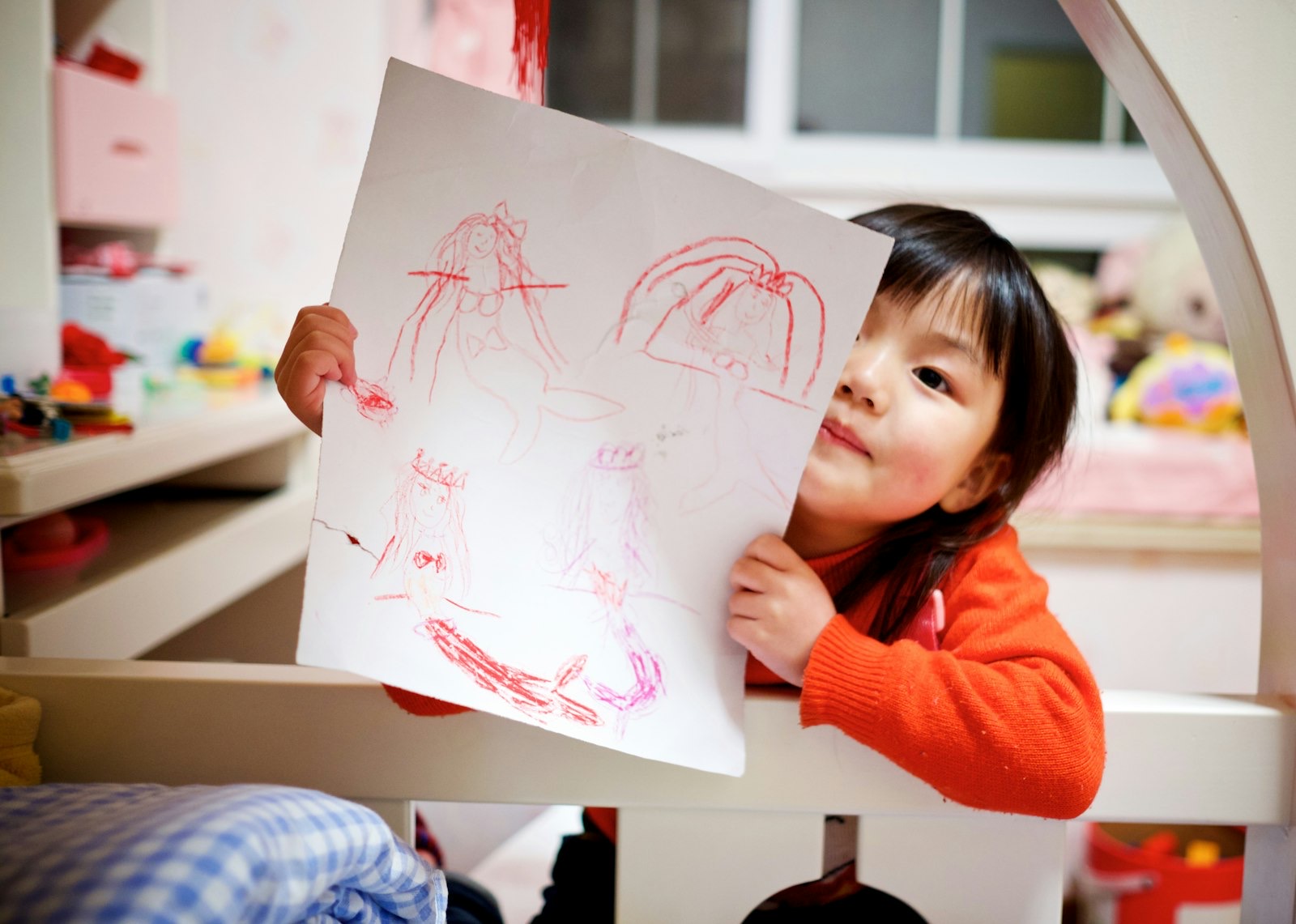
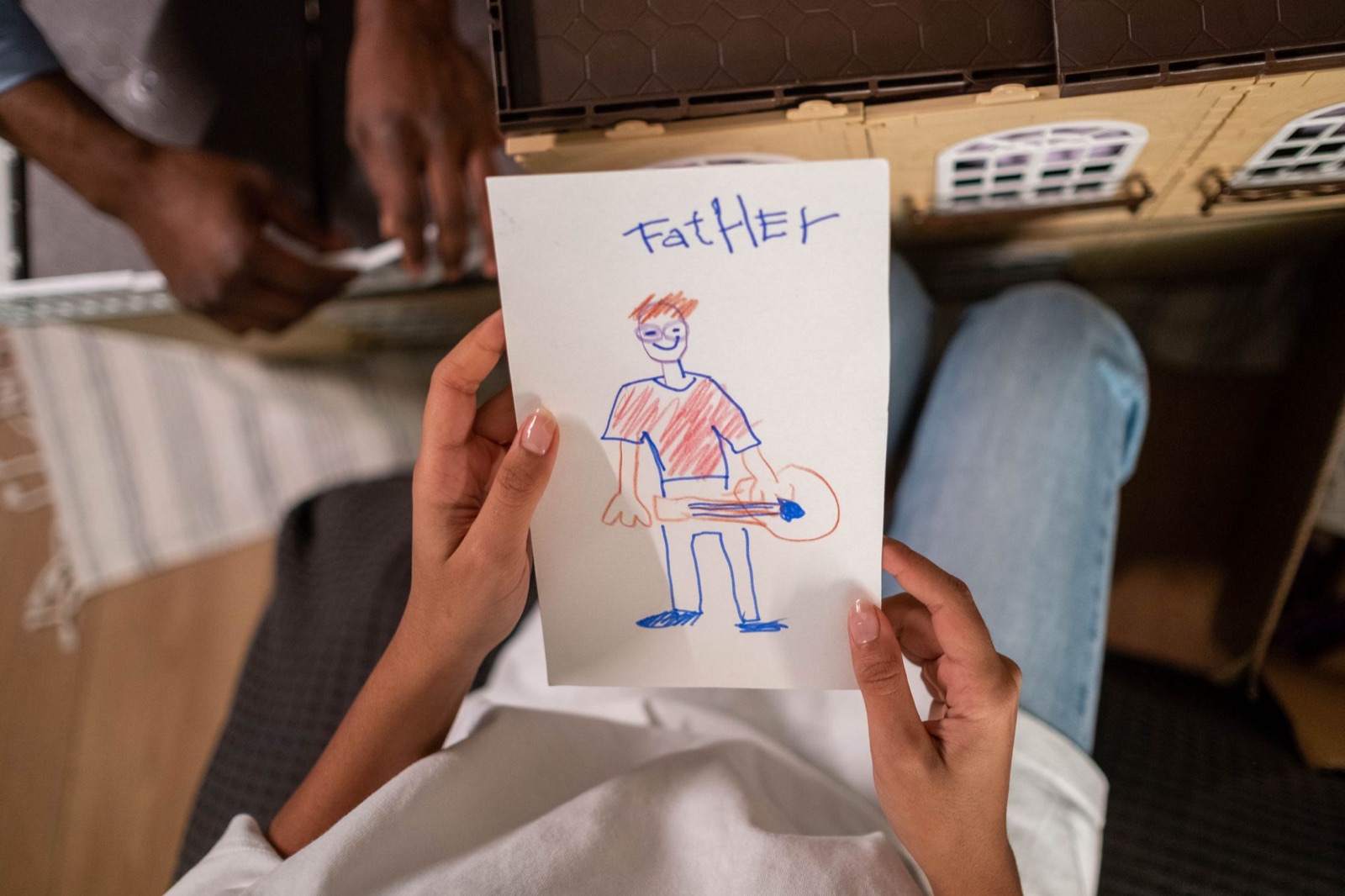
Many children's pictures also include a few things that are not from the standard set. A dog that is the family pet, a specific toy car, a beloved relative with an unusual hat. Those are the places where the picture becomes personal, and they are worth noticing.
When the symbols start to change
The standard set does not last forever. Somewhere in the later primary years, many children get dissatisfied with a house that no longer looks like a house. The square house flattens into a front and a side, with some perspective on the roof. Trees get branches that actually branch. Skies sometimes drop their blue stripe and become sky all the way down. We talk about the wobble this can create in when your child says "I can't draw".
You do not need to prompt this shift. It happens as the child looks harder at the world and starts to compare their pictures with what they see. What you can do is stay interested and avoid comparisons with other children.
A walk that changes the house
If your child lives in a flat, a tall building or a home that looks nothing like the usual pitched-roof house, there is a pleasant experiment. Go for a walk and play "house detective". Spot the flat roofs, the balconies, the round windows, the tin roofs, the shop with a flat above it, the one with washing hung out. You are not trying to correct anything. You are simply putting more kinds of houses in front of their eyes.
When you get home, offer paper and ask whether they would like to draw one of the houses they saw. Many children will, and the pictures often show a new detail or two: a balcony rail, an awning, a satellite dish. Their old house will probably still turn up in the next drawing as well. The new houses sit alongside it, and that is how a repertoire grows.
Nudging variety without nagging
If your child is happily drawing the same house forever, there is no urgency. But if you would like to open things up a little, the trick is to offer a problem, not a correction.
Here are some prompts that have worked for many families:
- The inside. "What would we see if we took the front off the house?" This invites rooms, furniture and people, and tends to produce lovely cut-away pictures.
- A different time. Draw the same house at night, in a thunderstorm, or on the day of a party.
- The visitor. Add something to the scene that does not belong: a giraffe at the door, a crocodile in the pond.
- A neighbour. A house needs a street. Who lives next door, and what is their house like?
- Another point of view. Draw the house from a bird's-eye view, or from a worm's, or from the dog's.
- A house that is not a house. A house for a snail, a house for a cloud, a house that moves.
Try one at a time, and do not insist on a result. If your child draws the same old house with a crocodile in the pond, that is a perfectly good outcome. The crocodile is new, and a new thing has joined the repertoire.
For more starting points, see our collection of drawing prompts for kids, sorted by age.
Leave the classic alone
There is a mild case for celebrating the standard house. It is a drawing that a child can make in a minute with complete confidence, and confidence is the thing that lets kids start any other drawing at all. Do not sneer at the sun with a face. When your child is eight and drawing something much harder, they will sometimes go back to it in the corner of the page, as a signature.
So tonight, ask your child to draw a house, and instead of asking anything about it, add a tiny detail yourself in the corner. A small dog, say, or a window with a cat in it. See if they notice. See what they add next. It costs nothing, and the house will almost certainly still be there in the morning, probably with a cat.
Common questions
Why do kids always draw a house with a triangle roof?
Because a square plus a triangle is a shape recipe that a young child can repeat reliably. Children draw the house they carry in their heads, a simple symbol, not the one they actually live in, so even a child in a flat will often draw a pitched roof.
What does a child drawing a sun mean?
Usually just that a sun is one of the easiest and most satisfying things to draw: a circle with lines. Charts that give hidden meanings to a sun with a face, or without one, are not reliable, so we would ignore them.
Is a child drawing a rainbow meaningful?
Mostly it means they like rainbows, which is a perfectly good reason. A rainbow is a chance to use every colour in the box, which many children find irresistible.
What does a child drawing a tree mean?
A tree is another trusted symbol, often a trunk with a cloud of leaves or a lollipop shape. It reflects what the child has learned to draw and what they have noticed, not a secret message about their family or feelings.
How do I get my child to draw something other than the same house?
Offer a new problem and not a correction: draw the house from inside, at night, in a storm, or with a person doing something unusual in it. Keep it playful and leave the original house alone.
Should I worry if my child never varies their drawings?
Most children go through long phases of repetition, and it is normal. If it is accompanied by wider worries about play, communication or mood, talk to your child's teacher or doctor and take the whole child into account, not just the drawings.
Keep reading
Stages of child art development, from first marks to realistic drawing
Scribbles, symbols, schemas and the wobbly leap toward realism. A rough map of how children's drawing changes, and what you can safely ignore.
9 min read
What your child's drawings mean, and what they don't
Online guides love to decode kids' drawings. Here is what a drawing can tell you, what it cannot, and what to do with the worry that brought you here.
8 min read
Why children draw circles first (and what comes after)
Circles are the first shape most children master, and they turn into faces, suns and tadpole people. What it means, and what it definitely does not.
8 min read