Why children draw circles first (and what comes after)
By the Scribblie team · Published · 8 min read
In this guide
- The circle is a motor milestone, not a message
- What the circle looks like when it first appears
- Circles turn into faces
- Tadpole people: the head with legs
- Suns, wheels and flowers: the circle's second career
- What comes after circles
- Three things parents often ask
- How to give circles a boost (without turning it into a lesson)
- When a circle is just a circle
- Common questions
Children draw circles first because a circle is the easiest closed shape for a small hand to make. It is one long, curving movement, the sort an arm already wants to do, and when it finally closes the child has made something with an inside and an outside for the very first time. Everything else in early drawing, from faces to suns to the person with legs growing out of their head, tends to start from that round.
The rest of this guide covers how circles turn into pictures, what comes after, and why a circle is not a clue to your child's inner life.
The circle is a motor milestone, not a message
Think about the moves a toddler's hand can make. Scribbles start as sweeping arm swings. Then come back-and-forth lines, then loops and spirals, which are circles that do not yet know how to stop. Somewhere in there the line starts to meet itself.
That closing-up is the milestone. It takes planning: the hand has to aim for a point it left a second ago. Many children reach it somewhere around two and a half to three, though the range is wide and a child who gets there at four is not behind in any way that matters. (For the bigger picture of how early marks develop, see our overview of the stages of child art development.)
You will sometimes find websites that read a circle as a symbol: a need for love, a wish for protection, a sense of wholeness. We would set those aside. In a two- or three-year-old, a circle tells you what the hand can do. It tells you almost nothing about what the heart is doing, and we cannot find a reason to think otherwise. If you want our fuller view on this, we wrote what children's drawings mean, and what they don't.
What the circle looks like when it first appears
It rarely looks like a circle to you. Expect a lumpy loop with a tail where the line overshoots, or a spiral that finally gets tired, or a ring that is slightly open at the top like a horseshoe. All of those count. The child has the idea, and the hand is catching up.
You may notice a few habits:
- Circles drawn in huge numbers on one page, sometimes inside each other
- Dots inside the circle, which in a few months will become eyes
- A line from the circle to the edge of the page that the child cannot quite explain
- The same direction every time, usually either clockwise or counter-clockwise depending on the hand
Do not press for neatness. There is nothing to improve at this stage by trying. Repetition does the work, and a child who fills a page with fifty wonky rounds is practising exactly the thing they need.
Circles turn into faces
Once a child can close a circle, they are suddenly holding a container. And things you can put inside a container get exciting: a dot, another dot, a line.
Quite quickly, many children discover that a round shape with two dots and a mouth is a face. It may be the first picture of anything they draw on purpose. It is no accident that faces come early. People, particularly the people at home, are the most interesting things in a small child's world.
Faces do not need much detail to be convincing. Two eyes and a smile will do for a long time. Hair may be a few spikes. Ears and eyebrows arrive later, and noses are often forgotten for ages, a detail that confuses parents more than it should. If your child's picture of you has no nose, be reassured: it is just a stage in what the picture is for. It is also a nice dry fact that you are probably being drawn in a much better mood than you were in.
Tadpole people: the head with legs
From the face, the next step is that circle growing limbs. Lines shoot out from the sides of the circle, or from the bottom, and a person has been born. Adults call these tadpole figures, and many children make them somewhere around three to five.
We think they are one of the most charming things a child ever draws, and there is real logic in them. A child draws what is important to them, so the face is there for looking at you, the arms for hugging and the legs for walking. The middle of the body does not do very much that a three-year-old cares about, so it does not make the page. When a torso does arrive, it usually shows up all at once, seemingly overnight.
We gave this its own guide, tadpole people and how kids learn to draw a person, including what to say to encourage more detail without correcting anything. In short, ask about the person and do not tell them what is missing.
Suns, wheels and flowers: the circle's second career
Once children have the circle, they put it to work everywhere. A big yellow one in the corner becomes the sun. Add lines sticking out and you have rays. Two circles under a rectangle make a car. A circle with lines from the middle is a flower, or a spider, or a wheel, or a clock, depending on the day.
Notice how few new skills are involved. The child has learned one flexible symbol and found that it can mean ten things. That is a very economical way to draw, and a lot of artists would admit to using it.
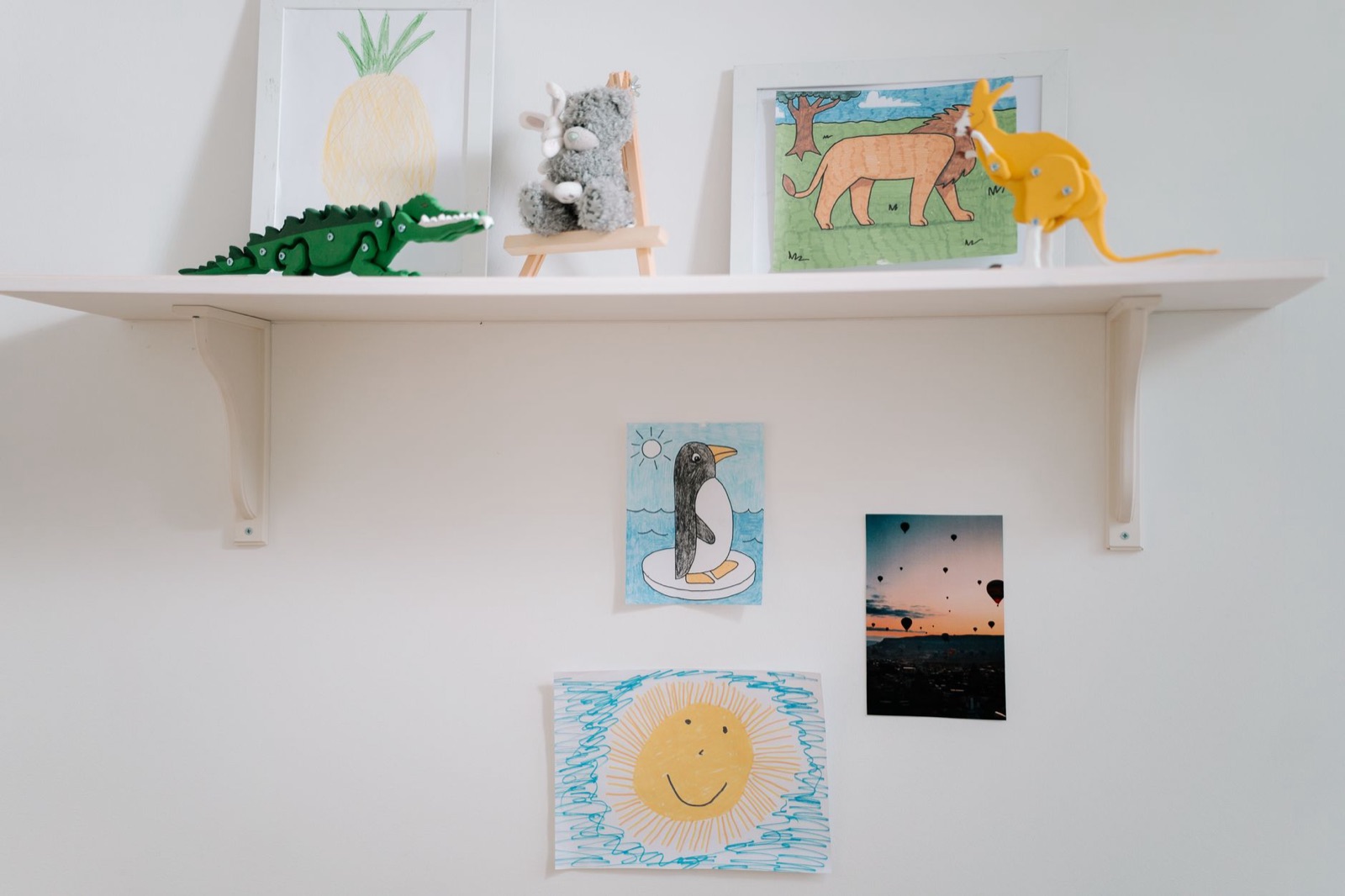
The sun is the famous one, and the one that reliably makes the fridge. It tends to have a smiling face and a set of spiky rays, and it sits in the top corner of the page more often than seems statistically plausible. We cannot give you a number for that, only a lifetime of fridges. We say more about why such symbols repeat in houses, suns and rainbows: why every kid draws the same things.
A word of caution about the sun in particular. Websites sometimes assign meanings to whether the sun has a face, is missing, or is covered by clouds. Please do not worry about any of it. A missing sun may mean the child was thinking about the cat.
What comes after circles
Circles are the first closed shape, not the last. A child's shapes tend to arrive in a rough order that looks something like this:
- Circles and loops
- Crosses and plus signs
- Squares and rectangles, often with rounded corners
- Triangles, which are harder than they look because of the pointy corners
- Diagonals and more complex shapes, once the hand can change direction cleanly
Do not treat that list as a timetable. Children mix it up all the time. But the pattern helps explain why a four-year-old's house may be a rounded square with a wobbly triangle roof, while their sun is a beautiful perfect circle. The circle is simply the shape they have had the longest.
As shapes pile up, they start to combine. A square with a triangle on top and a rectangle for a door is a house. A circle with rays is a sun. A set of shapes becomes a little language, and that is where the so-called schema stage begins, where children draw the same trusted pictures over and over because the pictures work.
Three things parents often ask
"My child only draws circles and nothing else. Should I be doing something?" Probably not. Children frequently stay with a favourite shape for weeks and then abandon it overnight. If you want to nudge, add one new idea to the table (a square lid to trace, a picture book full of boxes) and leave it there without comment.
"Why do the circles go round the same way every time?" Most hands have a preferred direction, and the arm settles into it. Some children turn clockwise and others the other way, and which one feels natural can differ from child to child. It is a habit of the hand and not a problem, so do not try to swap it. If your child is left-handed, our notes on left-handed kids and drawing go into the setup side of that.
"They drew a circle and then scribbled it out. Did I do something wrong?" Almost certainly not. A scribbled-over circle can be a child finishing a game, deciding the shape is a ball of wool, or enjoying the noise the crayon makes. Children revise their own work constantly. You cannot read the reason from the result, and it is nicer to ask than to guess.
How to give circles a boost (without turning it into a lesson)
You do not need to teach circles. What helps is making circle-making a pleasure:
Big movements first. Chalk on a pavement, a finger in a tray of sand or salt, a paintbrush with water on a fence. Large circles use the whole arm and are easier than small, tight ones.
Tracing in the air. Draw big circles in the air together and call them "the sun going round". Silly is fine.
Round objects to trace. A lid, a cup or a coin pressed under a sheet of thin paper and rubbed with the side of a crayon makes a circle appear like magic. Supervise small coins with very young children, since they are a choking hazard.
Stickers and dots. Sticking dots on paper and then joining them with a crayon is a quiet way to practise aiming.
A game of "what could this circle be?" Draw a circle yourself and ask your child what it might turn into. A pizza? A face? The moon? You add one line, they add another. This one tends to be a favourite.
We would skip worksheets with dotted circles to trace. Many children find them boring, and they turn something playful into a test.
When a circle is just a circle
Most of the time, nothing is hidden. A child who draws circles wants to draw circles, and the best reply is interest, not interpretation. "You made so many round ones" is accurate and kind. "Is that a ball?" can start a good chat but is not required.
If you ever worry about your child, because they are withdrawn, upset, or there has been a big change at home, the place to turn is their doctor or teacher, who can talk to the actual child. A drawing, even a vivid one, is a poor place to look for answers and cannot stand in for a conversation.
This phase passes fast. A year from now the circles will be wheels and faces and the odd moon, and you may struggle to remember the page of fifty wobbly rounds that once covered the table. Take a photo of one, or keep a sheet, while they are still new.
Tonight, if you want a tiny experiment, draw one big circle on a page and hand your child the crayon. See what they turn it into. It is rarely what you expect.
Common questions
Why do toddlers draw circles first?
A circle is one of the easiest closed shapes for a small hand, because it is one continuous, curving movement that the arm already likes to make. Straight lines and corners ask for stops and changes of direction, which come later.
Does a child drawing circles mean anything psychologically?
No. In young children a circle is mostly a sign of growing hand control, and the same spirals and rounds turn up in children everywhere. A drawing alone cannot reveal a child's feelings or character, and we would be wary of anyone who says it can.
What are tadpole figures?
Tadpole people are early drawings of a person with a round head and legs (and sometimes arms) coming straight out of it, with no separate body. Many children draw them somewhere around three to five, and they usually add a torso on their own later.
At what age can a child draw a circle?
Many children can close a rough circle somewhere around two and a half to three, though plenty do it earlier or later. Do not worry about the exact month, and do not test them on it.
Why does my child draw a sun with a face and rays?
It combines two things that children find easy and important: a circle and a set of lines pointing outwards. The face is added because the sun matters to the child and, in a child's drawing, important things tend to have faces.
Keep reading
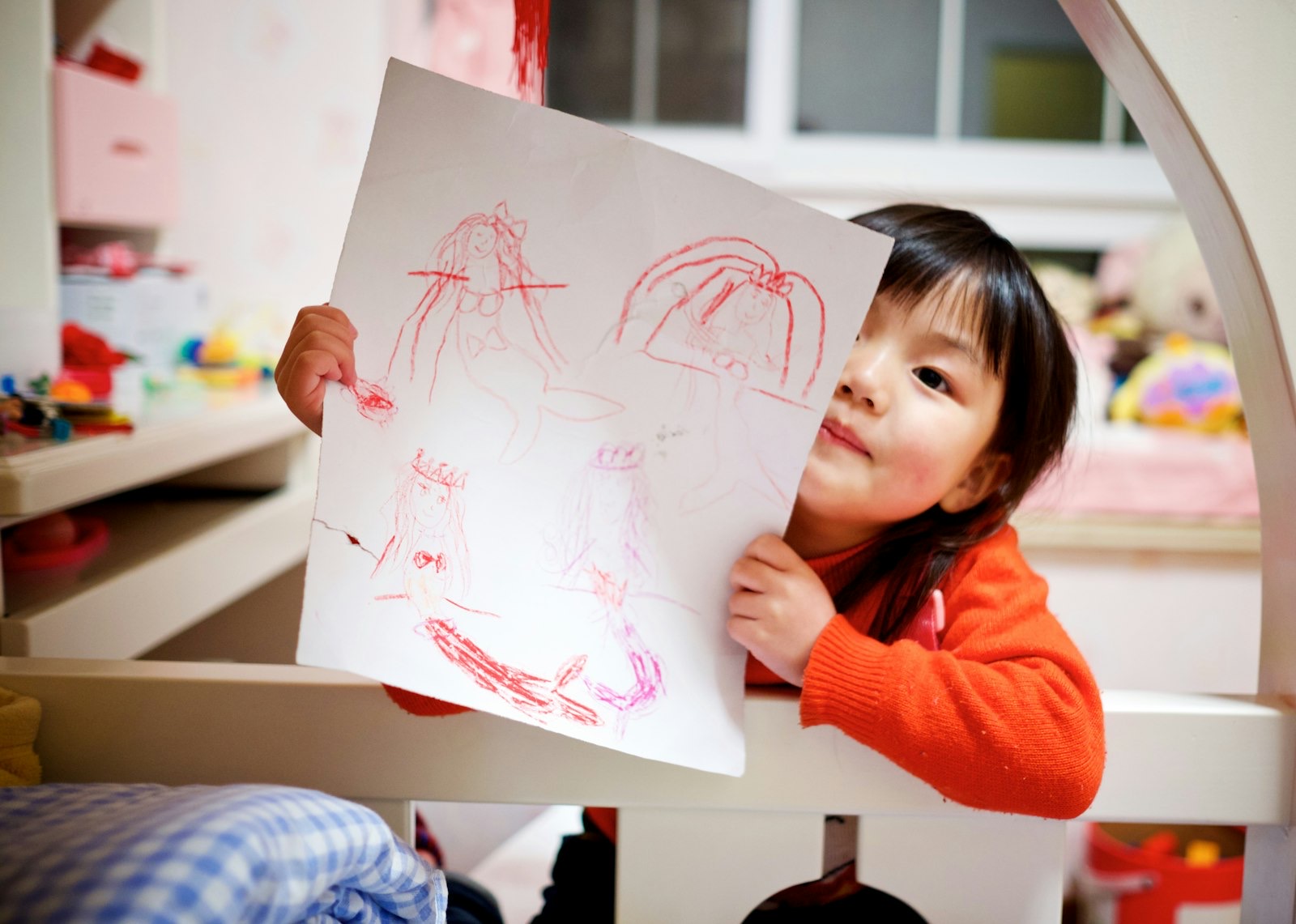
Houses, suns and rainbows: why every kid draws the same things
Square house, triangle roof, smiling sun. Why children everywhere settle on the same little set of symbols, and how to open up the repertoire without nagging.
8 min read
Stages of child art development, from first marks to realistic drawing
Scribbles, symbols, schemas and the wobbly leap toward realism. A rough map of how children's drawing changes, and what you can safely ignore.
9 min read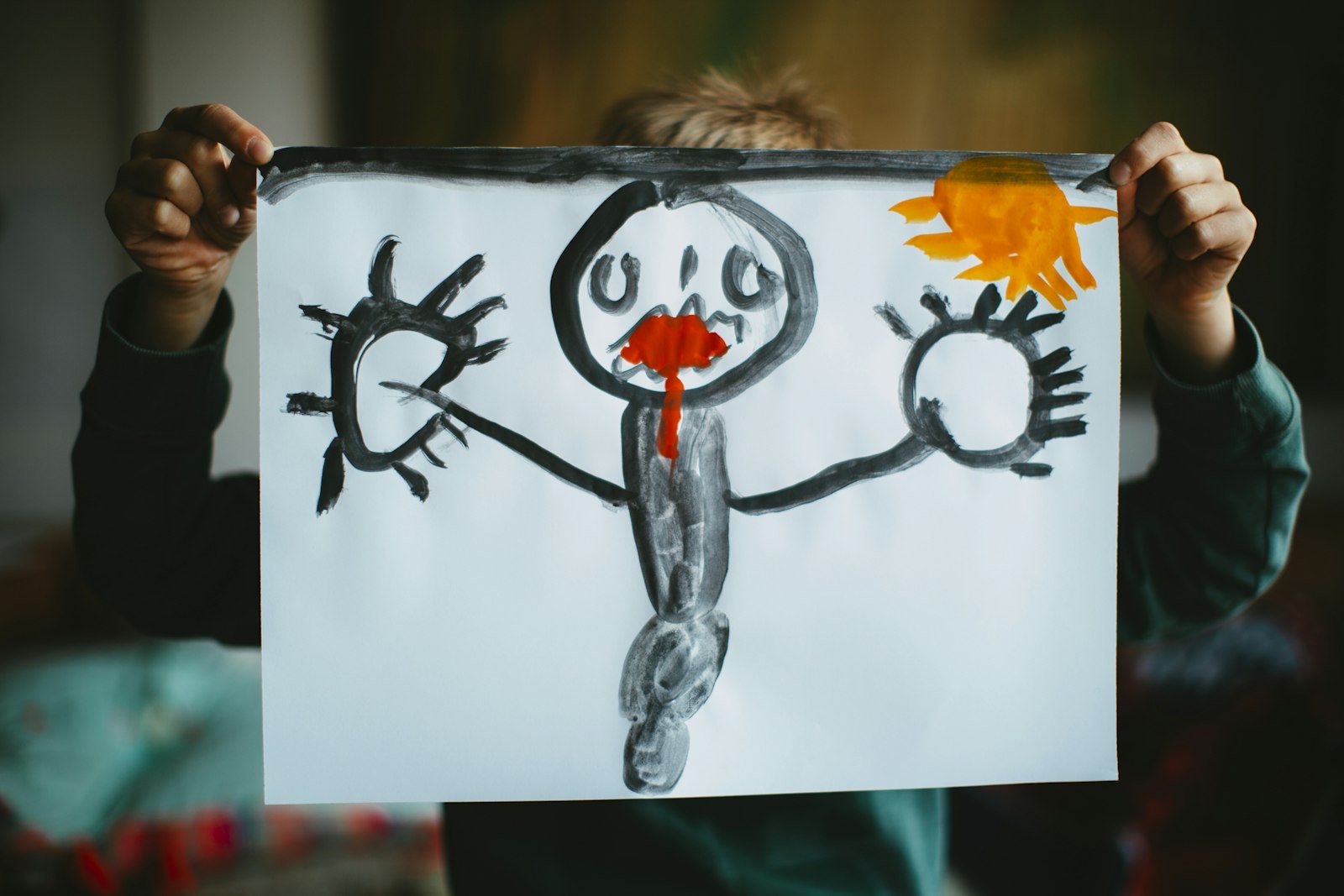
Tadpole people: how kids learn to draw a person
The head-with-legs figure is a milestone, not a mistake. Here is the usual route from tadpole people to full figures, and what to say along the way.
8 min read