Rainy day drawing activities that last longer than ten minutes
By the Scribblie team · Published · 9 min read

In this guide
- Plan the afternoon in four beats
- Beat one: listen to the rain and draw what you hear
- Beat two: the long-paper rain mural
- Window drawing and the view that changes
- Beat three: the break (food counts)
- Beat four: a weather diary and the quiet wind-down
- House rules that keep a shared mural peaceful
- How to adapt the plan by age
- When it all goes wrong anyway
- Keep the mural
- Common questions
If you have a wet afternoon to fill, the trick is lining up three or four drawing activities that hand off to each other, so there is already a next thing when the energy flags. Ten minutes is how long most single activities last. An afternoon is a chain.
Here is a plan you can borrow, with rough pacing and notes on what to do when it falls apart, as it sometimes will.
Plan the afternoon in four beats
Think of the afternoon as four beats: a warm-up, a main project, a break, and a wind-down. You do not need to hit them on the clock. They are simply a shape that keeps children from being asked to do the same kind of thing for too long.
The warm-up is quick and almost silly. The main project is the one thing that takes real time. The break involves the body and food. The wind-down is something quiet that produces a little display for the grown-ups who come home.
The order matters more than the details, so swap in your own ideas where ours do not suit your house.
Beat one: listen to the rain and draw what you hear
Open a window slightly if you can, or stand near a door. Ask everybody to be quiet for one minute, and listen. Then, with a pencil, draw the sound. Not the rain, the sound: is it taps, a drumroll, a hiss? Give a crayon to each person and see what a drumroll looks like. This is a way of getting even a reluctant child to make marks without thinking about whether they are "good".
A slightly older child will enjoy a second round. Listen again, and this time draw the sound of the whole house during the rain: the fridge hum, the neighbour's door, the cat's feet. It is a small exercise in noticing, and it takes five minutes.
For younger children, a simpler version works: draw a rainy line, a drizzle line, and a thunder line. They do not need to be literal. A three-year-old will probably make the thunder line with great force, and you should let them.
Beat two: the long-paper rain mural
This is the part that lasts. Unroll lining paper, the back of leftover wallpaper, or tape together sheets of newspaper or printer paper, until you have a strip long enough that it needs the floor. Anywhere from the length of a sofa to the length of a hallway will do. Tape the corners down so it does not slide.
Now draw a long scene together. A street in the rain, with a house for each person. A river with a bridge. A jungle in a downpour with an animal looking out from every tree. Agree on one rule: the mural has to connect, so something in your house has to reach the next person's. A path, a wire, a stream, a washing line. That rule is what makes children look at each other's work and respond to it, and it is also what makes the mural last.
Pacing a mural is a bit like pacing a long walk. Start with the big shapes and let them take a while. When the children flag, introduce a character who needs to travel from one end to the other, and the drawing becomes a game. When it flags again, add weather: a lightning bolt in one corner, a rainbow in another.
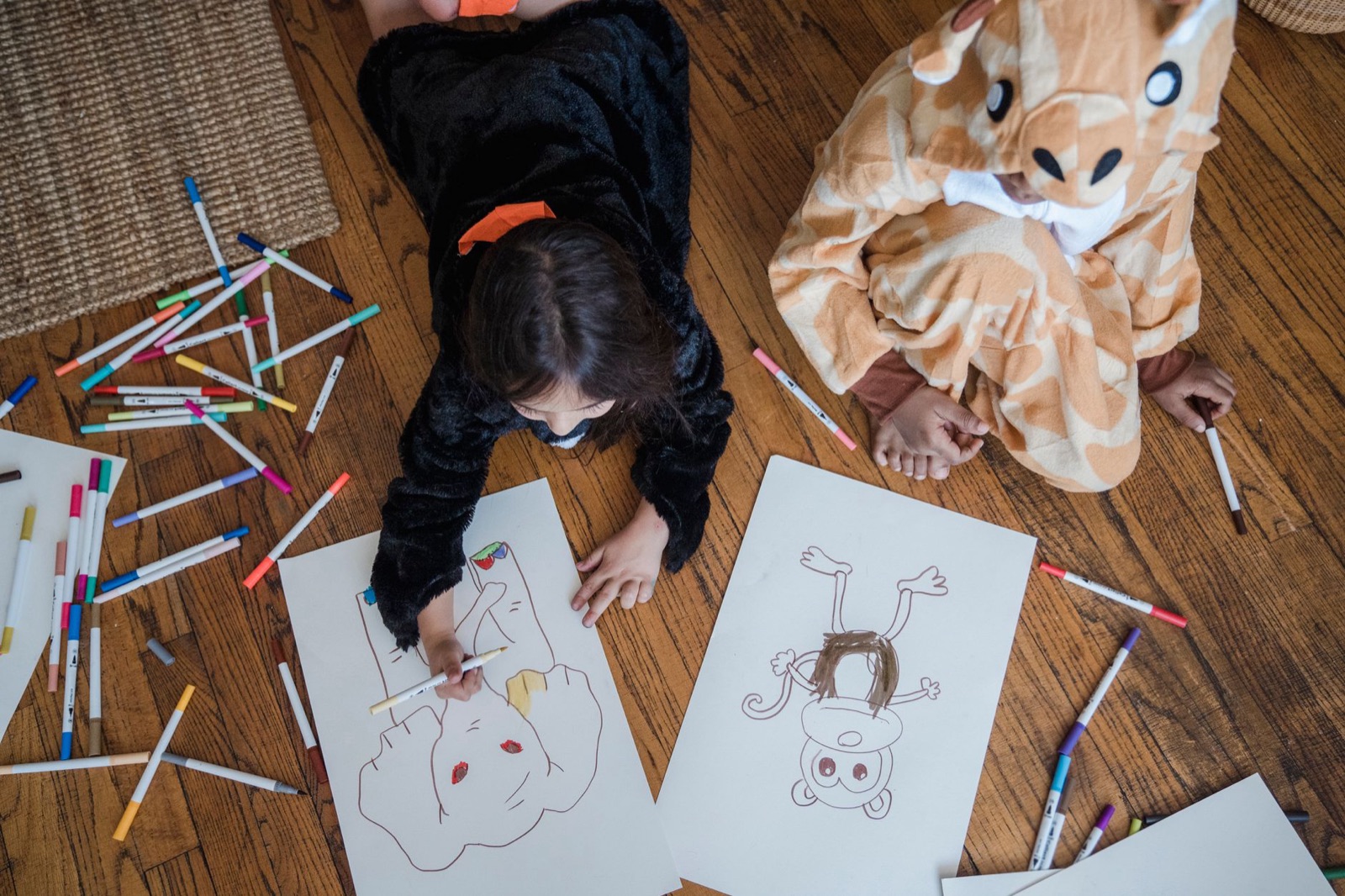
For mixed ages, the mural is the best option we know. A toddler can scribble the puddles, a five-year-old can do the animals, a nine-year-old can put in the perspective and the buildings, and a grown-up can do the boring bits like the sky. Nobody needs to be at the same level.
Window drawing and the view that changes
If you own window crayons or washable markers made for glass, a window is a free large canvas and a very good use of an hour. The special thing about a rainy window is that the real weather is already drawing on it.
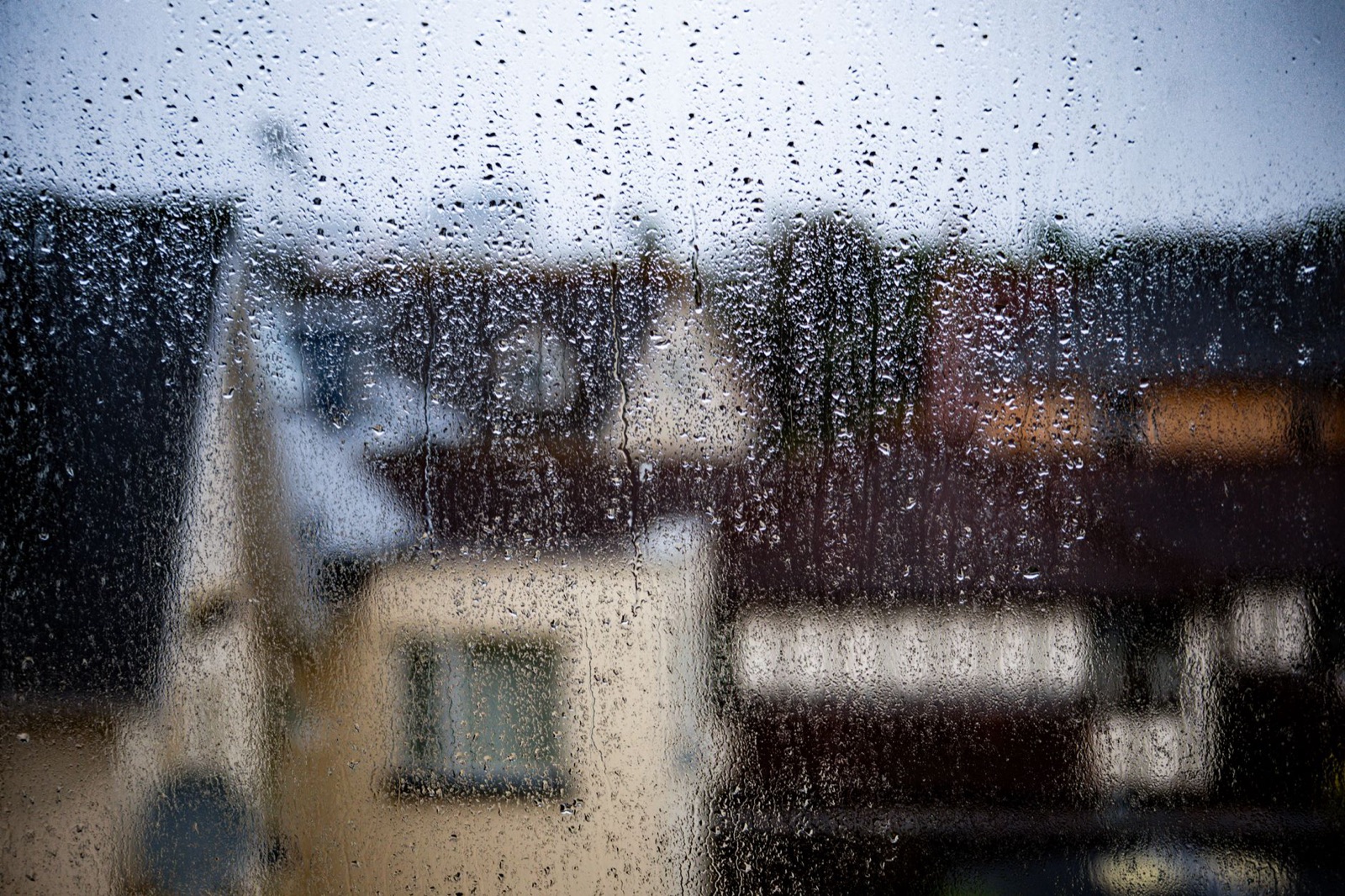
Trace the drips. A drop runs down the glass and the child follows it with a marker, leaving a line behind it, and the line makes a surprising shape. Have a race between two drops. Draw faces on the big drops, and see who gets to the bottom first. This is a fine game for a four- or five-year-old and a moderately funny one for a ten-year-old.
Or draw the world behind the glass. Outline the roofs and trees you can actually see, and add what you cannot: a dragon on the chimney, a submarine in the road. Many children enjoy putting something unexpected into a real view.
Safety and cleanup. Use products labelled for glass, test a corner first, and wipe off the same day. Do not draw on high windows, and do not let small children lean on glass. If you do not have glass markers, do not substitute ordinary ones and hope. Try a sheet of clear plastic folder taped over the window, or simply paper.
Beat three: the break (food counts)
The break is not optional. A child who has drawn for forty minutes needs to move, eat, and look at something else. Do not call it a break if that sounds like admitting defeat. Call it "the intermission".
Have a snack at the mural, then walk along it together while eating something that is not messy, and let the children tell you the story of the scene. Do ten jumps in puddle-shaped patterns across the room. Or go outside, if the rain allows, and look at a real puddle for a minute. It is a decent drawing prompt on its own, and one you will want to remember.
If your children are the kind who rush through drawing and then ask what is next, the intermission is where you ask them what they would like to add. A mural is never really finished, only paused.
Beat four: a weather diary and the quiet wind-down
By late afternoon, the energy has gone. This is when a small, calm project works well, and the weather diary suits it. Fold a few sheets of paper into a booklet. On each page, draw the weather at a different time of day: a morning picture, a lunchtime one, and one for now. Add a one-word caption.
A child who would not sit for a ten-minute still life will often draw this quietly for twenty. It is small, it has an obvious shape, and it is theirs. You can keep adding to it on other days, and by the end of a wet week you have a real object.
Another wind-down option is a rainy day postcard. Draw a small picture on a card and send it to a grandparent. Our guide for kids and grandparents drawing together has more ideas along these lines.

House rules that keep a shared mural peaceful
Anything with more than one child and one long sheet of paper needs a few rules, and it is better to state them before the first crayon comes out than after the first tear.
You draw in your own territory, and you can visit someone else's only by invitation. A small sign saying "ask first" is a good use of a four-year-old's early writing. Everyone gets a marker colour that is theirs, so you can see afterwards who did what, which also stops the argument about who scribbled over the sea.
Nobody is allowed to "fix" anyone else's drawing. This one rule prevents more tears than any other. If an older child feels the dog looks wrong, they can draw a better dog in their own corner, and that is the end of it.
The grown-up gets a patch too, and a deliberately modest one. Draw something a bit wobbly. It tells the children that the point is the fun of it, and that the mural does not need a professional.
Finally, a mural is allowed to be strange. Rain over a desert, a giraffe in a bath, a house with forty-three chimneys: all fine. You are not building a picture of the real world, you are filling a long afternoon.
Supplies for a wet day, from what you already own
Nothing here needs buying. A roll of lining paper is handy if you happen to have one, but newspaper taped at the edges does the job and makes a nicely grey sky. Crayons give strong colour on rough paper, and washable markers are good for the window and for bold outlines. Masking tape holds paper down without peeling the paint off a wall, though it is sensible to test a corner, and painter's tape is gentler still.
Keep a bowl for stubs and a damp cloth for fingers. And have somewhere for finished pieces to go. A cleared patch of floor, a clothes airer with pegs, or a length of string across the room are all fine for drying and showing off. If you would like the full list of what is worth having at home, our art supplies starter kit guide is the place to look.
How to adapt the plan by age
The four beats work from preschool upward, but the contents shift.
For under-fives, shorten everything. A beat may be five minutes. Use big paper, chunky crayons, and a lot of repetition. Big movements are good: drawing rain with the whole arm is more fun than drawing it with the wrist. If you have a very small child, a tray with a little water and a paintbrush, or a dry-erase board, can be calm and satisfying. For more ideas at this age, see our easy drawing ideas for 3 to 5 year olds.
For five to eight, add story and missions. "Draw an umbrella that does something unusual" is a more interesting prompt than "draw an umbrella", and you can get an hour out of an umbrella that is also a boat. The drawing prompts list has more.
For nine and over, give them real tasks. Ask them to draw the view from the window using only straight lines, or to design a rainy-day city with a drainage system. Challenge is a better motivator for this age than cuteness. A game with rules is another good move, and our guide to drawing games without screens lists a few that suit older kids.
When it all goes wrong anyway
Some days nothing lands. A child is tired, siblings are fighting, someone cut a corner off the mural and it is now a political situation.
First, lower the bar. If the main project has died, go back to the warm-up and make it the main project. Draw the rain sounds again. Nobody will mind.
Second, separate the combatants. A mural is nice, but a sibling who needs her own sheet of paper and a closed door for ten minutes is more important. You can rejoin the pieces later, with a bridge drawn across the gap.
Third, put the pencils away. A wet afternoon does not have to be filled. A game of cards, a blanket fort, or a long bath may beat any drawing idea we have. We just think drawing is a good ingredient, and a decent one to turn to first.
Keep the mural
When the rain stops, the mural is often still on the floor. Resist the urge to roll it up and bin it. Pin it to a wall, or fold it concertina-style and leave it on a shelf. Children like to see that the work lasted longer than the weather.
Next time it pours, pull it out and ask a single question: what happens to the street on the next rainy day? Somebody will have an answer.
Common questions
What are the best rainy day activities for kids at home?
The ones that change shape halfway through. A long paper mural, a window drawing, and a weather diary can each stretch an hour or more because there is always a next step. Pure colouring tends to be over in ten minutes.
How do I make a drawing activity last longer?
Add a second stage before the first one runs dry. After a drawing, add a story, a place to put it, or a change of scale. Rest breaks and snacks are part of the plan, not a failure of it.
Is it safe for kids to draw on windows?
Window crayons and markers made for glass are sold for this purpose, and the label should say that they wipe off. Test a small corner first, and check the product guidance for your type of glass. Supervise young children, especially near upper floors.
What do I do when my kids get bored after fifteen minutes?
Change something physical: the surface, the size of the paper, the room, or who is drawing. Moving from table to floor often resets a restless child. A short run around the house before you restart is also fine.
What are good rainy day activities for kids of different ages?
Toddlers like big marks and water-based painting with a brush on a wall or tray. Primary-school children like mission-style tasks and long projects. Mixed-age groups do best with a shared mural where everyone has a part.
Do we need special supplies for a rainy day mural?
No. A roll of lining paper, the back of old wallpaper, or sheets of newspaper taped together will do. Crayons, markers and a bit of tape are enough.
Keep reading
Drawing games for kids that need nothing but paper and a pencil
Seven paper-and-pencil drawing games with the rules spelled out, the usual ways they go wrong, and a fix for each.
9 min read
Drawing prompts for kids, sorted by age (3 to 12)
Sixty-odd drawing prompts sorted into four age bands, with the reasoning behind each so you can invent your own when these run out.
9 min read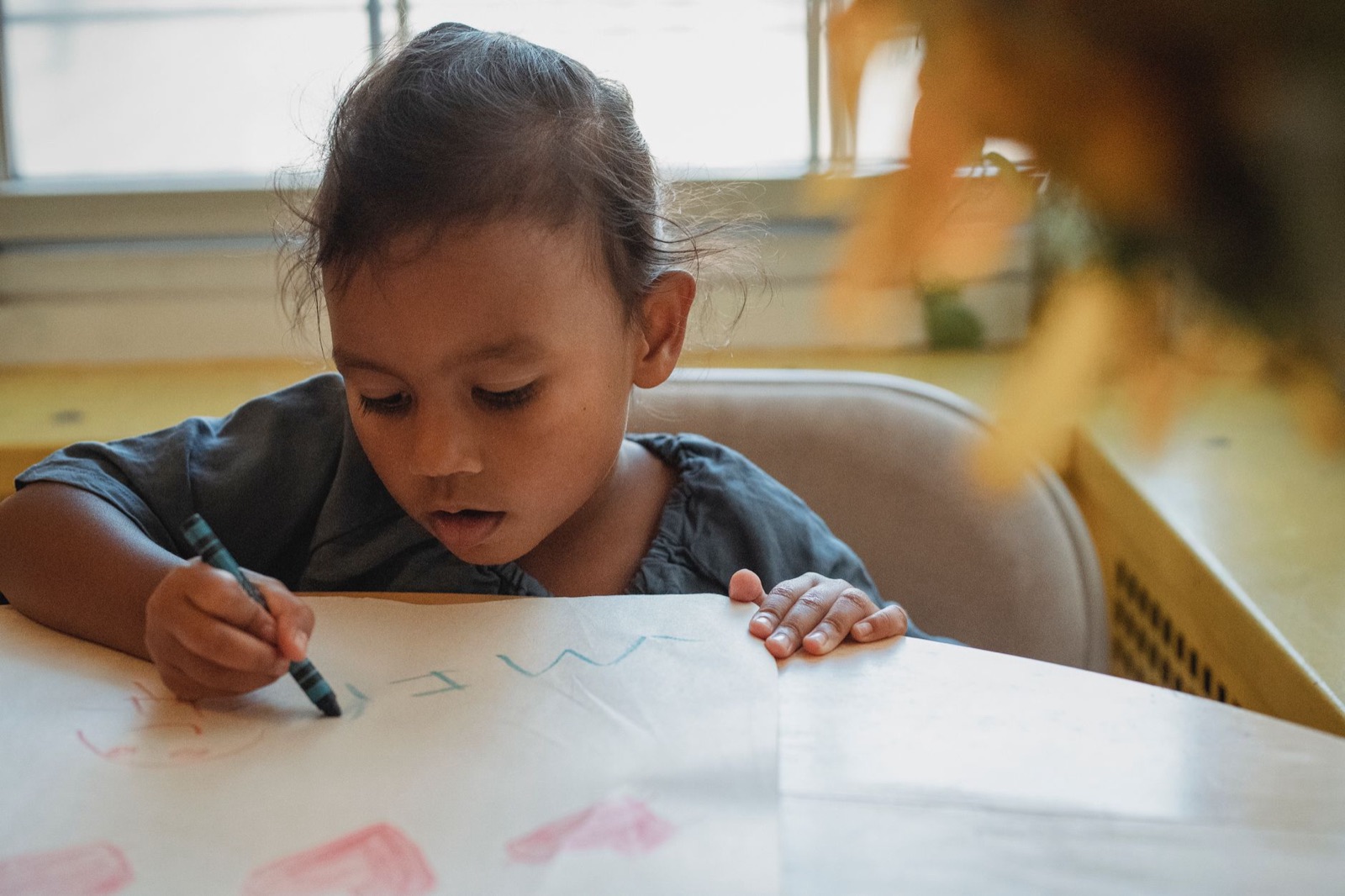
Easy drawing ideas for 3 to 5 year olds that need almost no setup
Drawing activities for little kids at home that start in under a minute, with notes on what to say, what to skip and when to stop.
9 min read