Art Supplies for Kids: A Starter Kit Under ₹2000 or $25
By the Scribblie team · Published · 8 min read
In this guide
- Buy in this order, and stop when you run out
- Paper: the cheap thing that matters most
- Pencils, crayons and markers
- Glue, scissors and a bit of paint
- What to skip, politely
- How the kit changes as the child grows
- Washable, replaceable, forgivable
- Where it lives: storage that gets used
- Whether a tablet belongs in the kit
- A shopping list to copy into your phone
- Common questions
Start with paper, then pencils, then crayons, then washable markers, then a glue stick and safe scissors. That is the order we would buy in, and if the money runs out after the markers, you have still bought most of what a child needs. The rest of this guide explains each choice, what to look for, what to leave on the shelf, and how to store it all so it gets used.
A note on budget: ₹2000 and $25 are roughly the same sort of amount in each country, but prices vary by shop, brand and season, so we will not quote line-by-line prices. Treat the budget as a ceiling, and do not feel you must reach it.
Buy in this order, and stop when you run out
The mistake we see most often (and have made) is buying a big boxed set first. It looks good, it feels generous, and it arrives with forty items of which six get used. A better method is to buy one thing at a time in a sensible order.
- Paper, in volume.
- Pencils and a sharpener.
- Crayons or wax pastels.
- Washable markers.
- Glue stick and child-safe scissors.
- A basic watercolour set with two brushes.
- A sketchbook that belongs to the child.
A child with items one to four will not be bored for a long time. Items five to seven are nice additions, and they open up collage and painting.
Let the child help with choices when they are old enough. A box of crayons chosen by the child often gets used more than the same box chosen by you, even if the colours are the same.
Paper: the cheap thing that matters most
Paper is where a small amount of attention pays off. Many children do their best drawing on a big, plain sheet and their worst on a small, printed page.
For everyday drawing, a ream or a thick pad of plain white A4 paper (or letter-size in the US) is the most useful purchase. It is cheap per sheet, and a child who knows there is lots more will draw freely and not guard each page. Avoid paper that is very thin, because markers will bleed through, and avoid anything glossy, because crayons slide off.
For paint, buy a small pad of thicker paper, sometimes called cartridge or watercolour paper. It is a bit more expensive and worth it, since thin paper curls and tears when wet.
A roll of cheap plain paper, such as lining or kraft paper, is handy for big pictures on the floor and for covering the table. Old newspaper does the table job for free.
Finally, a sketchbook just for the child. A small hardback or spiral-bound book with plain pages feels special, and a child with a sketchbook tends to draw more than a child without one. Do not rule it or write in it yourself.
Pencils, crayons and markers
Pencils. A few ordinary pencils are fine. A softer one (often marked 2B) is easier for young hands, since it makes a darker line with less pressure. A pencil sharpener with a lid saves the floor. A small eraser is useful, though young children tend to prefer starting again to rubbing out.
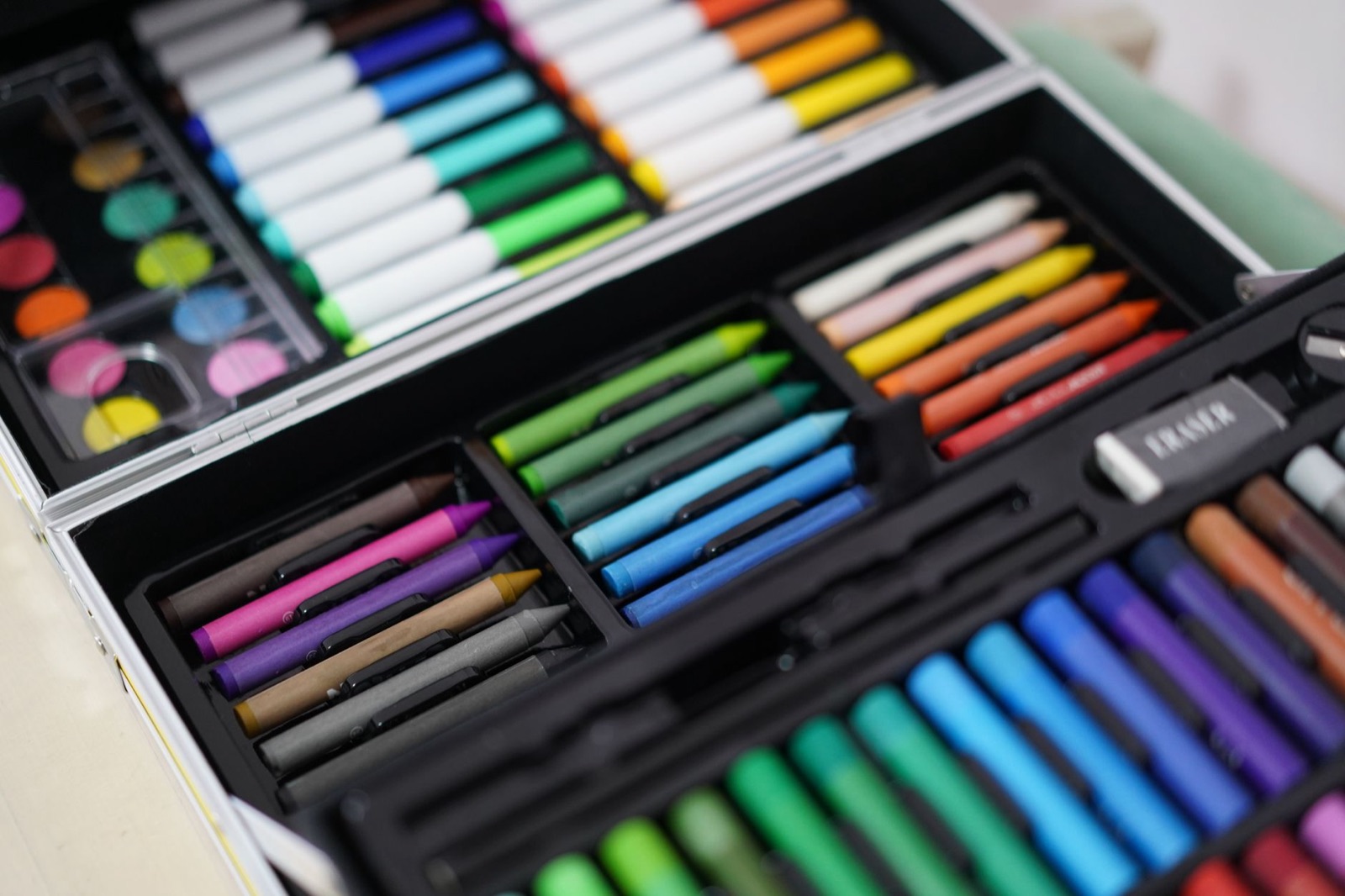
Crayons. A set of twelve to twenty-four wax crayons will do. For toddlers and young children, chunky ones are easier to hold. Thicker crayons are also less likely to snap under a heavy hand. If you can, avoid the huge sets with colours no child ever picks.
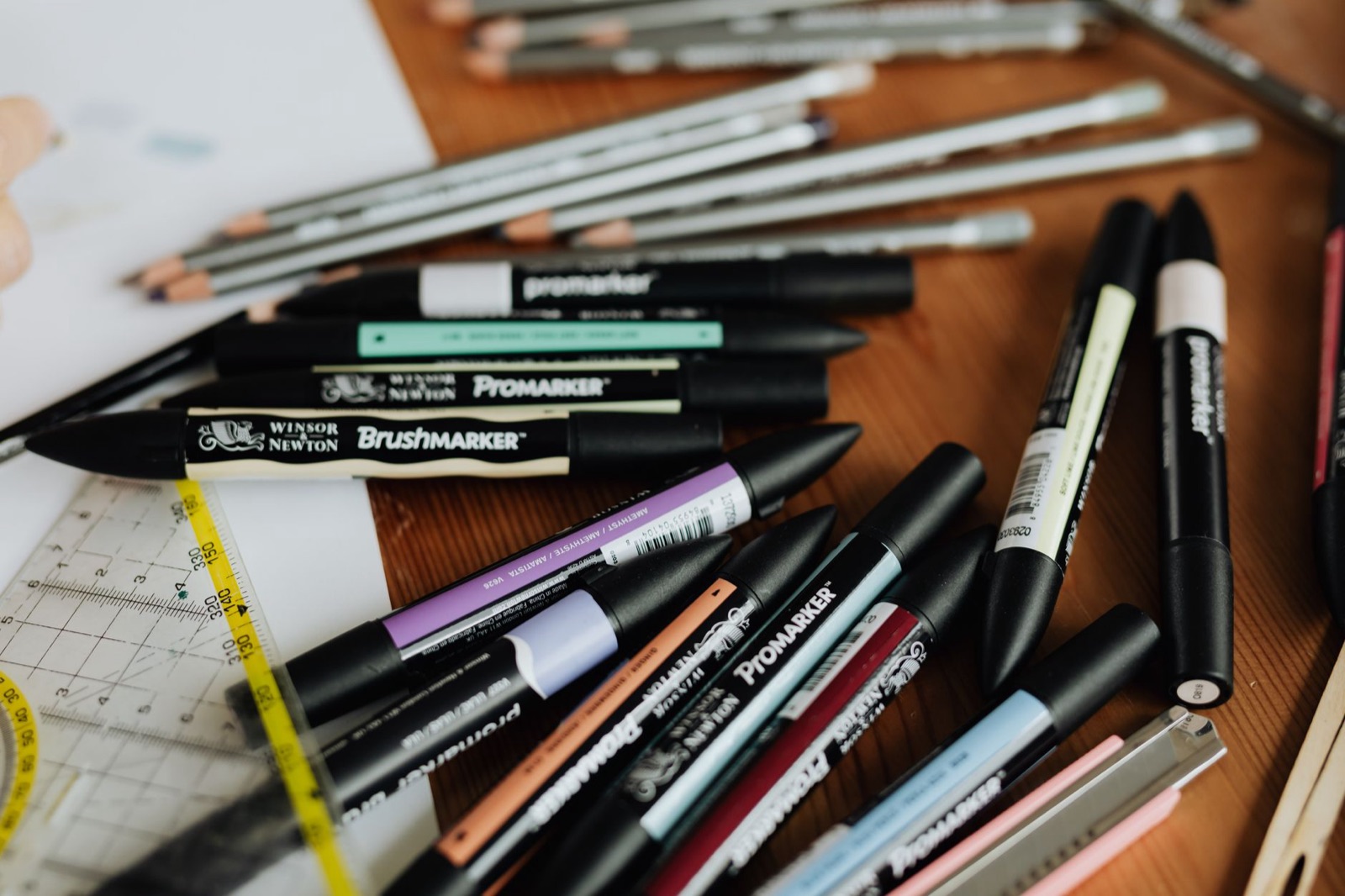
Washable markers. These are the budget item that most earns its place. Look for ones labelled washable, since ordinary markers can stain skin, clothing and furniture for a long time. Test one on a scrap of fabric or a hidden corner before letting a child loose. Put the caps on firmly, as they dry out quickly. A set of eight to twelve is plenty.
Skip fine-tip pens, oil pastels, anything labelled "professional" and gel pens (tempting, and they run out fast), at least at first. You can add them later if a child shows a real interest.
For a toddler, our guide to easy drawing ideas for 3 to 5 year olds suggests simple things to try with just crayons and paper, and the toddler scribble stage piece explains why a toddler's marks look the way they do.
Glue, scissors and a bit of paint
Once the basics are covered, glue and scissors open up collage, which is one of the most forgiving kinds of art. A glue stick is the tidy option, and a small bottle of white school glue is better for heavier things. Both should be non-toxic.
Choose scissors made for children, with rounded tips. Left-handed children need left-handed scissors, which are worth finding because right-handed ones can be frustrating to use in the other hand. Our guide on left-handed kids and drawing covers this and a few other small things. Scissors are always used under an adult's eye for younger children, and put away afterwards.
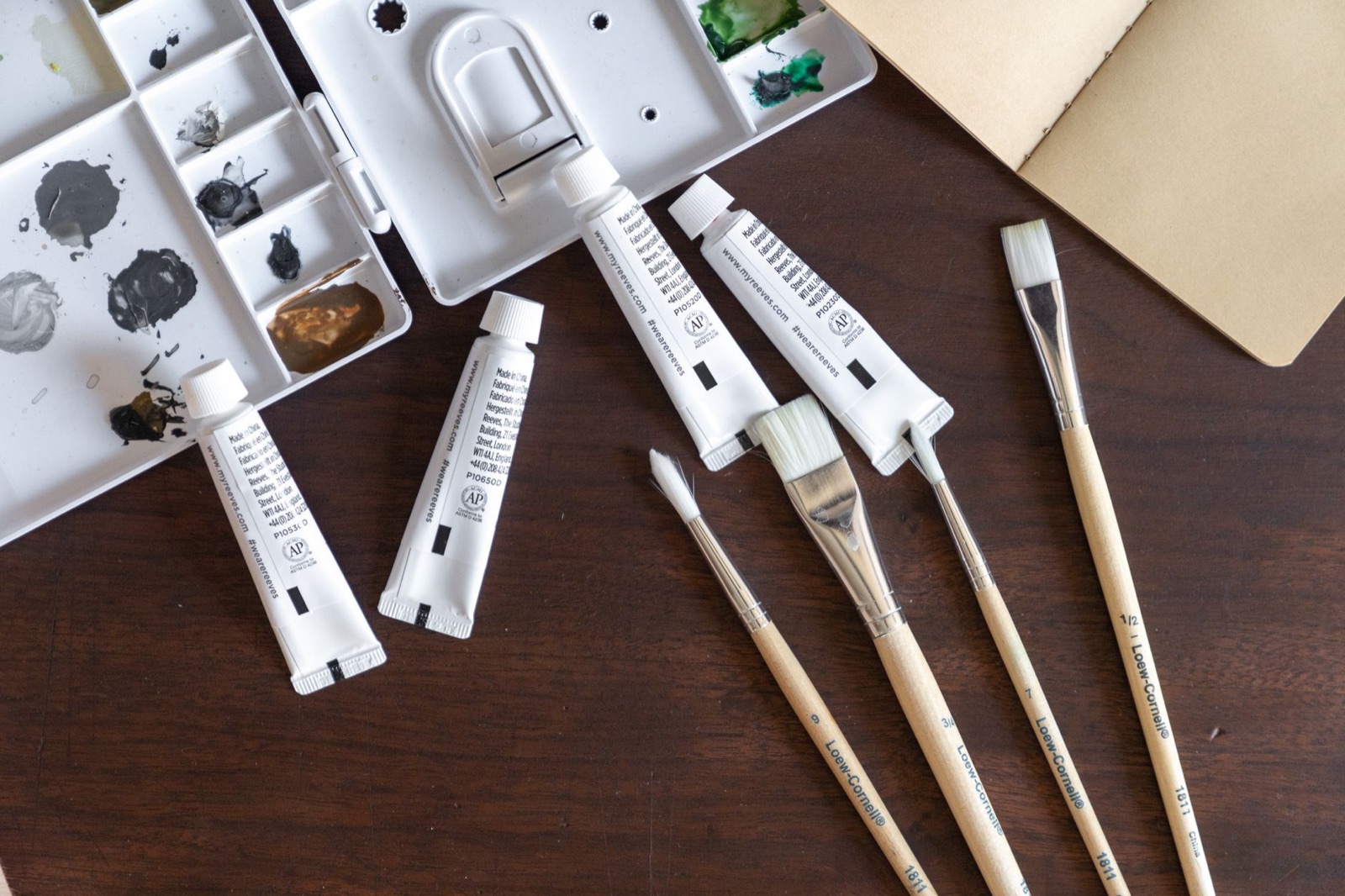
A watercolour set is the most affordable form of paint for most families. A simple pan set of eight to twelve colours plus two soft brushes (one thick, one thin) is plenty. Watercolour is easy to clean up, dries quickly and forgives mistakes. Poster paint is more vivid but messier, and can wait.
Check labels. Look for a "non-toxic" mark and make sure it applies to your country, and be especially careful with any material that a child under three might put in their mouth. We are not able to certify any particular product, so check the label yourself, and keep paints, glues and scissors where small children cannot reach them unsupervised.
What to skip, politely
Some purchases tend to gather dust. We would skip, or at least delay:
- Big all-in-one art cases with lots of plastic trays. They are heavy, and half the contents are novelty items.
- Kits with many tiny parts such as beads, sequins and googly eyes, particularly if a younger sibling is around.
- Glitter, unless you enjoy finding it in the sofa for the next year.
- Colouring books with very fine detail for young children. They frustrate small hands.
- Character-branded sets that cost extra for the licence rather than the material.
On colouring books specifically: they are not bad, and some children love them, especially for winding down. But a plain sketchbook asks a child to make something, and a colouring book asks them to fill something in. If you buy one, pick a book with bold, simple outlines and let the child choose the colours freely. A sky does not need to be blue.
How the kit changes as the child grows
The same kit does not suit a two-year-old and a nine-year-old, and it is worth adjusting before you rebuy.
For toddlers, keep it to chunky crayons, big paper and washable finger paint, with an adult close by. Everything goes in the mouth at some point, so choose non-toxic things and skip anything small. Drawing at this age is about movement and marks, not pictures.
Around four to six, add washable markers, a glue stick, child-safe scissors and a sketchbook. This is the age when children start drawing recognisable things and want to talk about them, so a clear place to put the finished work matters.
From about seven or eight, many children want finer tools: a few coloured pencils for detail, a better eraser, perhaps a ruler or a small set of fine-liner pens. They also start to care about how things look and may get frustrated. A slightly nicer pencil and a good sketchbook go a long way. If they begin to say their drawings are bad, our guide on what to say when a child can't draw may help.
These ages are rough, and children vary a lot. Watch what your child actually reaches for, and buy the next thing based on that, not on the label on the box.
Washable, replaceable, forgivable
Children use materials roughly, and things run out. Think about what you will need to replace, and buy accordingly.
Paper, glue sticks and markers will go first. Crayons and pencils last longer. Scissors, a sharpener and brushes should last for years, if they are put away.
Washable everything is not a luxury. If a child can paint at the kitchen table without a fight over every drop, the whole thing is more fun. Put a plastic cloth or old newspaper down, dress the child in an old shirt, and keep a wet cloth nearby. Our guide on drawing with different materials has ideas for what to try once the basics are in place.
If something goes dry, break or runs out, replace it quietly. Children are quick to notice a dried-up marker and slow to mention it.
Where it lives: storage that gets used
A kit in a cupboard is a kit that does not get used. Put the supplies where a child can see and reach them.
An open box or a few jars works well. Pencils in a jar, crayons in a shallow tray, markers standing cap-up in a cup. A small shelf or a low drawer for paper. A clipboard on a hook is handy for drawing on the sofa or outdoors.
Keep the stock small. Put out a little at a time, and keep the rest in a higher cupboard. Rotate every few weeks. A child faced with everything at once tends to pick the same two things.
Also give some thought to where finished work will go. A string and pegs on a wall, a folder, a box. Our guide to keeping and storing kids' artwork helps you decide what to keep and what to let go.
One safety note: keep anything with small parts, sharp edges or paint out of reach of toddlers, and store scissors in a place where they cannot be grabbed unsupervised.
Whether a tablet belongs in the kit
Some families add a tablet or a stylus to the shelf, and some do not. That is up to you. The paper kit above needs no screen, and a child who has a good supply of paper and pencils will draw happily without one. If you are thinking about a drawing app, our guide to what to check in a drawing app for kids gives the questions worth asking.
A shopping list to copy into your phone
- A ream or thick pad of plain white A4 or letter paper
- A small pad of thicker paper for painting
- A plain sketchbook for the child
- Six to ten pencils, one sharpener, one small eraser
- A box of twelve to twenty-four wax crayons
- A set of washable markers
- A glue stick and a small bottle of non-toxic glue
- Child-safe scissors (left-handed if needed)
- A watercolour pan set and two brushes
- A jar or box to keep it all in
Buy the first five lines this week. See what gets used. Then decide whether the others earn their place.
Common questions
What are the best art supplies for kids to start with?
Plain paper, a few pencils, a set of crayons, washable markers, a glue stick and child-safe scissors cover most needs. Add watercolours and a couple of brushes when your child asks for them. Everything else can wait.
How much should I spend on a kid's art kit?
A modest kit can be put together for roughly ₹2000 or $25, though prices vary by shop, country and season. We would spend more on paper and washable markers than on any boxed set with a long list of tools.
Are expensive art supplies better for children?
Not at the start. Young children use materials quickly and unevenly, and cheaper crayons and pencils are fine. It is worth spending a little more on a few things, such as decent paper and a pencil that is not scratchy, because they make drawing less frustrating.
What should I skip when buying art supplies for kids?
Large all-in-one boxes with fifty items, glitter you will find for a year, and tiny sets of oil pastels or fine pens for little hands are common wastes. Also be wary of sets with many small parts if there is a younger child in the house.
What are the best coloring books for kids?
There is no single best, but books with big, simple outlines suit small hands, while detailed designs suit older children. Many families find a plain sketchbook gets more use than a coloring book, because it invites the child to make something rather than fill something in.
How do I store art supplies so kids actually use them?
Keep them at child height in open containers, such as jars or shallow boxes, with the paper on a low shelf. Show only a few things at a time and rotate. A child who has to ask for every pencil will draw less.
Keep reading
Beyond crayons: drawing materials for kids and what each is good for
Crayons, oil pastels, markers, chalk, watercolour pencils and ordinary pencils, with plain opinions on what each does well, what it does badly and what to buy.
9 min read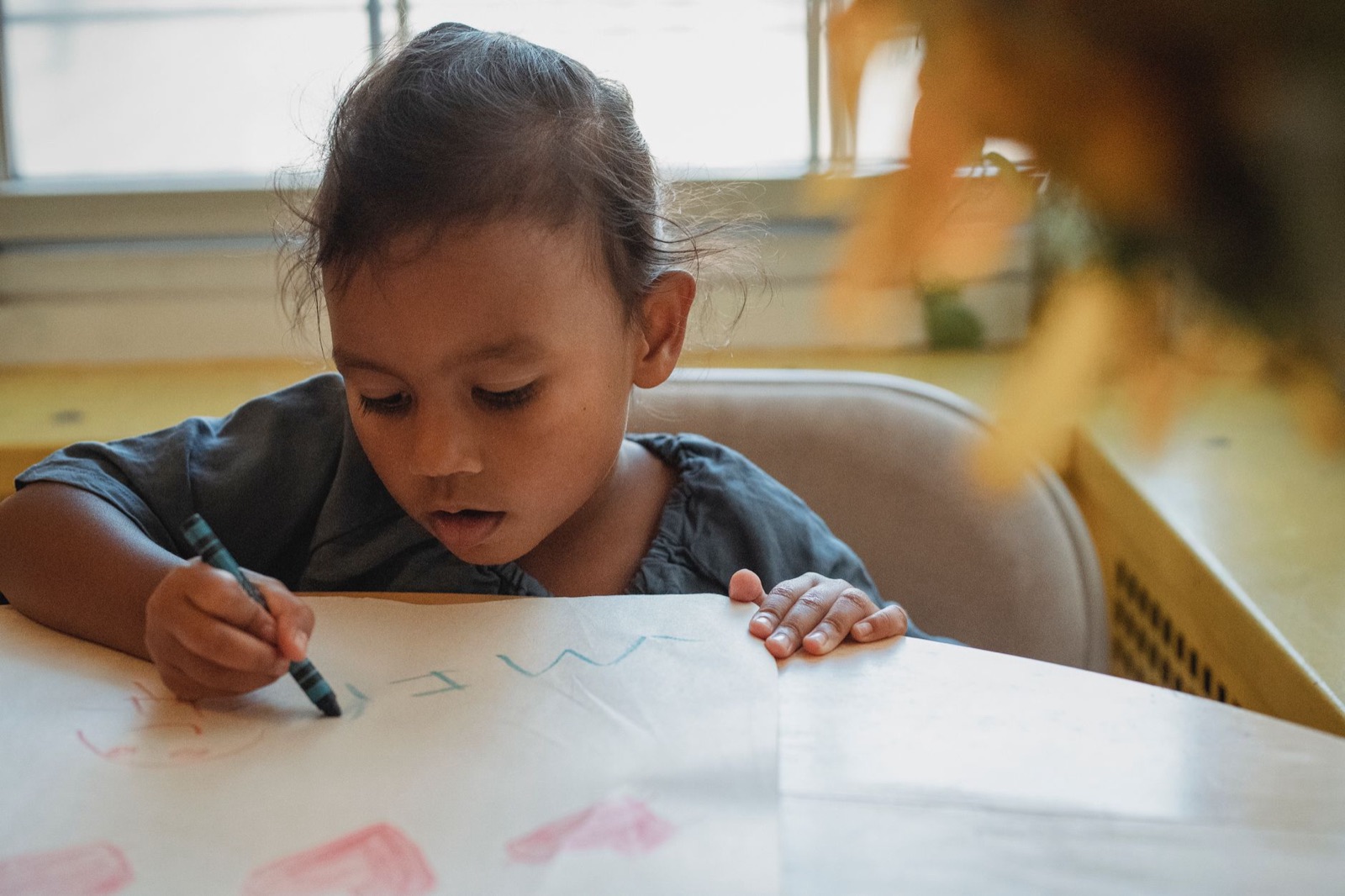
Easy drawing ideas for 3 to 5 year olds that need almost no setup
Drawing activities for little kids at home that start in under a minute, with notes on what to say, what to skip and when to stop.
9 min read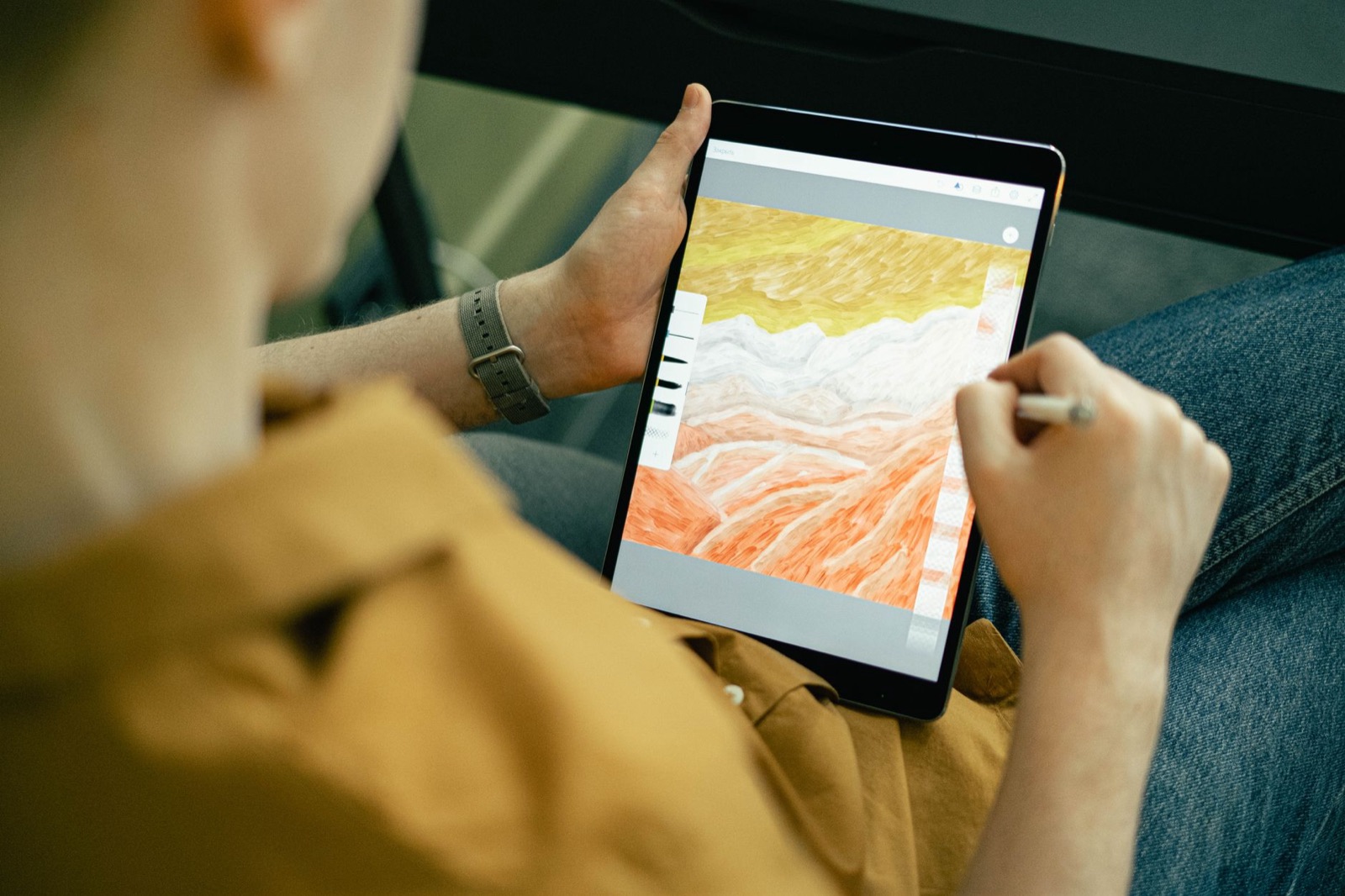
Choosing a drawing app for kids: a parent's checklist
A practical checklist for judging any drawing app for children, plus a ten-minute test you can run on the sofa before your child ever touches it.
9 min read