Bedtime stories for kids built from their own drawing
By the Scribblie team · Published · 8 min read
In this guide
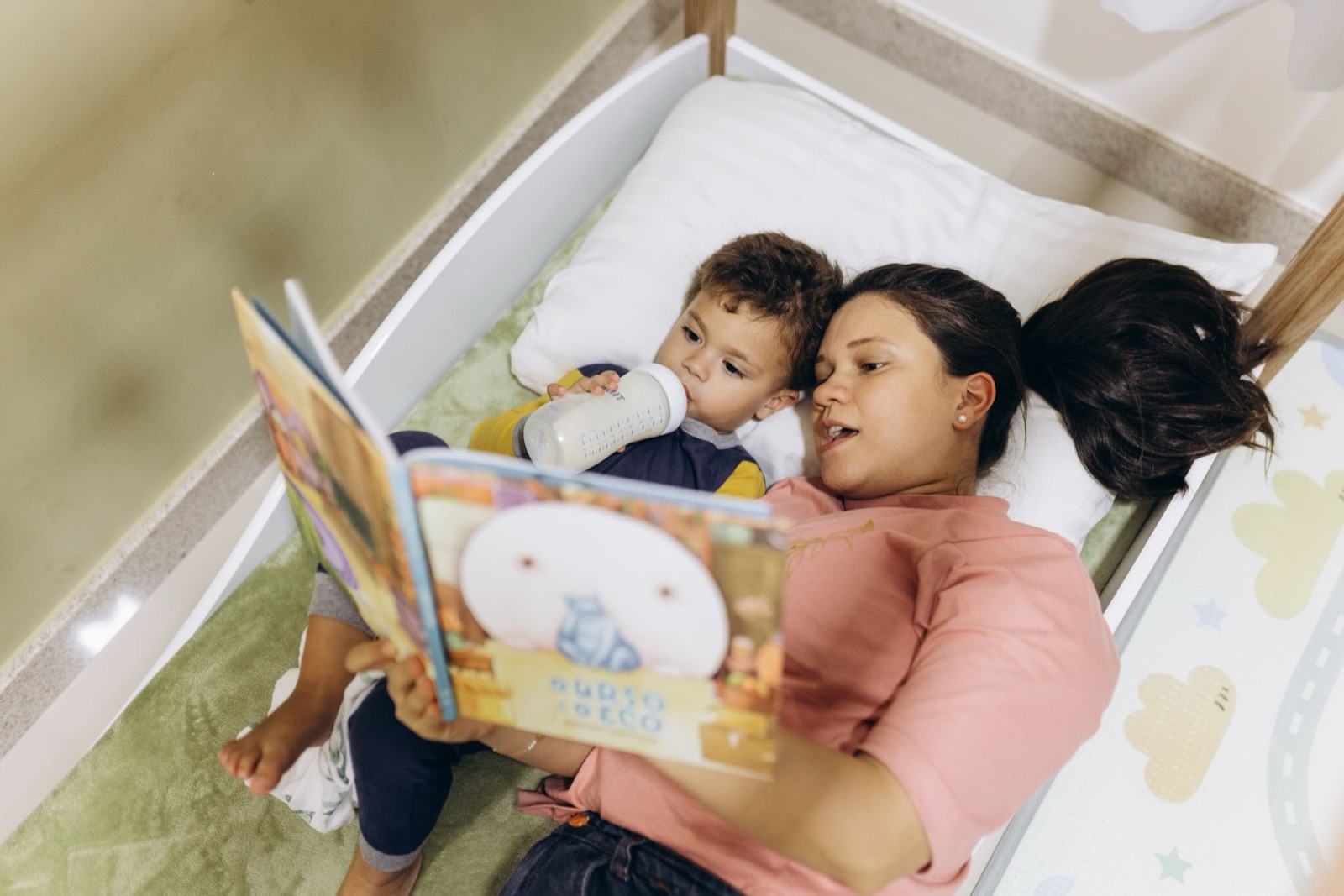
The simplest way to get a bedtime story out of nowhere is to start with something your child drew that day. Draw at dinner, or after, or in the bath-time lull when everyone is calm, then tell the story at bedtime with the drawing propped beside the lamp. A drawing already has a hero, a place and often a problem. All you have to do is slow everything down and make it kind.
Why a drawing beats a blank page
Tired parents have a particular kind of bedtime brain. You are asked for a story and nothing arrives. The usual response is to tell a version of something you remember, which is a shame, because the child has just handed you a better idea.
A drawing does three things for you. It gives you a character your child already cares about. It gives you a setting you can describe without thinking. And it gives your child a stake in the story, because it is theirs. They are being told their own story, and children tend to listen differently to that.
It also saves you from the pressure of being inventive. You do not need to be a novelist, just a quiet narrator with a good prop.
The method: dinner to lights out
Here is how it can go, as a routine you can adapt.
At or after dinner (five minutes). Put out paper and a pencil. Ask your child to draw one thing, the creature, the house, the boat. Do not ask for a scene. One thing is plenty. If they want to give it a name, great, and if not, no pressure. We have notes on that in naming characters kids invent.
Ask two questions. "What does it like?" and "What is it a little bit scared of?" These are the seeds. A creature that likes puddles and is scared of the dark has a whole story in it.
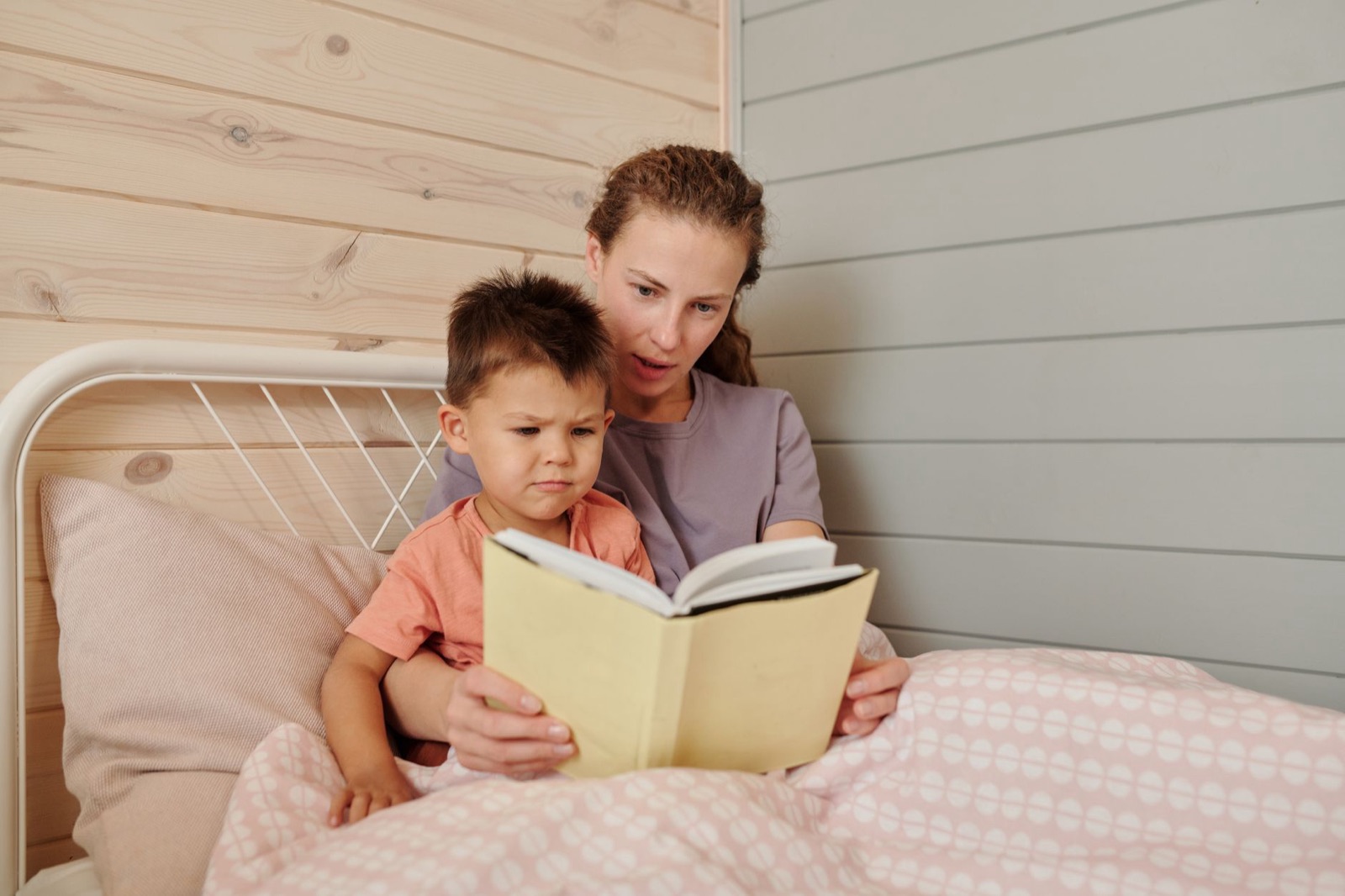
At bedtime (five to ten minutes). Prop the drawing up where your child can see it. Lower your voice. Tell the story, using their answers. When you reach the part about the dark, slow down.
Close. End with the character going to sleep. Say goodnight to the drawing if your child wants to. Turn the light off.
That is all. It works best when it is the same every night, which makes it a ritual, and rituals are what many children find settling.
Keep it calm: the shape of a sleepy story
A daytime story builds, and a bedtime story winds down, like a staircase.
Start with something lively but small: a creature with a wish. Then a gentle problem, such as being lost, or a bit cold, or not able to sleep. Resolve it kindly, with help from someone warm. And then make the pace slower and the sentences shorter, until the last few lines are almost a lullaby.
A few things that tend to help:
- Use a repeated line the child can join in with, such as "and the little boat rocked, rocked, rocked."
- Describe things in threes where you can, but only when it feels natural.
- Soften verbs. "Tiptoed" beats "raced" at nine o'clock.
- Keep villains offstage, or turn them into someone who just needs a nap.
Some children love scary stories, but at bedtime we would save the thunder for the morning.
Your voice is half the story
You do not need to do voices. In fact, one slow, soft, slightly flat voice is usually better than a cast of characters, because performance wakes children up. If you want a variation, make the character a notch quieter than you, almost a whisper.
Pauses do a great deal of work. After "and then Marmalade opened the door and saw..." wait a beat. A child who is half asleep will often fill the gap with one drowsy word, and you can use it.
Older children and siblings
A seven-year-old may think a story about a three-legged orange creature is for babies. You can raise the stakes slightly without raising the volume: a map, a secret, a small mystery that is solved by morning. Let the older child draw the map.
If there are two children in the room, give each one the same job as above, one decision each, and alternate who goes first. It keeps arguments down, and a story invented by two sleepy people tends to be wonderfully odd.
Three templates you can reuse
When your brain is empty, borrow a shape. Each of these can be filled in from any drawing.
The Lost and Found. Your character is a bit lost. They meet three helpers in turn, each of whom offers a small piece of help. By the end they are home and tucked in. Good for ages around three to six, and it is easy to extend by adding another helper.
The Can't-Sleep. Your character cannot sleep. They try things: counting, a drink of water, listening to the rain. Each attempt makes them a little sleepier. By the end the story has put them to bed, and with luck the listener too.
The Visit. Your character goes to see someone, such as the moon, a grandmother, a very old tree. They bring a small gift, they are given a small gift, and they come home. It works well for children who like predictable structure.
If you want something with more bite, our post on story-starter drawing prompts has sparks for daytime, and how to help your child tell stories shows how to hand the pen to them.
A short example
This is an illustration of how a story might go, built from an imaginary drawing of a round orange creature with three legs and a scarf. It is not a real child's story, just a model for the shape.
Once there was a creature called Marmalade, who had three legs and a very long scarf. Marmalade loved puddles. Every evening, Marmalade stepped in the biggest puddle on the hill, and splashed, and splashed, and splashed.
But one evening the puddle was gone. The sun had been out all day, and the hill was dry. Marmalade felt a little bit cold, and a little bit sad.
So Marmalade went to find it. First Marmalade asked a sleepy owl. "I don't know where the puddle went," said the owl, "but you could ask the wind." Marmalade asked the wind. The wind said, "Follow me," and blew very gently, down, down, down the hill.
And at the bottom of the hill, in the shade of a big, kind tree, there was the puddle, small and shiny, waiting. Marmalade stepped in. Splash. Just one, very quiet splash.
Then Marmalade wrapped the scarf around all three legs, and curled up beside the puddle, and the moon came out, and the puddle held the moon, and Marmalade went to sleep.
That is under two hundred words and takes about two minutes to read aloud. You can stretch it with a second helper or shrink it to a few lines.
Letting your child steer without waking them up
A common problem. You want your child to contribute, but their ideas are exciting, and an excited child does not sleep.
One way around it is to use a "pass the pebble" system. Give your child one decision per story, and make it a small one. "Is the owl wearing a hat or a scarf?" "Is it raining or snowing?" You are letting them choose the colour of the curtains, not rewrite the plot.
If they come up with something dramatic, such as a volcano, you can absorb it. "The volcano was fast asleep too, snoring very gently." You have honoured the idea and cooled it down in one sentence.
What if you are too tired to invent anything
Some nights you will have nothing. That is allowed. Here are three rescues, in order of effort.
The lowest effort is to read the drawing aloud. "This is Marmalade. He has three legs. He is wearing a scarf. It is nearly bedtime for Marmalade." Then stop. It is a story in four sentences, and some children are perfectly content with it.
The next is to ask the child to tell it, with you as the sleepy audience. You say "and then?" in a soft voice, and the child does the work. It is a quiet way to let a child tell stories without taking over, and many children are surprisingly good at it last thing at night.
The third is a story you already know, with the drawing swapped in. Take the shape of a familiar tale about a lost animal who finds its way home, and put Marmalade where the animal was. Nobody is checking your originality.
When they ask for the same one again
Many children want the same story night after night. It can feel like a trap, but it is common, and it often gives children comfort. They know what is coming. Predictability is the point.
If you are going slightly mad, vary one small thing. A different helper, a new colour of scarf. Many children will spot it at once and correct you, which is its own pleasure. If they do not, you have a story that is changing quietly, and nobody is hurt.
If your child is anxious at bedtime in a way that worries you, perhaps with persistent fears, nightmares or trouble settling over a long stretch, it is worth mentioning to their doctor. A story is a lovely part of a routine, and it cannot do everything.
Keeping the stories
You will forget most of these by Thursday. If you would like to keep one, jot three lines on the back of the drawing the next morning. Date it. Over a year you will have a small, odd, precious collection. Our guide to keeping and storing kids' artwork has ideas for how to store them without the pile taking over the house.
Some families record a story on a phone and play it for a grandparent who lives far away. If you do, keep the recording somewhere you control and ask your child first.
One optional helper
We are building an app called Scribblie, which is not yet in the stores. It is made for children around five to eight, and a child can draw a character that wakes up, says hello and plays a short adventure with them. We would not put it in the bedtime hour, since we think the last part of the evening is better without a screen, but some families may find it a pleasant way to meet the character in the daytime, before the story at night. The friend's replies come from AI models and can sometimes be imperfect. How Scribblie works has the whole picture.
Tonight
Ask for one drawing. Ask what it likes and what it is a little bit scared of. At bedtime, prop it up, lower your voice and tell a story in which it is found, helped and put to bed. Keep it under five minutes. If your child falls asleep in the middle, that is the best review you can get.
Common questions
How do I make up a bedtime story for my child?
Start from something your child made or noticed that day, like a drawing, and give it a small wish and a gentle problem. Then keep the pace slow, soften the ending and let the story wind down rather than build up.
What makes a good short bedtime story for kids?
A good one is quiet, repetitive and short enough that you can tell it half asleep. A familiar pattern, a kind main character and an ending where everyone is safe and sleepy tends to work well.
How long should a bedtime story be?
Five to ten minutes is plenty for most families, and many stories work in three. Length matters less than calm, so stop when your child's eyes start to close.
What if my child wants a scary story at bedtime?
Some children love a bit of spookiness, and a mild one can be fine. If it keeps them awake or leads to worry, move the exciting stories to daytime and use calmer ones at night.
My child keeps asking for the same story. Is that okay?
Yes, it is very common and many children find the repetition comforting. If you are bored, change one small detail each night and see whether they notice.
Can I make bedtime stories without any screens?
Easily. Paper, a pencil and your own voice are all you need, and keeping the screen out of the last hour is a choice many families make.
Keep reading
Storytelling for kids: how to help your child tell stories without taking over
The hard part of helping a child tell a story is closing your own mouth. Here are the questions, the story spine and the small rituals that give the story back to them.
8 min read
Kids naming characters: why you should always ask what their drawing is called
Your child's creature is called Splonk, or Mr Toast, or Nothing. Why asking for the name is one of the nicest questions you can put to a young artist, and what to do with the answer.
8 min read
How Scribblie Works: From a Drawing to a Friend Who Talks Back
A plain-English walk through Scribblie, the app we are building: how a drawing becomes a friend, what it remembers, what grown-ups control and where it can go wrong.
8 min read