Story-starter drawing prompts: draw first, tell the story after
By the Scribblie team · Published · 9 min read
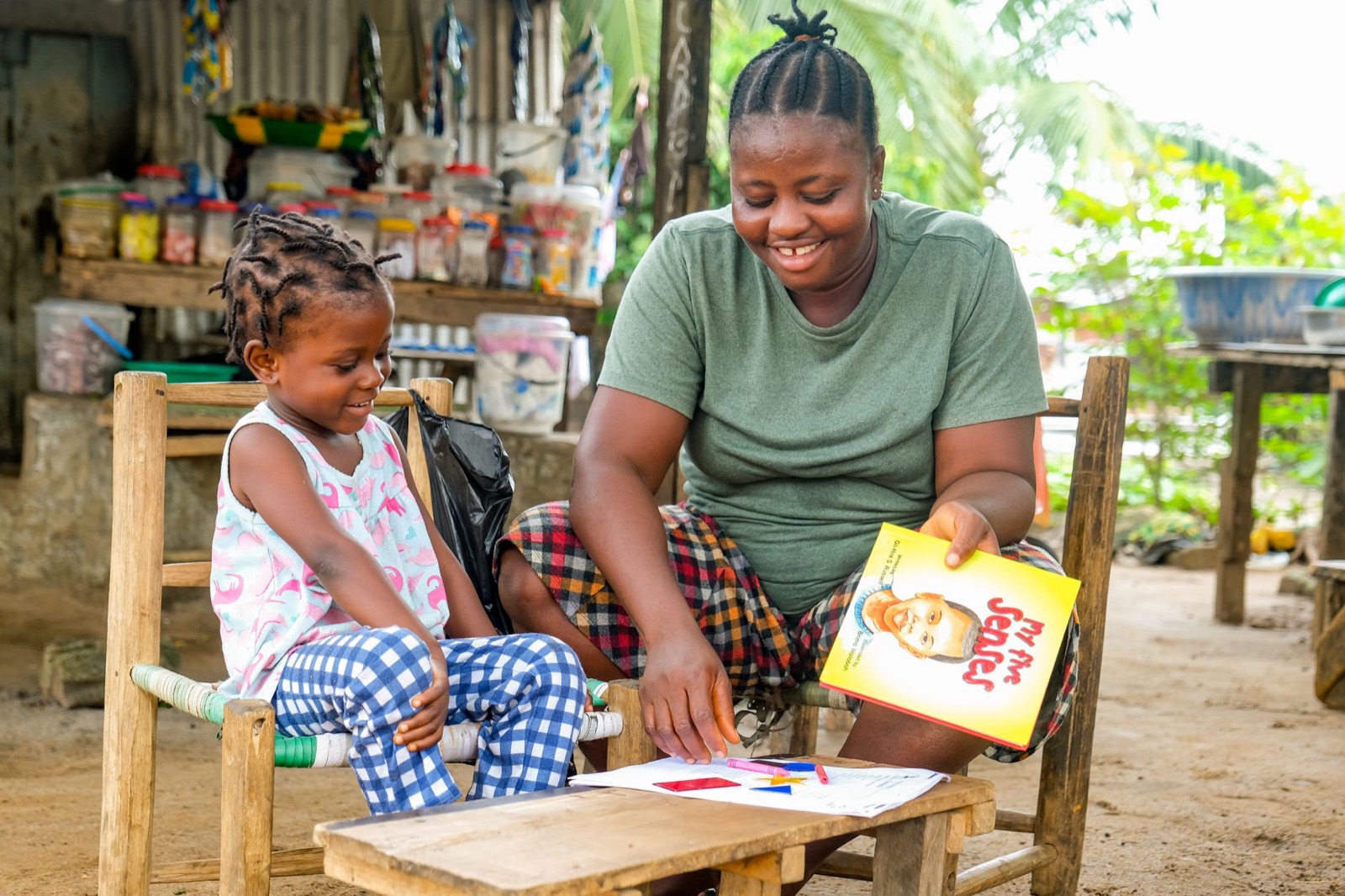
In this guide
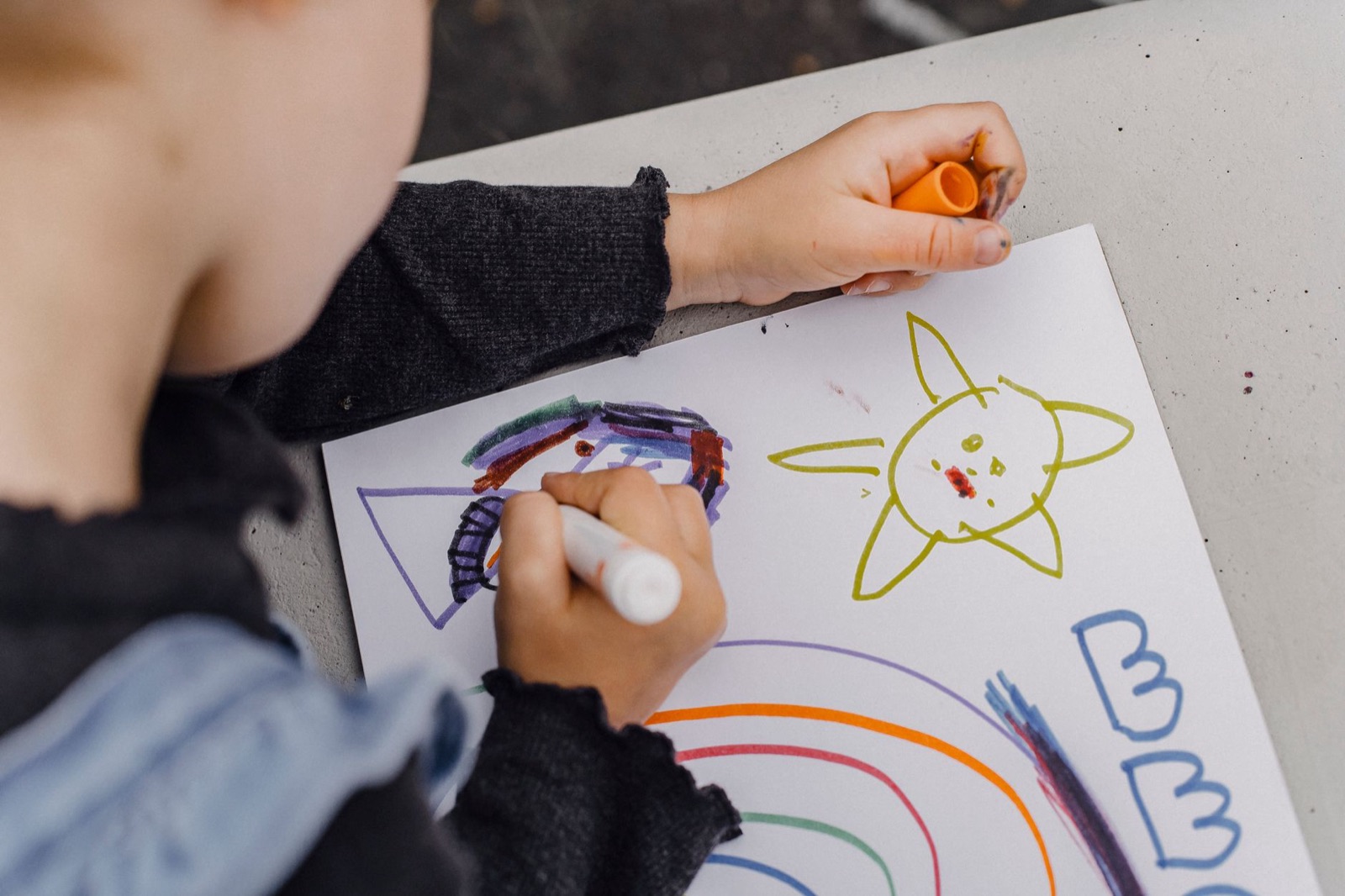
The usual order is tell a story, then draw it. Try reversing it. Let a child draw something first, with no story attached, and then ask about it. The drawing gives them a place to start, a thing to point at, and a reason to keep talking, and they do not have to come up with a plot from an empty head.
Below are five questions to ask, a six-line spine to hang a story on, a few illustrative scripts and a list of things we would avoid. It is meant for children from about four to ten, and works with a single child or a small group.
Why draw first
Telling a story from nothing is hard. Many adults freeze when asked to "tell a story", and children do the same. A drawing changes the question from "what is your story?" to "who is this?", which is much easier to answer.
While the child is drawing, they are also thinking. They are choosing a character, a place, a mood, and none of it is being tested. By the time the picture is finished, they have already done much of the invention, and the story is usually sitting just below the surface.
Hands help too. A child who is fidgety or anxious about talking often finds it easier to do so while holding a crayon. You may notice that they give more detail to the picture while telling, adding a window or a tail as the story gets going. Let them. The drawing and the story are developing together.
We are not claiming this improves anything measurable. It is simply a good way to spend twenty minutes, and children tend to like it.
The five questions
After the drawing is finished, ask the following questions, in roughly this order, one at a time. Do not use all of them. Stop when the child is off and running.
Who is this? A name, a type of creature, anything. If the child says "I don't know", offer two silly names and let them pick one or reject both.
Where are they? The drawing may answer it. If it does not, ask about the weather, the time of day, or what the ground feels like. Place gives a story its air.
What do they want? This is the engine of the whole thing. A character who wants something has a reason to move. It can be tiny: a biscuit, a friend, a quiet corner.
What gets in the way? A story needs a problem. Ask it lightly: "Uh oh. What's stopping them?" Children are very good at problems, and often enjoy making them worse.
What do they do about it? The child gets to solve it, which is where they feel most clever. Accept any answer. A strange solution is usually the best part.
You can add a sixth if it is going well: "And how do they feel at the end?" It gives the story a landing.
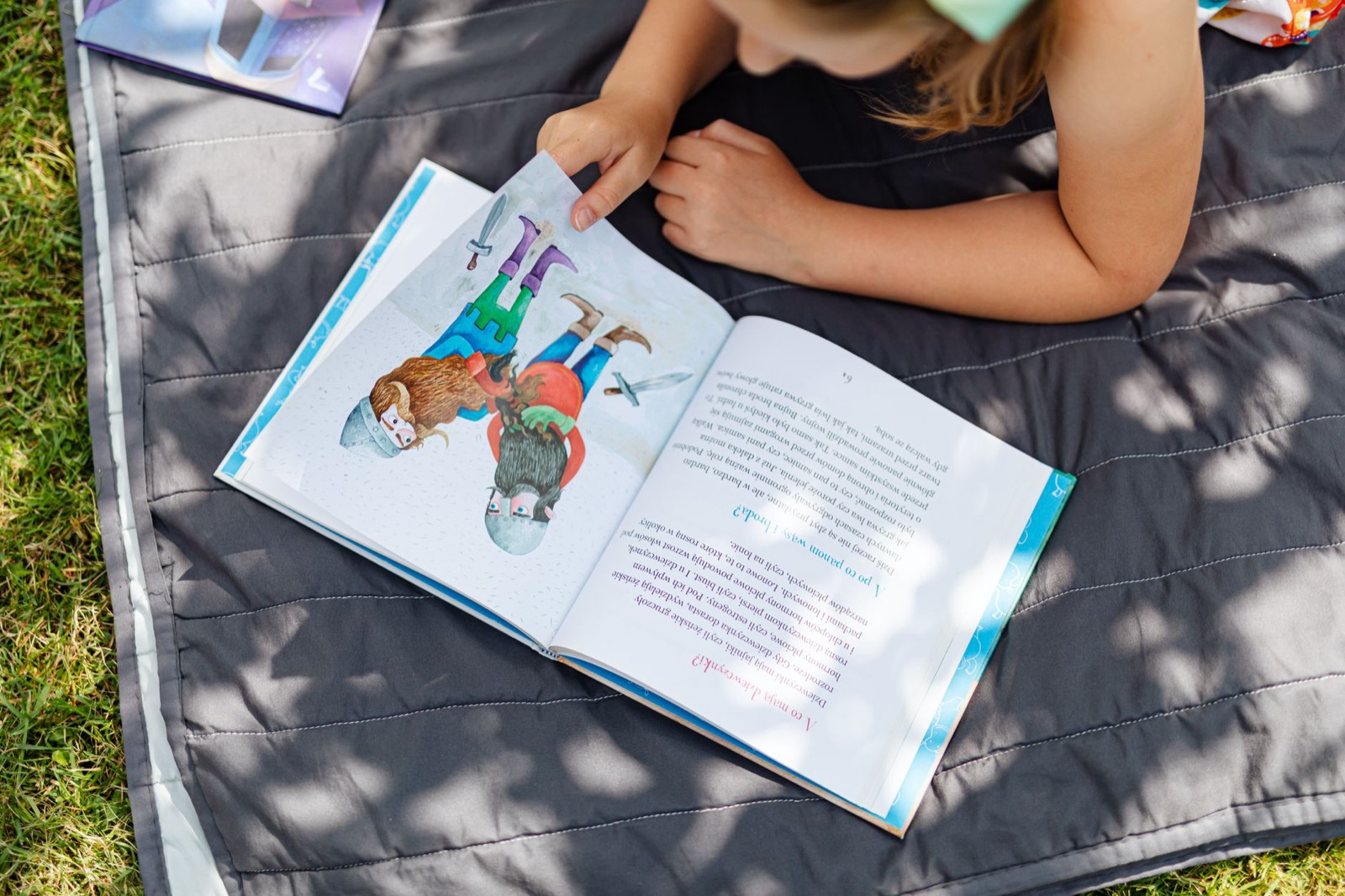
A six-line story spine
If your child likes a bit of structure, or wants to tell a longer tale, the story spine is a gentle skeleton. Read it as a set of sentence openers for the child to finish.
Once upon a time there was... The character. Every day they... The routine. Until one day... The change. Because of that... The first result. Because of that... The next result. Until finally... The ending.
Sit with your child and let them fill in the blanks about the drawing. A typical exchange might go like this (illustrative, not a record of a real conversation).
Parent: "Once upon a time there was..." Child: "A giraffe named Pickle." Parent: "Every day Pickle..." Child: "Ate the leaves from the very top." Parent: "Until one day..." Child: "A little bird sat on his head and wouldn't leave." Parent: "Because of that..."
From there, a child will often keep going without being prompted. If they stall, offer a choice rather than an answer: "Did Pickle get cross, or did he get curious?" Repeating "because of that" makes each event cause the next, which is what turns a list of things into a story.
For younger children, use only the first three lines. Four-year-olds rarely need to get to "finally". A story that stops at "until one day a very large hat arrived" is a complete work of art.
What it sounds like in practice
Here is another illustrative scene, this time with a younger child and a looser drawing. Again, this is an invented example to show the rhythm, not a transcript.
Parent: "Tell me about this one." Child: "It's a house." Parent: "Who lives there?" Child: "A cat and a bear." Parent: "What do they want?" Child: "Pancakes." Parent: "Uh oh. What's stopping them?" Child: "The bear ate the flour."
Notice what the parent does: no new ideas, just the child's own words repeated, the next simple question, and some space. If the child had said "I don't know" at any point, the parent might have offered "was it a big problem or a tiny one?" and waited.
The parent does not correct anything or try to make it make sense. A bear who eats flour and a cat who needs pancakes is already a story with stakes. Our guide to how to help your child tell stories goes further into this approach.
Six story-starter drawing prompts
Sometimes the best story starts with an unusual drawing. Try these as prompts when your child wants something to draw, and then use the five questions on the result.
Draw a door that does not belong where it is. A door in a tree, in the sea, in the ceiling. Who would use it?
Draw something that has just been lost. A glove, a shoe, a tooth. Where did it end up?
Draw a creature that is far too big for its home. A whale in a bath, an elephant in a teacup. How does it get out?
Draw two characters who should not be friends. A mouse and a fox, a dragon and a knight. What brings them together?
Draw a map with an X on it. Who made the map, and what is at the X?
Draw the moment just before something goes wrong. A cake on the edge of a table, a ladder leaning on a roof. What happens next?
If you are looking for more ideas of this kind, the drawing prompts for kids by age list has many that suit this method.
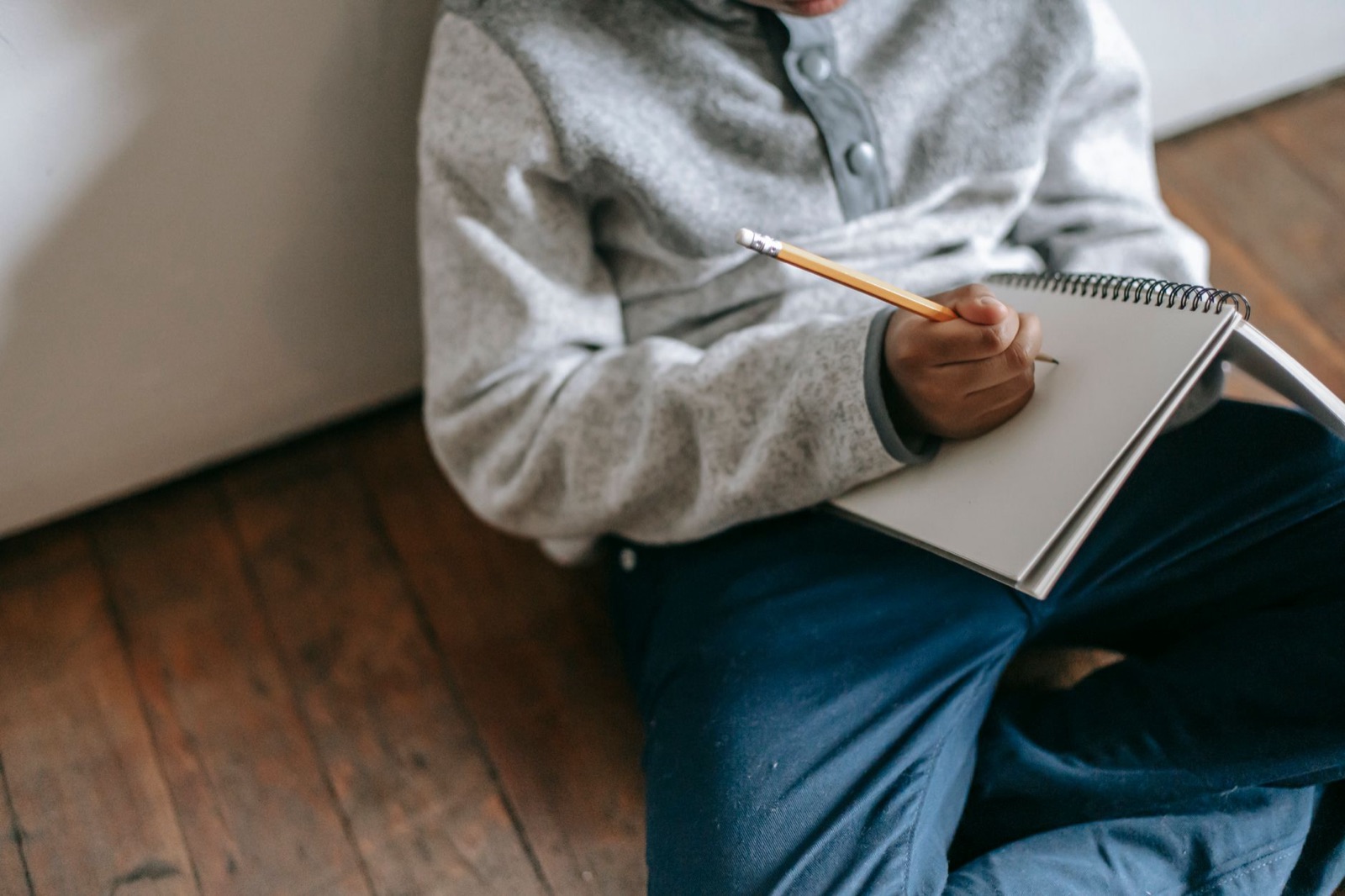
Adapting for different ages
Three- and four-year-olds will mostly describe what they see. That is fine and is already a form of storytelling. Ask what the character is doing right now, and what they are feeling. A one-sentence story is a story.
Five to seven is the golden age for this game. Children have a lot of imagination, a growing vocabulary, and little self-consciousness. Use the five questions and let them wander. If you want to capture a favourite, write the story down in their words, including the odd grammar.
Eight to ten may want more control. Offer the spine as a challenge, or ask them to tell the story as a series of three panels. Some children of this age enjoy writing the story themselves and using you as a first reader. Others prefer to keep it spoken. Either is fine. We would never insist on turning a verbal story into writing.
For a group, such as siblings or a classroom, try passing the story around. Each child adds one sentence, starting from one drawing. It tends to spin out of control in a very satisfying way.
What we would avoid
A few habits can quietly take the story away from the child.
Do not fix the plot. If the story has no ending, that is often fine. If it has a violent ending, that is often fine too, as children explore the edges of things through stories. If you want to guide, do it with a question, not a correction.
Do not rush to write it down or turn it into something. If a child says, "Can you write that?", yes. Otherwise, let the story exist in the air. Stories that are immediately recorded can feel like they are being assessed.
Do not ask "what is it supposed to be?" Our piece on how to praise a child's drawing covers better openers.
Do not interpret the drawing. A scary picture does not mean a scared child. A drawing alone proves nothing about feelings, and if you are worried about something, a chat with the child's teacher or doctor is a better step than psychoanalysis at the kitchen table.
Keeping the stories you like
Not every story needs to survive, but a few deserve it. The simplest method is the back of the drawing. Turn the page over, and write the story in the child's words, as close as you can manage, with the date. Do not tidy the grammar. "Pickle the giraffe eated all the top leaves" is far better than anything you could improve it into, and in ten years it will be the line the family quotes.
If a story gets going over several sessions, staple a few drawings together into a booklet. One drawing per scene, with a sentence under each. Children treat a stapled booklet with a seriousness that surprises their parents, and a character who appears in three booklets becomes something like a family member. Our guide on naming characters kids invent covers what to do when a name sticks.
And once in a while, read an old story back to the child, in the original words. Watch their face. Most children are delighted to find out that they were funny, and that the funny thing was kept.
Letting the drawing talk back
Some children find it easier to tell a story when the character does the talking. Hold the drawing in your hand, give it a voice, and ask it questions. "I am Pickle the giraffe. Who are you? Why are you looking at me like that?" Children will answer on the character's behalf, and some of them find it far easier than answering as themselves.
This is the idea behind Scribblie, which is not yet in the stores but is coming to the App Store and Google Play. A child draws on paper and takes a photo, and the drawing wakes up, says hello and asks for its name. The child talks to it by voice, and it answers in its own voice and remembers small things such as the child's first name. Its replies are generated by AI models, so they can sometimes be imperfect. It is the same talking-drawing trick, with the character answering back on its own. You can read more in how Scribblie works. It does not replace the paper-and-pencil version, which needs nothing but a pencil and works anywhere.
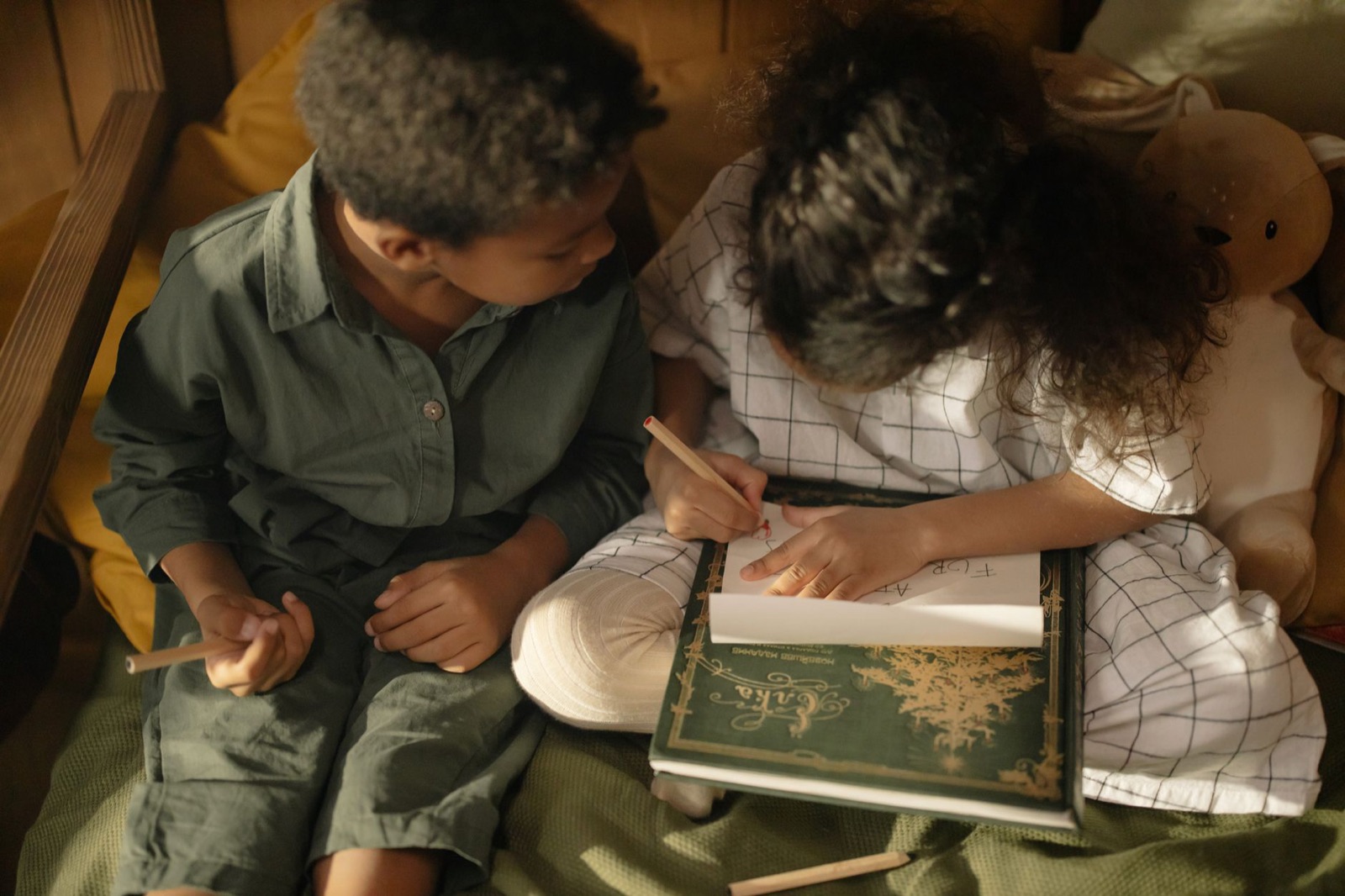
Try it tonight
Hand your child a piece of paper and say, "Draw someone who is about to have a very strange day." Let them take as long as they like.
When they are done, ask only one thing: "What does this person want?" Then listen.
Common questions
How do I help my child tell a story from a drawing?
Ask open questions about the drawing, one at a time, and write nothing down unless they want you to. Start with who is in it, then what the character wants and what gets in the way. Let silence do some of the work.
What is a good story structure for kids?
A simple spine works well: once upon a time, every day, until one day, because of that, because of that, until finally. It gives a child a shape without telling them what to say. Most children find the "until one day" line the most exciting.
Why draw before telling a story?
A drawing gives the child something concrete to look at and point to, so they do not have to invent from nothing. Many children find it easier to talk about a picture than about an idea in their head. It also keeps their hands busy while they think.
What if my child just gives one-word answers?
Try making it a guessing game, add a silly option, or let the character speak rather than the child. "What would the dragon say if I knocked on his door?" is easier than "what happens next?" It also helps to try again another day.
How do I get shy kids to tell stories?
Offer a drawing as the speaker. Puppets, soft toys and drawn characters can say things a shy child will not say as themselves. Keep the audience small and the pressure low.
Should I correct a child's story if it does not make sense?
We would not. Stories at this age often jump and loop, and that is part of what makes them lively. Ask a curious question instead, such as "how did he get from the forest to the moon?"
Keep reading
Drawing prompts for kids, sorted by age (3 to 12)
Sixty-odd drawing prompts sorted into four age bands, with the reasoning behind each so you can invent your own when these run out.
9 min read
Storytelling for kids: how to help your child tell stories without taking over
The hard part of helping a child tell a story is closing your own mouth. Here are the questions, the story spine and the small rituals that give the story back to them.
8 min read
A 30-day drawing challenge for kids (that survives day 12)
Most daily drawing challenges die around day twelve. Here is a 30-day plan designed around that, with themes by week and an exhibition at the end.
9 min read