Storytelling for kids: how to help your child tell stories without taking over
By the Scribblie team · Published · 8 min read
In this guide
The best way to help a child tell stories is to ask a small question, then be quiet for longer than feels comfortable. Most of us, given a pause, rush in with the next idea ourselves. A five-year-old will usually get there on their own if you give them four or five seconds of silence and a face that says you are listening. The rest of this guide covers what to ask, what shape to offer and how to keep what they say.
Why we jump in (and why it backfires)
You start with good intentions. Your child says, "There was a dog." You say, "And the dog was called Biscuit and he lived in a big house." You are being generous. You have also, within ten seconds, stopped it being their story.
It is a very ordinary thing to do. Adults are fluent, fast and a bit anxious about silence. Children are slower because they are choosing words, remembering what came before and checking that you are still paying attention.
So the first rule is boring but worth repeating: if you would not interrupt a friend who was telling you about their holiday, do not interrupt your four-year-old. You are allowed to nod, to say "mm" and to look worried when the dog is in danger. That is your whole job at first.
Questions that open a story up
Closed questions get one-word answers. "Was the dog nice?" Yes. Open ones give the child something to build.
Some that work for a wide range of ages:
- What was the dog doing when the story started?
- Where were they going?
- What did they want?
- Then what happened?
- What did they do about it?
- How did they feel? (and then, later, how did the other character feel?)
A useful rule is to stay one step behind the child. Ask about what has already been said, not what you would like to happen. "He found a key. What does it open?" is better than "Maybe the key opens a treasure chest?"
We keep a longer list of prompts for working from a picture in questions to ask about your child's drawing, and many of them work just as well for stories.
A four-beat story spine
Some children get lost in the middle. A simple skeleton can help, and it works for ages from about four upwards. We use four beats.
- Someone. Who is it, and where are they?
- Wants. What do they want, or what goes wrong?
- Tries. What do they try? (Aim for two attempts. The first usually fails, which is where the fun is.)
- Ends. How does it finish, and how is everyone feeling?
You can write the four words on a scrap of paper or hold up four fingers. Children will often fill in each beat out loud and then tell it all in order, without you touching the content at all.
You may recognise this as a cousin of the classic "once upon a time, every day, until one day, because of that, finally" ladder that many writing teachers use. Ours is shorter on purpose. Four beats fit on a hand.
What it looks like at different ages
These are illustrations, not milestones. Children go at their own speed.
Around two to three. The story is a scene, usually with toys. "Teddy sleeping. Shh." There is no plot to speak of, and that is fine. You can add a gentle prompt: "Is Teddy dreaming?" Often the answer will be a surprise.
Around three to four. Stories begin to have a "then." A typical one might have a bear going to the shops, buying a banana, then falling over. You are listening for the sequence, and you can say it back to them so they hear their own order: "He went to the shops, bought a banana, and then he fell over!"
Around five to six. A problem appears, and often a surprisingly dramatic one. The story may involve a volcano and a cousin. This is a good time for the four-beat spine and for asking what the character wanted.
Around seven and up. Many children start to enjoy twists, secret rooms, a villain with reasons. They may also get self-critical ("this is rubbish"). If so, that is a moment for ordinary encouragement, and a nod to our guide on when a child says they can't draw, which has the same feelings at its heart.
Starting from a drawing
Many children find a blank "tell me a story" daunting but have lots to say about something they have just made. A drawing already has characters, a setting and often a problem in it, even if the problem is only that the dragon is bigger than the house.
Try the "walk in" move. Say, "If we could step into this picture, where would we land?" Then ask what it smells like, who is nearby, what is about to happen. Ask the child to look around, not to produce a plot.
We have gathered more prompts for this in story-starter drawing prompts, and a calm, sleepy version in bedtime stories built from your child's drawing.
Recording their voice
If you have a phone, you can keep a short audio of the story. Ask first, and let them say no. Some children love to hear themselves back and some find it deeply embarrassing, and both are fine.
A few small things make the recording better. Choose a quiet corner. Let them hold the phone if they want to, within reason. Do not ask them to "start again properly", because the first version is the real one. And hold off on saying "that was great!" before the end, because the child may stop mid-sentence to look at you.
Keep the recordings somewhere you control. If you would like to know how apps handle children's voices, we look at that in how kids' apps use your child's data.
Writing it down works as well. Take their exact words, including the odd ones. "And the moon was cross" is far more interesting than "And the moon was angry." You can put the date on it and tuck it behind the drawing.
Here is a trick we like, once you have a recording or a note: the next day, ask them to tell it again. Not as a test. Just "Can you tell me the one about the dog and the key?"
Children often change the story on the retelling. A character gets a new name, the key opens something else. That is the child editing, which is a real skill and a lovely thing to watch. Resist the urge to say "last time you said it was a chest."
Retelling is also how stories get longer. Each go adds a bit, and by the fourth night you may have a real adventure on your hands.
Stories that are really about the day
Not every story has to be invented. Some of the best ones are retellings of an ordinary afternoon: the walk to the shop, the dog next door, the thing that happened at the swings. Children who struggle with "make something up" are often much happier with "tell me about your day, but make it a story."
Try giving the day a title. "The Case of the Missing Sandal." "The Day the Pigeon Came Inside." A title turns a list of events into a tale, and it lets the child choose what to leave out, which is half of storytelling. You might find you learn more about their day this way than from the usual "what did you do at school?" and the usual answer of "nothing."
Grandparents are brilliant at this. A child telling a story to someone who was not there has a real reason to put things in order and explain who people are. Video calls count. So do voice notes sent to an aunt.
Picture books give children the shapes of stories: a beginning, a problem, a turn, an ending. Reading aloud, and stopping now and then to ask "what do you think he will do?", is a lovely way to hand over the pen. We would not claim it will make anyone a better storyteller, but it gives them plenty to borrow from.
The trap is that books also have an answer. When your child tells their own story, nobody is going to turn the page and say who was right. That freedom is the point, and it is worth saying aloud: "In your story, you decide."
If your child keeps retelling the same book with small changes, enjoy it. That is a child trying on the shape of a story, one stitch at a time.
When it all goes sideways
You will meet the story that never ends. "And then... and then... and then." You will meet the one that is a retelling of a cartoon, scene by scene. You will meet the one that ends in the first sentence because the child has lost interest.
None of these is a problem. Retelling a favourite show is a way of practising, and many children do it before they invent. If you want to nudge, ask a single "what if" ("What if the dog was not nice?") and see whether it catches. If it does not, drop it.
If your child seems unusually reluctant to talk or tell stories, or you have worries about their speech, mention it to their doctor or teacher. A story that is hard to get going is not evidence of a problem. We simply cannot assess a child from an article, and someone who knows them can.

Where our own app fits
We are building Scribblie, a children's app that is not yet in the stores. A child draws, and the drawing wakes up, says hello and asks what it is called. The child can then talk to it out loud and play a little adventure together. We think of it as one more audience for a child's story, and you stay the main one. Its replies are generated by AI models, which means they can sometimes be a bit off, so it suits grown-ups who like to be nearby. If you are curious, how Scribblie works explains it plainly, limits included.
A ten-minute routine
Keep it short. Ten minutes is plenty, and stopping while the child still wants more is the best way to get them back tomorrow.
If you want something concrete, try this tonight or at the weekend.
- Fetch one toy or one drawing. Let the child choose.
- Ask, "Who is this, and where are they?" Wait.
- Ask, "What do they want?" Wait.
- Ask, "What do they try?" Then, "And did it work?"
- Ask how it ends, and how everyone feels about that.
- Write one line from the child's own words on the back of the picture.
If it goes wrong, stop at step two and have a biscuit. You can try again tomorrow, and the story will still be there.
Common questions
How do I start storytelling with my child?
Begin with something small and concrete, like a drawing, a toy or something that happened today, and ask one open question such as "What happens next?" Then wait. The waiting is most of the skill.
At what age can children tell stories?
Many children begin telling little made-up scenes between two and three, often with toys, and fuller beginning-middle-end stories tend to come somewhere around four to six. Ages here are rough, and every child differs.
How does storytelling help children's development?
Telling a story asks a child to find words, put events in order and imagine another person's view, which are all things children are busy learning anyway. We would not promise specific outcomes from it, but it is a pleasant way to spend ten minutes together.
What if my child's story makes no sense or never ends?
That is very common and not a problem to fix. Many young storytellers go round in loops or finish with "and then everyone ate cake." You can gently ask "and what happened in the end?" once, and otherwise let it be.
Should I correct my child's grammar or details in a story?
We would not, while the story is being told. Interrupting tends to end the story. If you want to model a better sentence, repeat their idea back in your own words afterwards, as part of the conversation.
How can I save my child's stories?
Write them down word for word, record them on a phone with the child's permission, or add a line or two beneath the drawing. Keeping their exact words, even the odd ones, is what makes them worth keeping.
Keep reading
Bedtime stories for kids built from their own drawing
When the library of picture books has been read to death, your child's own drawing is the best story you have. A calm, five-minute method with templates and a short example.
8 min read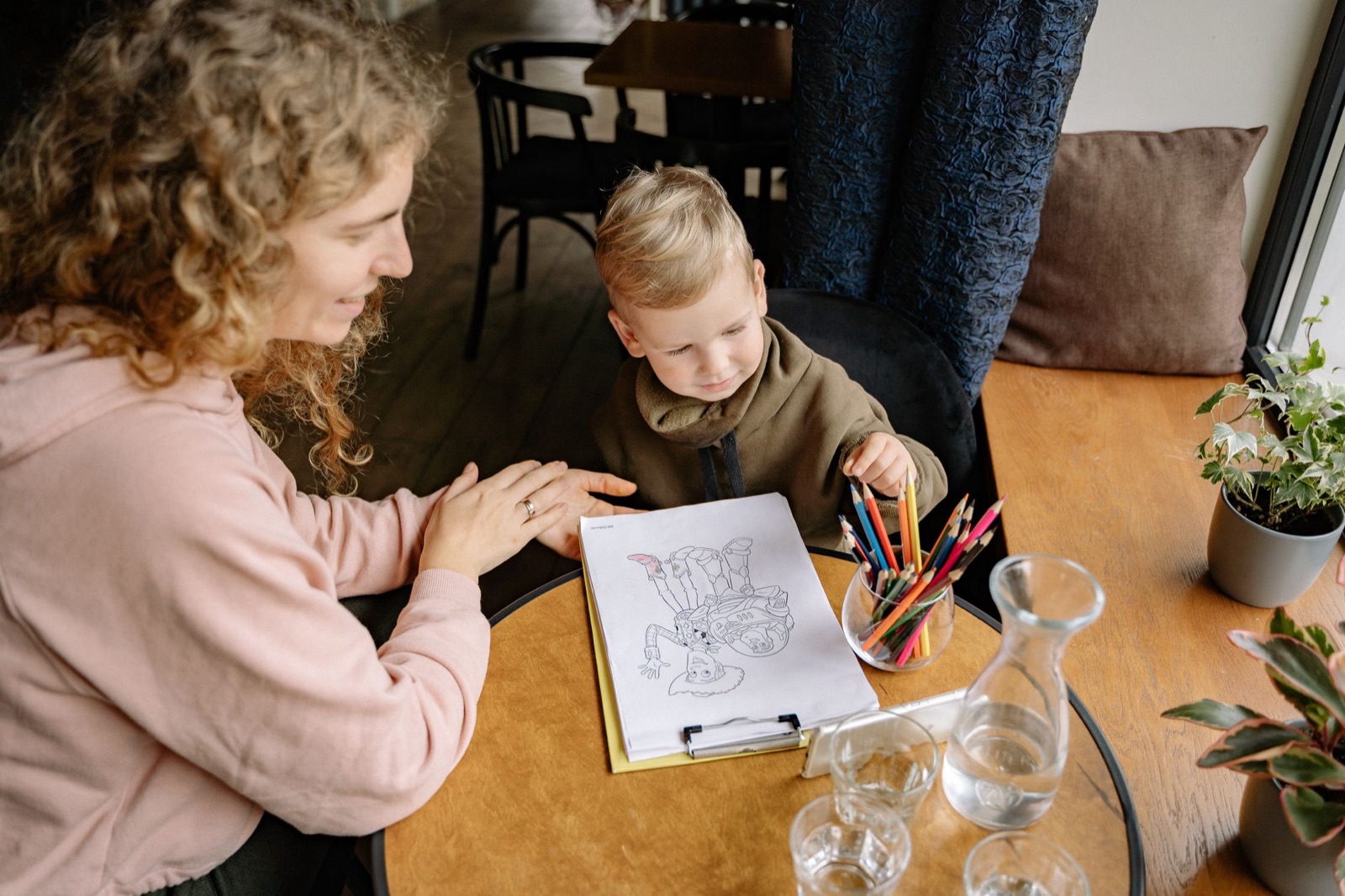
20 questions to ask about your child's drawing instead of "what is it?"
"What is it?" ends more conversations than it starts. Here are twenty better questions, sorted by purpose, with notes on how to listen once your child starts talking.
9 min read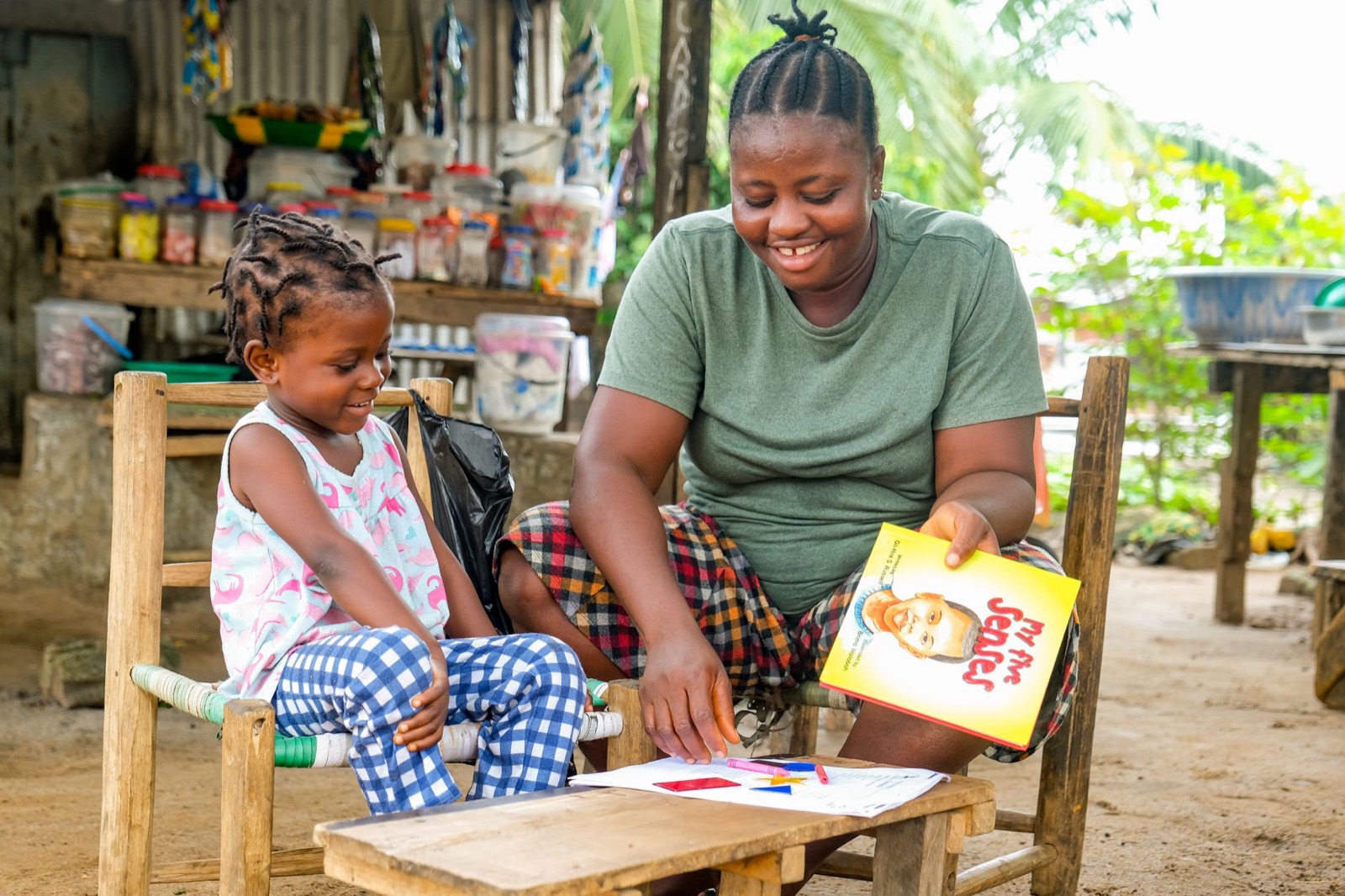
Story-starter drawing prompts: draw first, tell the story after
Five questions, a six-line story spine and some illustrative scripts for turning a finished drawing into a story, without hijacking it.
9 min read