20 questions to ask about your child's drawing instead of "what is it?"
By the Scribblie team · Published · 9 min read
In this guide
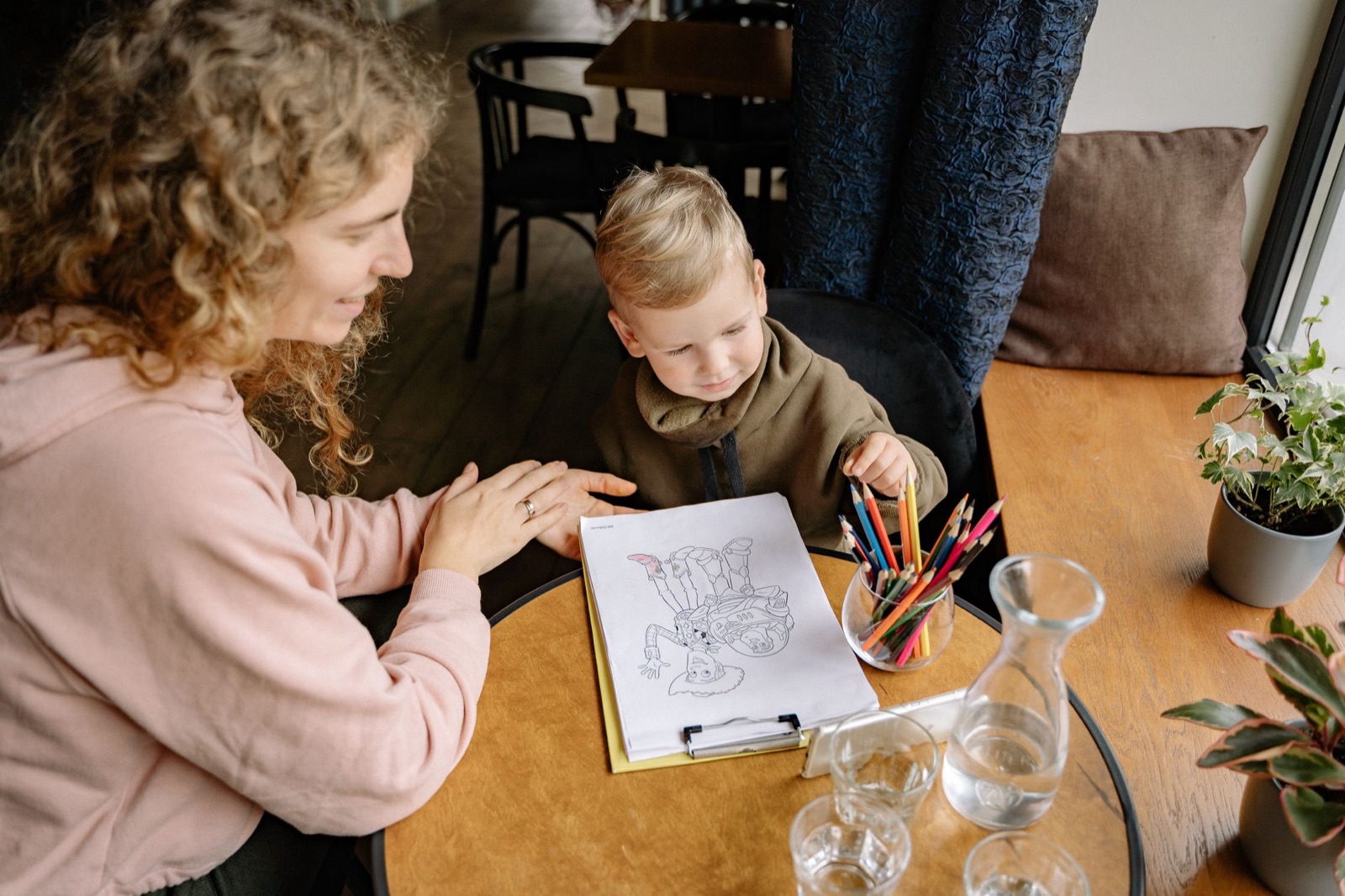
The best thing to say to a child holding up a drawing is something specific you actually see, followed by a question that cannot be answered with a single word. "You've used a lot of blue here. Tell me about it?" will usually get you a lot further than "What is it?" Below are twenty questions, sorted by what they are for, and then a few thoughts on what to do with the answers. You do not need all twenty. Pick one, and let the child do most of the talking.
Why "what is it?" so often falls flat
On paper it seems friendly. In practice it asks a child to translate something visual into a label, and it quietly implies that a drawing is supposed to be of something.
A young child who has just enjoyed making a swirl may not have a "what." A four-year-old who has made a monster is bound to feel a small chill when you ask what it is, because to them it is obviously a monster. And an older child who has done their best on a horse may hear "what is it?" as a verdict.
So we try to keep the question for the occasions when there really is no other way in, and ask something else the rest of the time. If you want the longer reasoning on responding to art, how to praise a child's drawing goes further.
A quick way to start: look, then say what you see
Before any question, take a breath and look at it properly for a few seconds. Then say one plain thing you can see, with no judgement attached.
"There's a lot of red at the top." "I see lines going all across the page." "You made a very small person in the corner."
Plain observations are honest, children believe them, and they usually invite a reply without any pressure. A child who has been seen tends to explain.
Then ask. The questions below are in four groups, and the groups matter more than the individual wording.
Twenty questions, sorted by purpose
Questions about feelings
These are for when the colours, the mood or the way a child holds the picture suggest they have something to say. They are best used lightly, and not as a way of reading a child's mind. A drawing alone cannot tell you how someone feels, so we treat the answers as the child's own account and nothing more.
- How did you feel when you were drawing this?
- If this picture were a weather, what would it be?
- Which part makes you happiest?
- Is there a part you're not sure about?
- How do you think the person in the picture is feeling?
Number five is the one to try first. Children often find it easier to talk about a character's feelings than their own, and it gives them room.
If something in a drawing worries you, perhaps a repeated theme that seems distressing, or a change in your child's behaviour alongside it, we would not interpret it ourselves. Speak to their teacher or doctor, who can see the whole child.
Questions about the story
These are for pictures with characters or places in them. They are the bridge to storytelling.
- Who lives here?
- What happened just before this moment?
- What is going to happen next?
- Does anyone in the picture have a secret?
- What's the best thing about this place?
Number seven is a favourite. It turns a still picture into a scene in a film, and it is a quick way to a story. If your child likes it, how to help your child tell stories takes it further.
Questions about the process
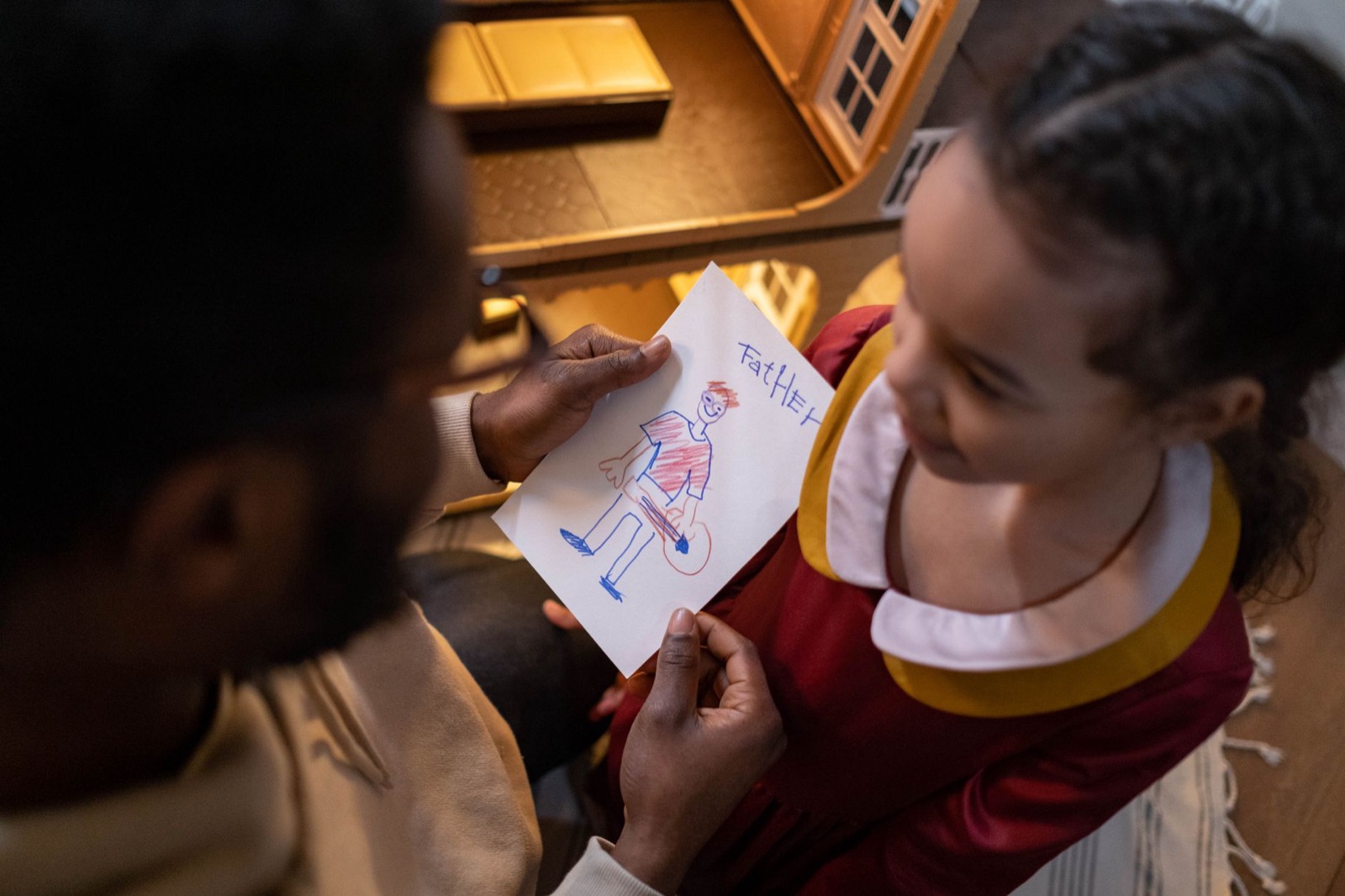
These are for children who are not interested in telling stories but love talking about how they made something. They are also a quiet way of showing respect for the work, as in "I noticed you did that on purpose."
- Where did you start?
- Which bit was the trickiest?
- How did you decide on those colours?
- Is there anything you'd do differently next time?
- Did anything surprise you while you were drawing?
Process questions also take the pressure off the result. A child who thinks the picture is a failure may still be happy to explain how they got the sky to look like that.
Be careful with number fourteen. Asked in the wrong mood it sounds like "what was wrong with it?" We would use it only with children who clearly like to refine things, and never when they are tired or cross.
Questions that stretch the imagination
These are for the playful end of the day, with children who like to go off on a tangent.
- If we could step inside this picture, where would we land?
- What would this creature say if it could talk to us?
- What does it smell like in here?
- If you could add one new thing to the picture, what would it be?
- What would you ask the thing you drew, if it could answer?
Number seventeen has a way of turning into a performance. Let it. If a drawing talks in a squeaky voice, you have found the first part of a pretend game, and we have a few of those in pretend-play ideas that grow out of a drawing.
Matching the question to the age
The same twenty questions do not suit every child, and it helps to adjust.
For two- and three-year-olds, keep it to one short question and be ready for an answer that seems unrelated. "Tell me about it?" is often enough. You may get a single word, or the name of the family dog. Take it with pleasure.
For four- and five-year-olds, story and imagination questions tend to work best. This is the age of "and then the dragon came," and the "what happened just before" questions fit well. They are also the age where adults get told they have the wrong idea, so hold your guesses back.
For six- and seven-year-olds, process questions start to be interesting. Many children at this age notice the gap between what they pictured and what appeared on the page, and a question about how they solved a problem treats that gap as normal.
For eight and up, ask the way you would ask a friend. Some children this age will not want to talk about a drawing at all, and a plain "I'd like to see it, if you want to show me" may be the right amount.
These ages are rough. A child may be a five-year-old in one mood and an eight-year-old in another.
What a good exchange might sound like
This is an illustration, not a transcript of a real family, and your child's version will be odder and better.
"Hey, I noticed you put a lot of yellow at the top of this one." "That's the sun. It's angry." "Why is the sun angry?" "Because it has to go to work." "What does it do at work?" "It makes everyone hot. They don't say thank you."
Look at what the adult did there. They said one thing they saw, and then asked three tiny questions, each from the child's last sentence. They did not know where it would go, and they did not steer. They did not say "that's a funny idea" or "suns can't be angry." It took about thirty seconds, and the child said more than they might in an afternoon of "what did you do today?"
Questions to skip, mostly
A few we would use with care.
"Is it a ...?" Guessing is the thing we are trying to avoid.
"Why did you use that colour?" It is a lovely question for some children and an exam question for others. If the child has already told you they like it, fine. If not, try "How did you pick the colours?"
"Can you draw it again but properly?" We would never.
"What's wrong with him?" About a character who looks sad, as if sadness were a fault. Better: "He looks like he's thinking about something."
"Are you sad?" asked about a picture. Children's drawings are not mirrors, and a dark picture can simply be a dark picture. A drawing alone proves nothing, and if you have concerns about a child's mood, the thing to do is to speak to them directly and, if needed, to their doctor or teacher.
How to listen once they start talking
Listening matters more than asking.
Wait. Give them four or five seconds of silence, and resist filling it. A child who is thinking looks identical to a child who has nothing to say, and the difference is only apparent if you wait.
Repeat back a word or two. "A very tall house?" That tells the child you are following, and invites more.
Do not correct. If the dog has five legs and you know dogs have four, keep that to yourself.
Do not turn it into a lesson. A drawing of a rainbow is not an opportunity to name the colours in order, unless the child asks.
Follow their lead. If you asked about the story and they want to tell you about the pen, the pen it is.
And accept "I don't know" or "nothing." It might be true. It might mean "not now." Both deserve a nod.
What about the shy ones?
Some children go quiet when asked anything. If so, drop the questions, sit beside them and draw something of your own. Talk about your drawing, not theirs. Often a few minutes later a small voice will say something about theirs.
We have a longer piece on shy kids and creative play that has more of these low-pressure approaches. The general idea is to lower the temperature.
A note on how often
You do not need to ask a question about every drawing. A child who makes thirty pictures a week would be exhausted by being interviewed about all of them. Pick one a day, or one a week, and let the rest sit on the fridge.
Some of the most valuable listening happens when you say nothing at all, and just look at the picture for a while while the child watches you do it.

A gentle place for this in the app we are building
We are building Scribblie, which is not yet in the stores. A child draws, and the drawing wakes up, says hello and asks for its name. The child can then talk to it, and the friend answers in its own voice. We mention it here only because the questions above are the same ones a talking drawing can ask, such as "where do I live?" The replies come from AI models, so they can sometimes miss, and a grown-up nearby makes it better. It is made for roughly ages five to eight. Our page on how Scribblie works explains what it does and does not do.
Try this tonight
Pick a drawing on the fridge, choose one question from the lists and write it on a sticky note. Tomorrow, ask it once, in a relaxed moment, perhaps while they are eating toast. Listen for the whole answer, then say "thank you for telling me."
Common questions
What should I say when my child shows me a drawing?
Start by noticing something specific you can see, like "you used a lot of purple here," and then ask an open question such as "Tell me about it." Avoid guessing what it is, since a wrong guess can sting.
Why shouldn't I ask my child what their drawing is?
It is not forbidden, but it tends to make the drawing a test with a right answer. Some children are not drawing "something" at all, they are enjoying colour and movement, and the question can quietly tell them that was the wrong thing to do.
How do I encourage creativity in a child through drawing?
Give them materials, time and an interested audience, and keep your own opinions about what it should look like to yourself. Questions about the story, the process and the imagined world tend to be more useful than comments on how realistic it is.
Should I praise my child's drawing?
Warm, specific comments are usually better than general ones. "I can see you pressed hard on the red" tells a child you looked, while "beautiful!" is nice but tells them less.
What if my child doesn't want to talk about their drawing?
That is allowed, and it is not a sign of anything. Leave the question, put the drawing somewhere you both can see it, and try again another day or from another angle, such as asking them to choose a favourite colour.
What age can I start asking questions about drawings?
From around two or three, many children will happily tell you about a scribble if the question is simple and kind. Older children can handle more reflective ones, such as how they decided what to draw.
Keep reading
Storytelling for kids: how to help your child tell stories without taking over
The hard part of helping a child tell a story is closing your own mouth. Here are the questions, the story spine and the small rituals that give the story back to them.
8 min read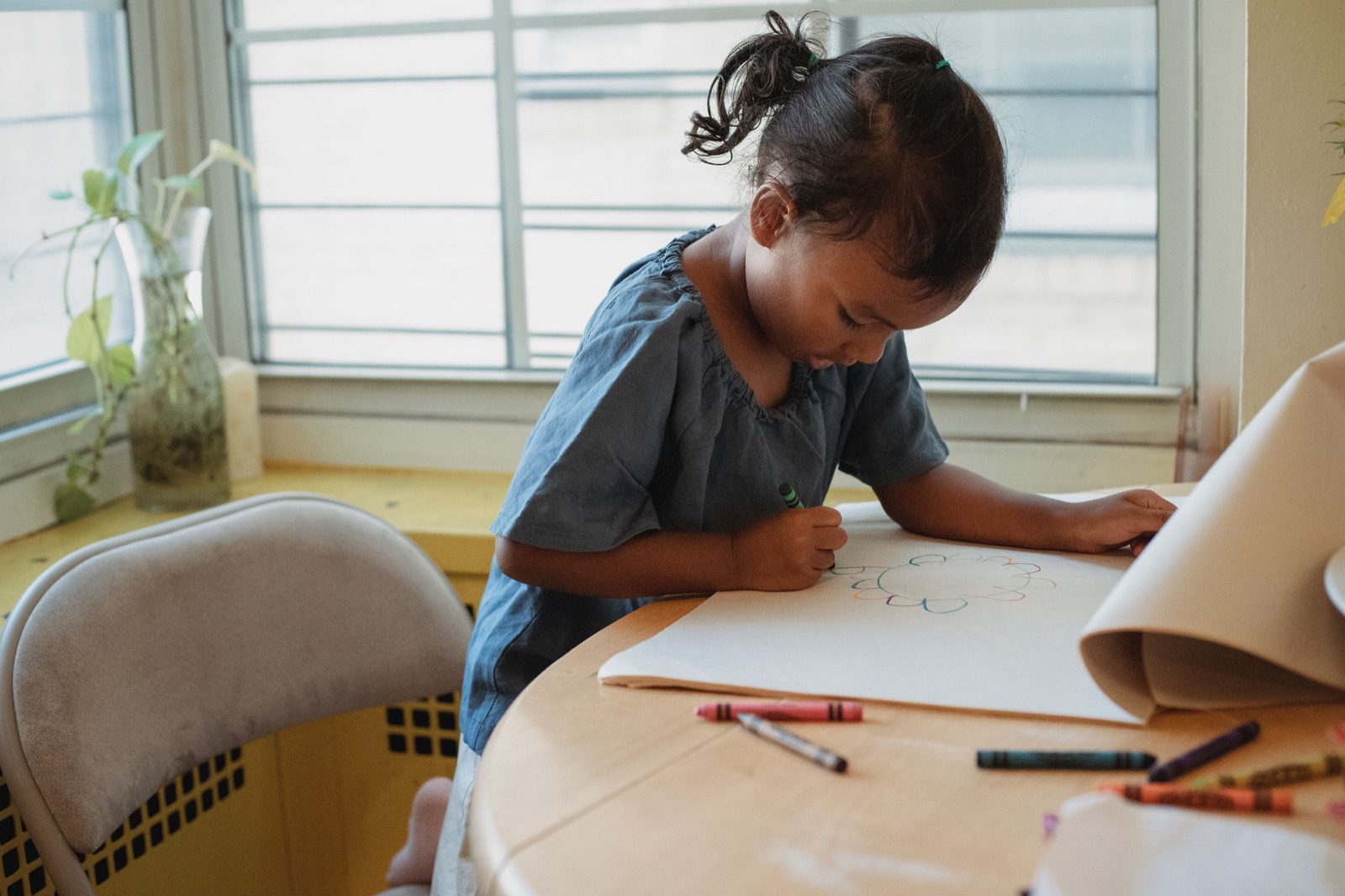
Shy kids and creative play: easing a quiet child into talking about their work
A quiet child is not a problem to solve. Here are gentle, low-pressure ways to share creative time, from parallel drawing to puppet voices, without ever calling them shy.
9 min read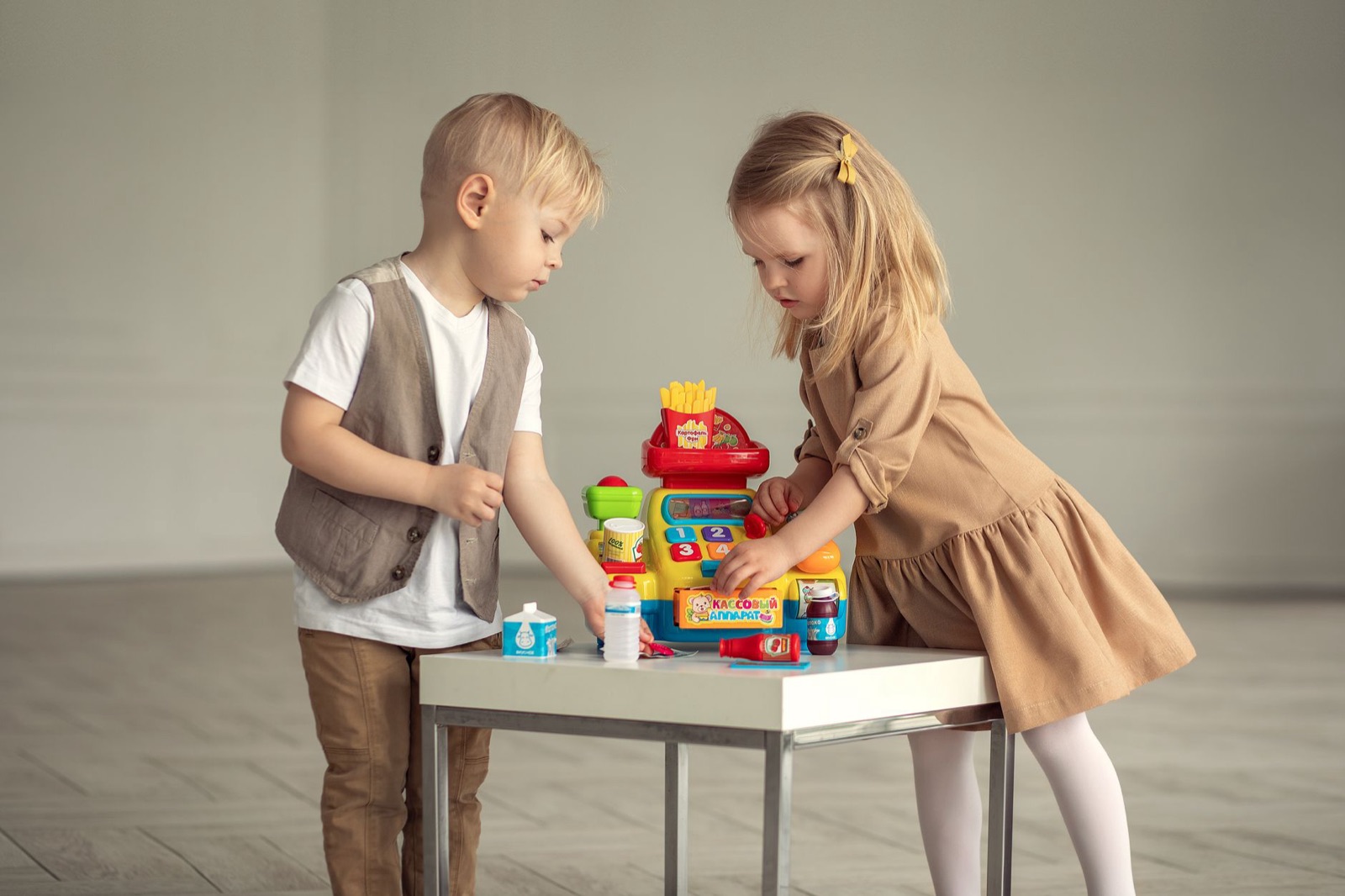
Pretend play ideas that grow out of a drawing (shops, vets, restaurants and more)
A drawn menu, a paper till and a toy bear with a bandage: pretend play grows fast when the props are made by the children. Here are six games that start with a pencil.
9 min read