Shy kids and creative play: easing a quiet child into talking about their work
By the Scribblie team · Published · 9 min read
In this guide
- First, a word about the word
- Why a drawing can be easier than a conversation
- Parallel drawing: the easy win
- Drawing first, talking second
- Puppets, toys and borrowed voices
- Group settings and school
- What not to do
- When it might be more than quietness
- Where our app comes in, if at all
- For this weekend
- Common questions
A quiet child usually needs a way in that has no spotlight on it. The easiest one we know is to draw next to them, on your own paper, and talk about your own picture, not theirs. Over a few sessions many quiet children start to share, in their own time and in their own words, and it often happens sideways. Everything below is a variation on lowering the pressure, keeping your hands busy and letting the child set the pace.
First, a word about the word
"Shy" gets used a lot, often in front of the child, often kindly. "Oh, she's a bit shy." We would try to retire it.
Children hear themselves described and tend to believe it. A child who is told she is shy may start to treat it as a fact about herself, and then reach for it when something feels hard. Besides, quiet children are a mixed bunch. Some are observers, who are happily taking it all in. Some are slow to warm and then become chatty. Some are cautious about new people but loud at home.
So we describe what happened instead. "You watched for a while and then you joined in." It is true, it is specific, and it leaves the door open.
None of this is a clinical view. We are not able to tell you why your child is quiet, and we would not try. It is just a better way to talk.
Why a drawing can be easier than a conversation
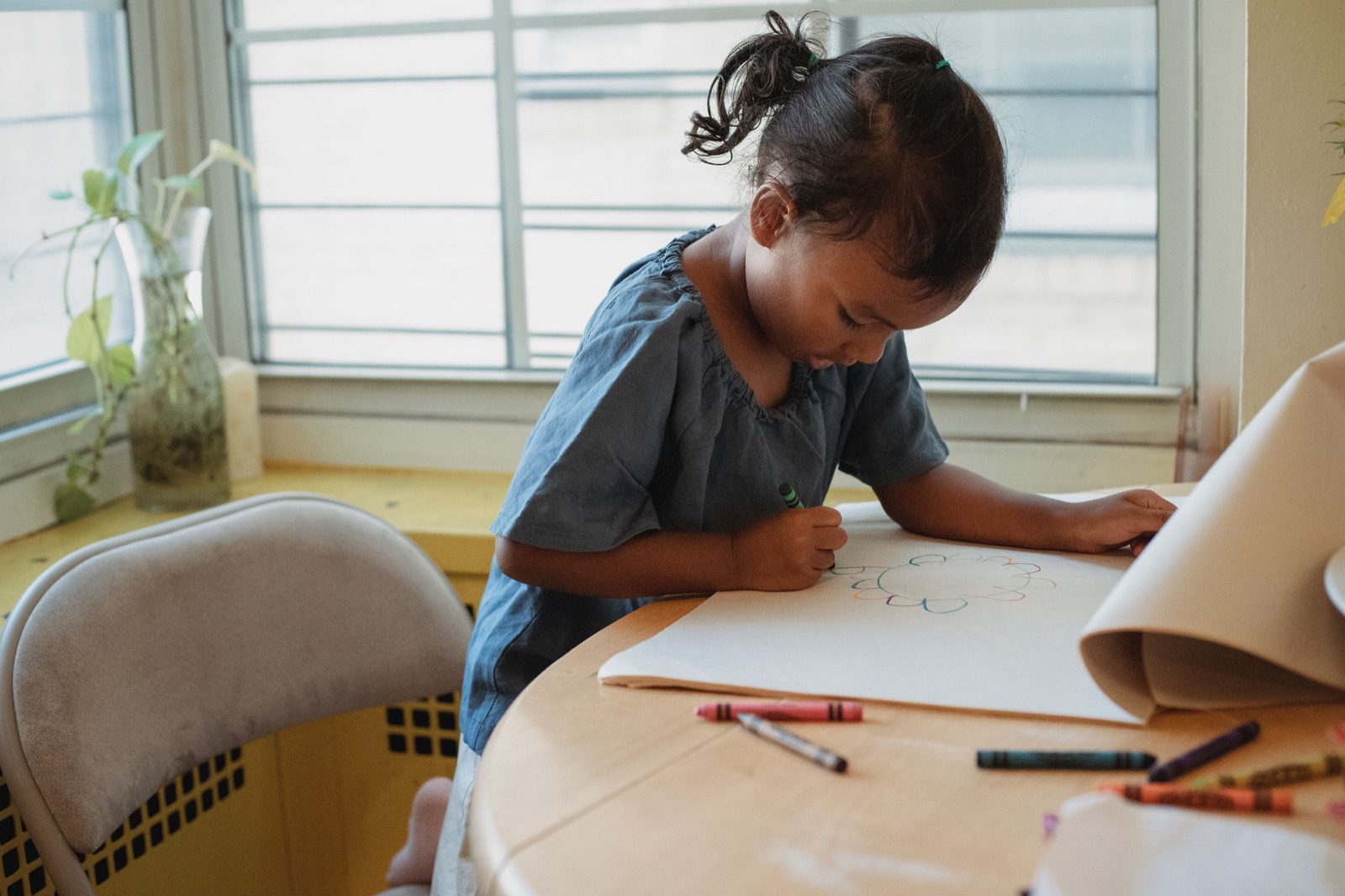
Talking asks a child to produce words, in the right order, to a person who is watching their face. That is a lot. Drawing gives them something else to do with their hands and eyes. Attention goes to the paper, not to them.
That is why many adults find it easier to talk in the car, or while washing up, than face to face. Side-by-side is a gentler setup than head-on.
It also means a quiet child often says more through a picture than through a sentence, and that is a perfectly good thing to be able to do. We would not treat a drawing as a message that needs decoding. A drawing alone proves nothing about how a child feels. We would just treat it as something they chose to make, and that is already a kind of communication.
Parallel drawing: the easy win
Here is the simplest approach, and the one we would start with.
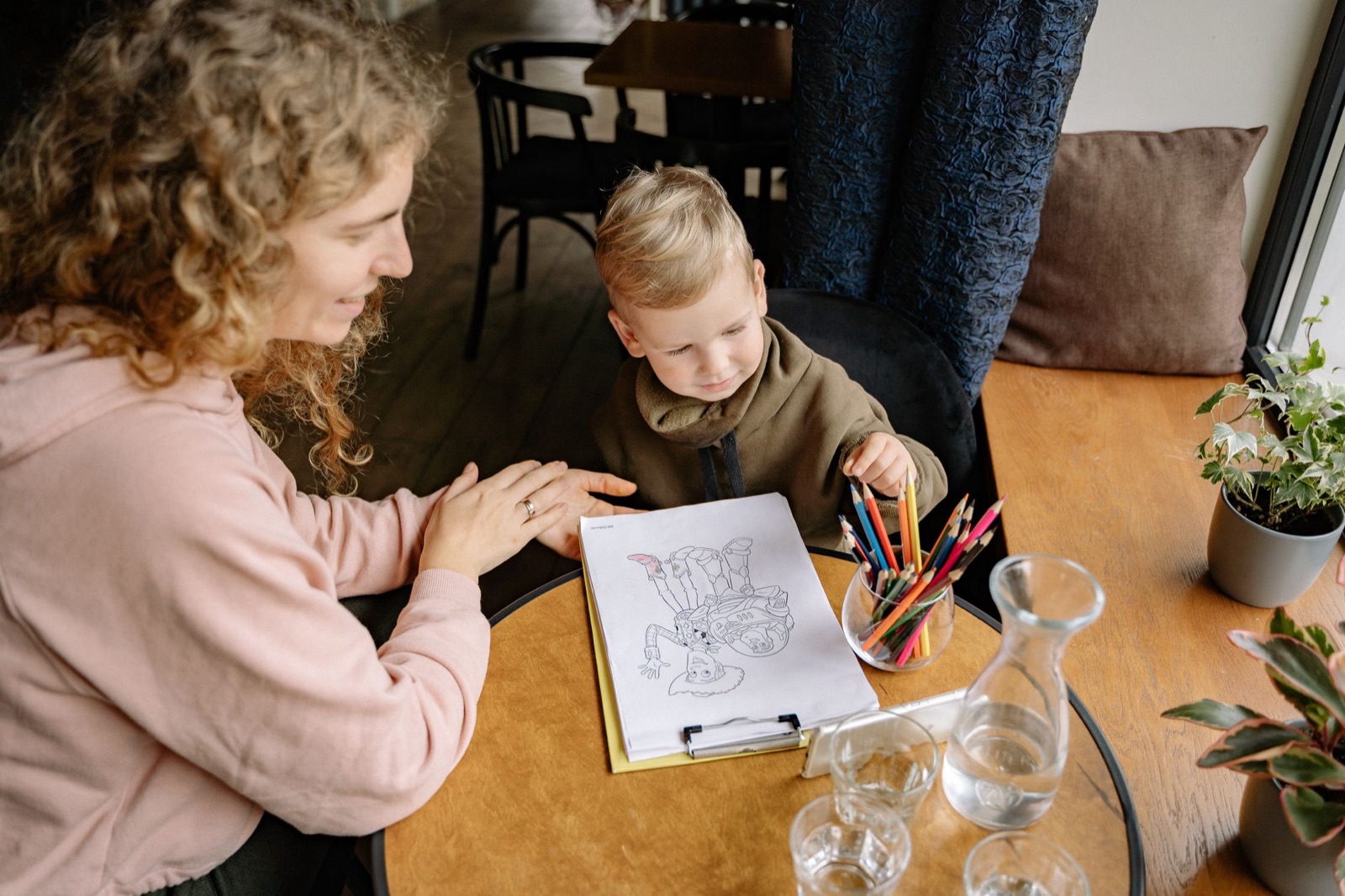
Put two sheets of paper on the table, one in front of you and one in front of your child. Give them the pens they like. Start drawing something of your own, anything, and do not look at their page.
Talk a little, but only about yours. "I think I'll give my cat a hat." "Oops, that's gone wobbly." Keep your voice relaxed and ordinary.
After a few minutes, you may notice your child glancing across. Do not react. They may say something, or they may not. Either way, you have spent ten pleasant minutes together and nobody has had to perform.
This is sometimes called parallel play, and it is how many small children first play near each other before they play with each other. We are borrowing the idea for grown-ups and children.
Drawing first, talking second
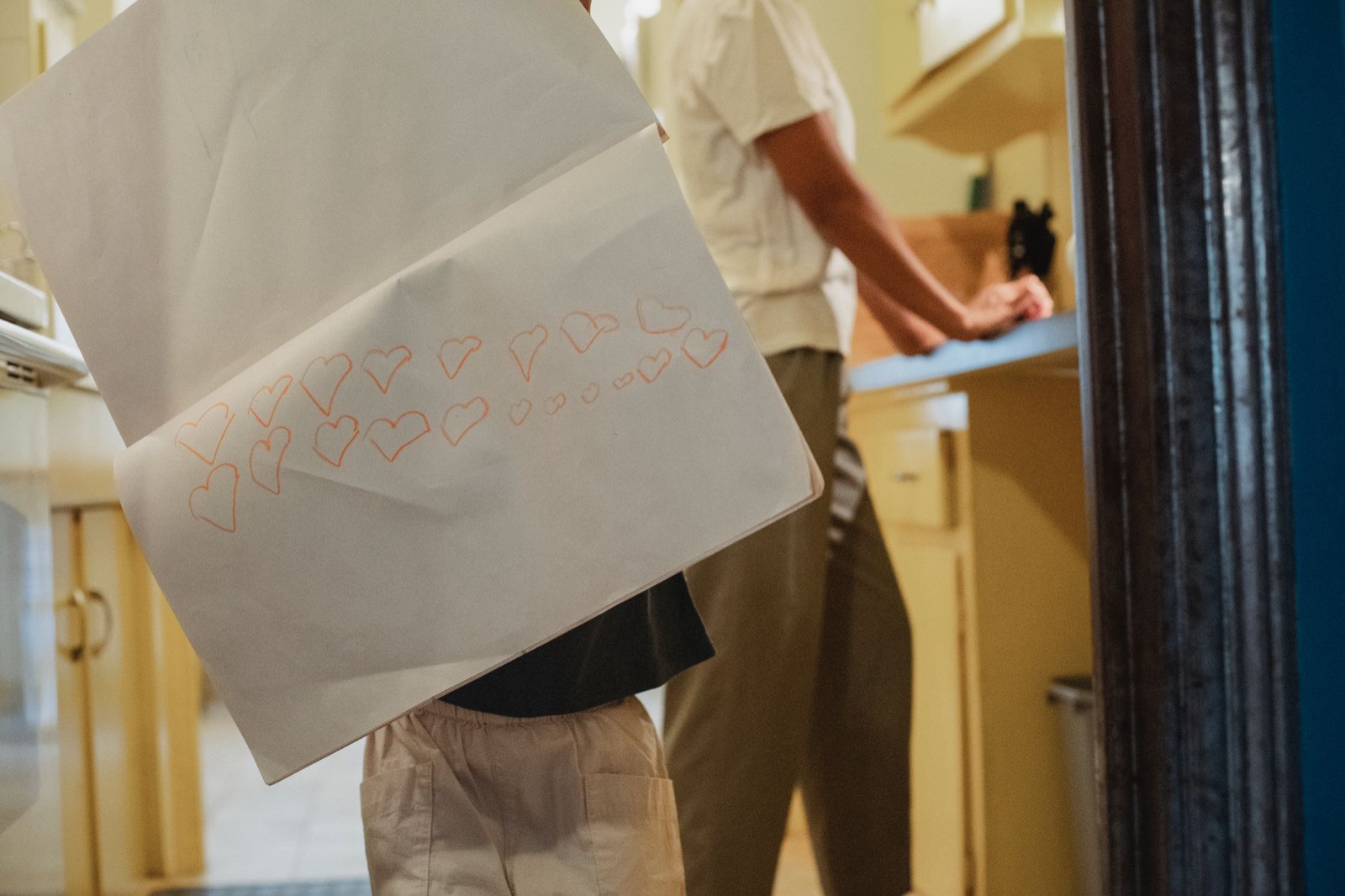
If your child tends to freeze when asked a question about something they have made, try reversing the order. Let them draw, with no questions, for as long as they like. Then, afterwards, do one of the following:
- Say what you noticed ("There's a lot of green in this one") and then say nothing more.
- Ask them to put the picture where they would like it to live.
- Invite them to tell you one thing about it, if they feel like it, "or no things, that's fine."
The "or no things" part matters. It makes saying nothing a legitimate option, which paradoxically makes it easier to say something.
For a bigger bank of questions that suit a quiet child, see 20 questions to ask about your child's drawing. The process ones are good, because they are about what the child did, not what they feel.
Puppets, toys and borrowed voices
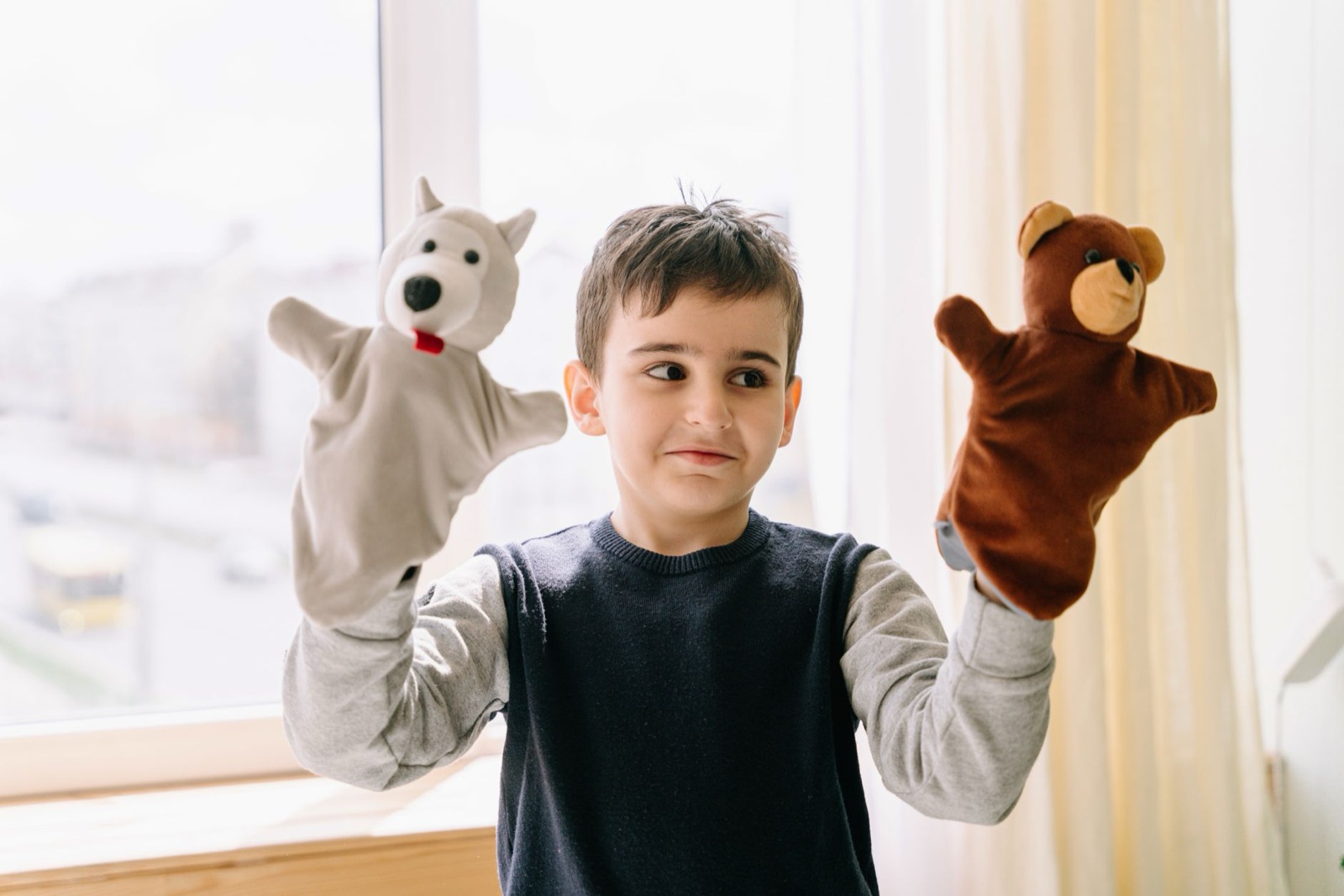
Many quiet children can speak freely through a character. A sock puppet, a wooden spoon with a face, a favourite dinosaur. The character takes the attention, and the child gets to be a bit bold from behind it.
You can start this yourself. Hold up a puppet and let it say hello to the drawing. "Hello, drawing. I like your colours." You are not asking the child anything. If they want to join in, they will, either by taking the puppet or by answering for the drawing.
Don't push for the child to speak to the puppet. If they would rather whisper to you and have you pass it on, that is fine too. A relaxed grown-up tends to help, and it does not matter who is doing the talking.
This is also where a child's drawn creature can get a voice. If your child has a character they like, ask if it would like to say anything. That sort of play is a close cousin of the imaginary friends that many children invent, and it comes from the same place.
Materials that help the quiet ones
Some things lower the stakes by their nature.
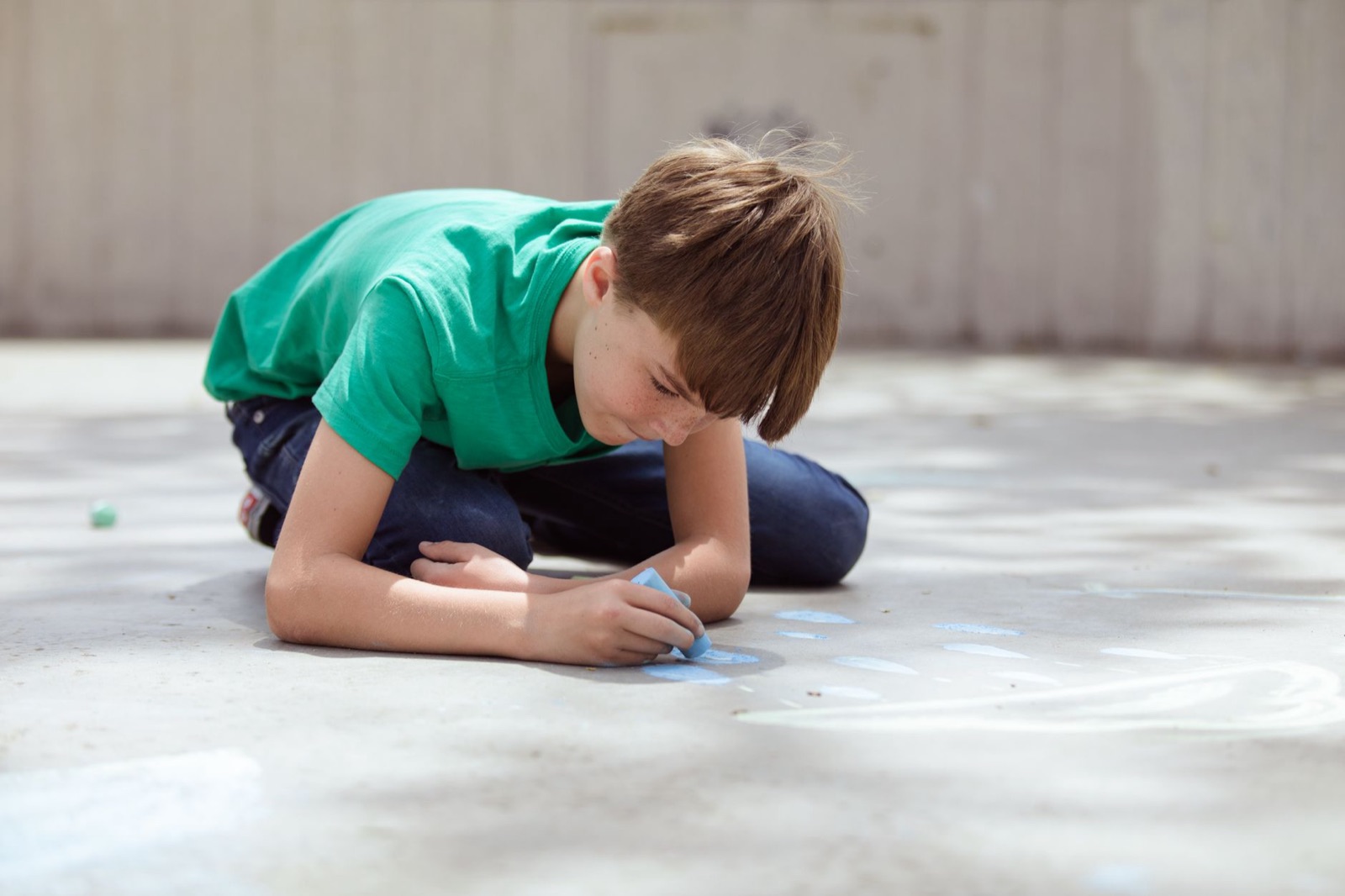
Big paper and chunky crayons, because there is no way to get them "wrong." Dough or clay, because it can be squashed and begun again. A shared sheet of paper, where no one person owns the picture. Chalk on the pavement, which washes away.
Things that are harder: tiny, fiddly tasks with a clear correct result, and anything that has to be done in front of a group.
If paint or small parts are involved, please supervise, and check the age label on any kit. We would keep things simple, with materials you trust.
For more on the materials themselves, see drawing with different materials, and the basics in our art supplies starter kit.
Group settings and school
Quiet children can have a hard time in group creative activities, such as show-and-tell with a drawing. If you are a parent, a quiet word with the teacher can help. "She finds it easier if she can show it to one person first" is a perfectly good sentence.
If you are a teacher, a few things tend to work. Give children a choice about whether they present. Let them show their work to a partner before a group. Display work without requiring a speech. Offer a pretend microphone to children who like gadgets.
We have more ideas for classrooms in drawing in the classroom: teacher ideas.
A slow-start session, step by step
If you would like a script for the first few attempts, this is one we would try. It works for a child of around four to eight, and it is meant to be repeated across several days, not done in one go.
Day one. Put paper and pens on the table and draw your own picture. Say nothing to your child, except perhaps "help yourself if you like." If they draw, good. If they just watch, that is also good. Stop after ten minutes.
Day two. Repeat. This time, let the pen slip on purpose and say "oops." A small, relaxed mistake shows that mistakes are ordinary, which is a useful thing for a careful child to see.
Day three. Add a puppet or a toy that "likes looking at drawings." Let it sit near the paper. Do not make it speak unless it feels natural.
Day four or later. Leave a drawing of yours on the table with a gap in it. A cat with no tail, a house with no door. Do not mention it. Many children will quietly add the missing piece, and that is a tiny, safe way of joining in.
None of this is magic, and some children will take weeks. Some will skip every step and want to show you everything on day one. Follow the child, not the schedule.
Praise that does not put a spotlight on them
Quiet children can find praise uncomfortable, especially loud or public praise, because it makes them the centre of attention. A warm, brief and private comment often lands better than a big one.
Try a quiet "I like how careful you were with the corners" at bedtime, or leave a note beside the drawing. Or say nothing and put it on the fridge. Our page on how to praise a child's drawing goes through why specific beats general, and why less is often more.
What not to do
A short list, because we have all done most of these.
Do not say "go on, tell them," in front of other people. It puts a spotlight on a child who is already uncomfortable.
Do not speak for the child. It is tempting, especially when the silence stretches. It is better to wait, or to say "you can tell me later."
Do not offer a reward for talking. It makes the talking a performance.
Do not compare them to a louder sibling or classmate, even a kind comparison. It only reminds them where they stand.
And try not to hurry. A child who has finally begun to say something does not want to be told it is "wonderful" in a big voice. A quiet nod works better.
When it might be more than quietness
Most quiet children are simply quiet, and that is part of who they are. Some of them will blossom at nine or at fourteen, and some will stay thoughtful and measured all their lives. Neither is a problem.
That said, if your child seems very distressed in ordinary situations, avoids school or friends over a long period, or you have a feeling that something is not right, it is reasonable to speak to their teacher or doctor. You do not have to be sure. A teacher in particular sees how your child is with other children, which you cannot. A drawing on its own will not settle the question either way.
Where our app comes in, if at all
We are making an app called Scribblie, which is not yet in the stores. A child draws and the drawing wakes up, says hello and asks what it is called. The child talks to it by voice, and it answers. Some quiet children may find it easier to talk to a drawing than to a person, in the same way a puppet helps, though we do not know that and we would not claim it does anything for confidence. The replies are generated by AI models and can sometimes be imperfect, so stay close. It is made for children of around five to eight. How Scribblie works has the details.
For this weekend
Choose a ten-minute slot, put two pieces of paper on the table and draw something of your own. Say nothing about their page. If they speak, listen. If they do not, you have still shared a quiet ten minutes, and that is a good way to begin.
Common questions
What creative activities are good for a shy child?
Ones with no audience and no right answer work well: drawing side by side, making a collage, building with clay or modelling dough. Anything that lets a child do something with their hands while talking is usually easier than a face-to-face chat.
How do I get a shy child to talk about their drawing?
Skip direct questions at first, sit beside them and draw your own picture, and comment on yours. Many quiet children will begin talking about theirs once the spotlight is off them.
Should I tell my child they are shy?
We would not use the word as a label, even kindly, because children can take it on as who they are. Describe what they did instead, such as "you took a while to warm up and then you joined in."
Can a puppet help a shy child talk?
Often, yes. Some children find it easier to speak through a puppet or a toy than in their own voice, since the character takes the attention. Let the child control the puppet if they would like to.
When should I worry about a child's shyness?
Being quiet is a normal temperament for many children. If your child is distressed in everyday situations, avoids school or friends over a long time, or you simply feel something is off, talk to their teacher or doctor, who know the whole child.
How can I encourage creativity in a child who doesn't want to join in?
Offer, don't push. Leave materials out, let them watch, and accept that watching counts as taking part.
Keep reading
20 questions to ask about your child's drawing instead of "what is it?"
"What is it?" ends more conversations than it starts. Here are twenty better questions, sorted by purpose, with notes on how to listen once your child starts talking.
9 min read
Imaginary friends: why they happen and when parents should (not) worry
Your child has a friend you cannot see, and you have been asked to set a place at the table. Here is what is usually going on, how to play along, and when to check in with someone.
9 min read
Art Supplies for Kids: A Starter Kit Under ₹2000 or $25
A starter art kit in order of priority, with what to skip, what to look for on the label, and a way to store it so the supplies actually get used.
8 min read