Doodle ideas for bored kids (and bored grown-ups)
By the Scribblie team · Published · 8 min read
In this guide
Boredom is a doodle machine that is waiting to be switched on. A child who says "I'm bored" is usually a short distance from making a mark. All they need is something that tells the pen where to go first.
So instead of a long list of things to doodle, here are four doodle systems, each one a small engine for ideas. Learn one and you will not need another list.
What a doodle is, and why it needs a system
A doodle is a drawing you do without much planning, with half your attention. It lives in margins, on napkins, on the corners of homework. It does not have to be good, or finished, or kept.
Where do you begin? That is the trouble with a blank page, and a system answers that. It says, "start here, do this, then do it again." It lowers the cost of the first line to almost nothing, and it keeps going by itself, because every mark suggests the next one.
Most of us have a doodle we do automatically, a spiral, a star, a cube. That is a one-move system. The four below are a bit bigger.
System one: the pattern alphabet
This is the best doodle idea we know. It takes ten minutes to set up and you can use it for years.
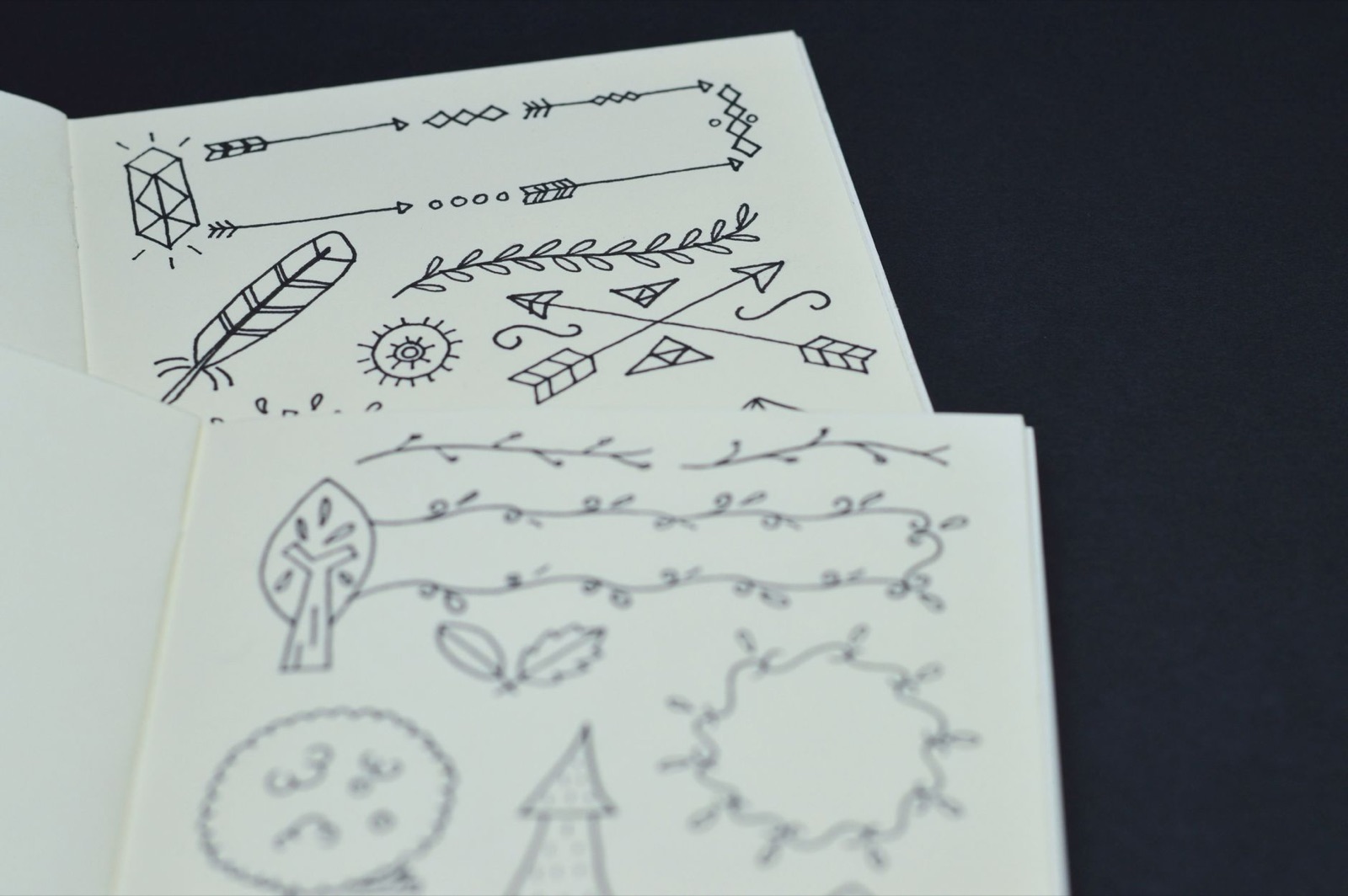
On a sheet of paper, draw a grid of eight or ten boxes. In each box, draw a different simple pattern: dots, stripes, waves, little triangles, scales like a fish, a row of loops, tiny crosses, a checkerboard. Each pattern should be something that can be drawn in a few seconds without thinking. That is your alphabet.
Now draw any shape you like, a blob, a leaf, a fish, a house, and fill it in with patterns from the alphabet. Put stripes in the roof, scales on the fish, waves in the sky. The result looks surprisingly polished, because patterns have a built-in rhythm.
Why it works: it turns a hard question ("what shall I draw?") into an easy one ("which pattern next?"). It is also soothing in a way that is hard to describe. A child who has had a loud day often settles into pattern doodling and goes quiet.
What goes wrong: children who rush leave patterns half-done, and the page looks messy. Slow them down by making a rule: no pattern is allowed to cross a line. Another trap is making the alphabet too complicated. If a pattern takes more than a few seconds, it is too much.
This approach borrows from a style of drawing in which repeating patterns fill sections of a page. If you search for "zentangle-style" drawing, you will find many examples. You do not need to follow any official method. Make up your own patterns, and give them silly names.
System two: faces on everything
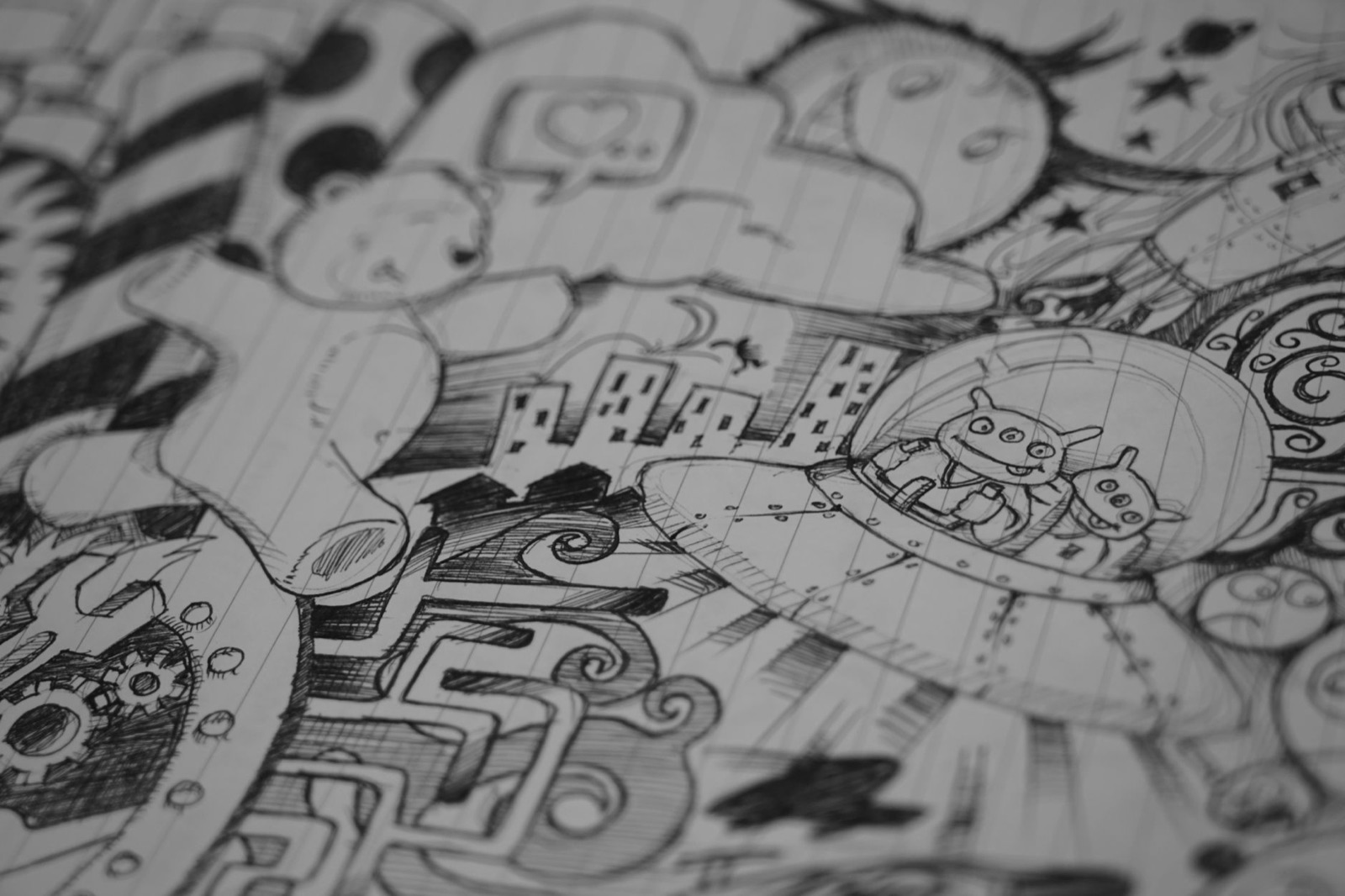
The simplest one of all, and the one children turn to naturally. Take an everyday object and give it a face. A cup, a shoe, a cloud, a staircase, a tomato.
Draw the object. Add two eyes and a mouth. Now decide how it feels. A shoe that has been stepped on too many times. A cloud that is shy. A staircase that is exhausted.
Why it works: children are expert at seeing faces and feelings everywhere, and the game plays on that. It is also an easy route into expression, since the eyebrows, the angle of the mouth and the position of the pupils carry the whole mood. A child who has drawn thirty faces on thirty objects will have learned a great deal about how a face works, and no one will have told them so.
A slightly richer version: draw a street and put a face on every building, and let each one have a different mood. Or draw a table with a face on each thing that sits on it. A child who is stuck can simply draw whatever is in front of them and add a face.
If you want to go further, give each face a name. Our guide to naming characters kids invent explains why names matter so much to children.
System three: the wobble line and fill
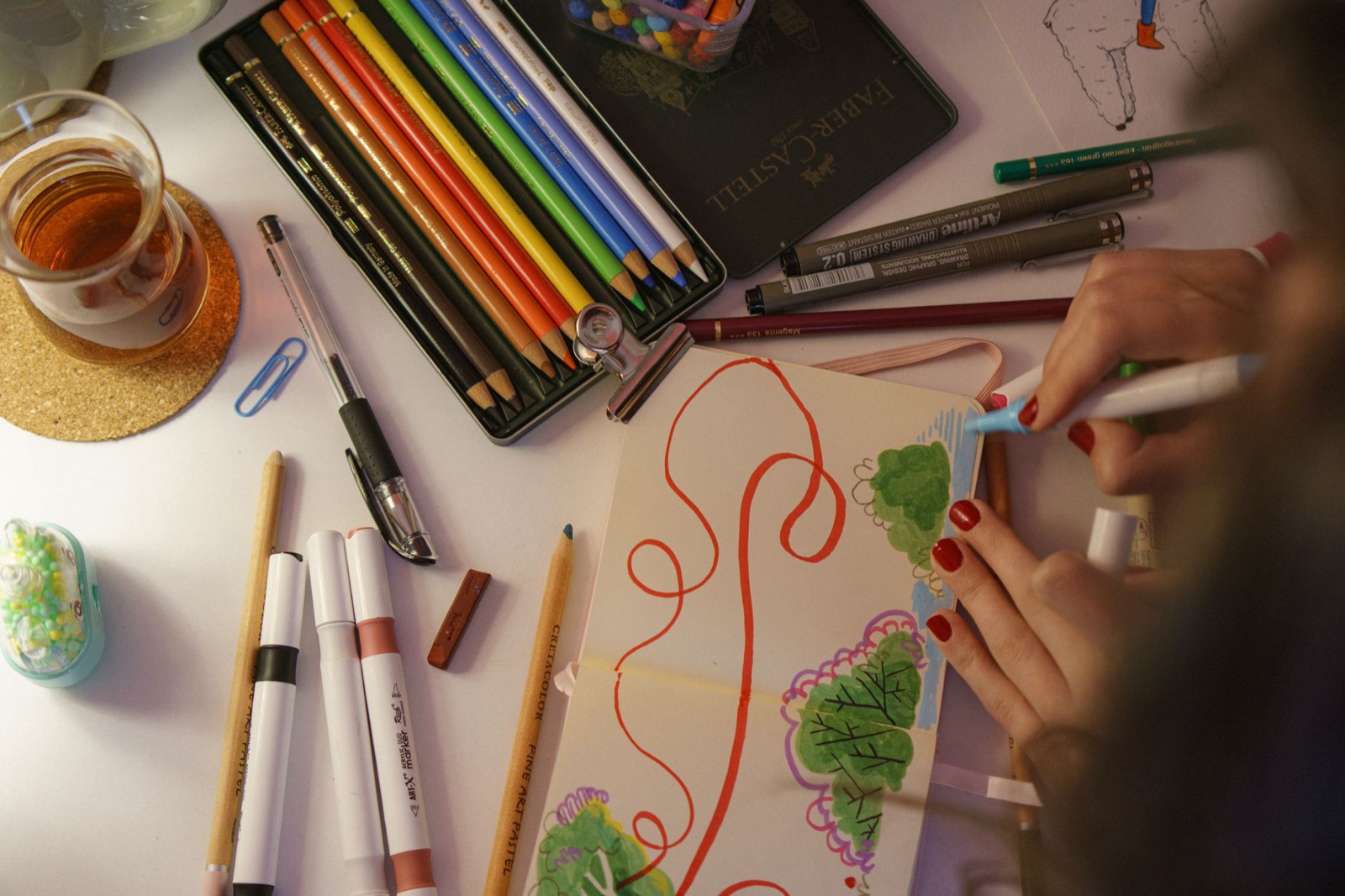
For a child who finds the first mark hardest, this one is almost foolproof. Draw a long, wobbly line across the page without lifting the pen. It can loop, cross itself and double back. That creates sections.
Now fill each section with something different. One with polka dots, one with stripes, one with tiny faces, one with a pattern you invent. You end up with a patchwork that looks planned, even though it began as a scribble.
Why it works: the scribble does the thinking. It removes the choice about shape and composition, so all that is left is filling, and filling is easy. It also takes a variable amount of time, depending on how many sections there are. For a child who needs ten quiet minutes, make a big, loopy line. For a child with two minutes, a small one.
What goes wrong: nothing much, which is the beauty of it. Some children find that crossing the line makes sections too small to fill. Suggest a larger scribble, or let them leave tiny sections blank. Blank is a pattern too.
This is a close cousin of the squiggle swap in our drawing games without screens, which uses the same trick with two people.
System four: the doodle a day
This is the long game. It is a tiny notebook, a time of day and a rule of one doodle.
Choose a small notebook that lives somewhere easy to reach. It should be so small that a single doodle fills a page, and nobody feels the pressure of a big blank sheet. Every day, one doodle. Date it, and that is the system. It works best as a bedtime habit, or a first-thing-after-school habit, with no parental commentary at all. Over a few weeks, it becomes a record of a child's moods, interests and favourite subjects. A child who draws a different cat every day for a month has built a collection without trying.
If your child wants more structure, use a loose theme for each week, such as animals, food, places or weather. Our 30-day drawing challenge is a more developed version, with a plan for the dip that arrives in the second week.
If the day is missed, skip it, and do not catch up. A doodle notebook with gaps is more honest than one with a forced entry on every page.
For the bored grown-up
Grown-ups doodle too: in meetings, on phone calls, on the margins of shopping lists. Many of us stopped drawing deliberately at about ten, and doodling is the one form we kept.
If you want to share the habit with a child, do it side by side. Put a sheet of paper between you and each of you pick a pen. You start a pattern, they continue it. They draw a face, you give it a hat. There is no goal. You are simply keeping each other company while your hands move.
You may find that the child opens up in a way that does not happen when you face each other and ask questions. Side by side is easier than eye to eye, which is why a lot of good conversations happen in cars and at the sink. A doodle between two people is a similar situation, and the talking comes later, without prompting.
If you are a parent who says you cannot draw, doodling is the best medicine. Nobody expects a doodle to be good, so you are free to be bad at it in front of a child. That is a lovely thing for them to see.
Doodles by age
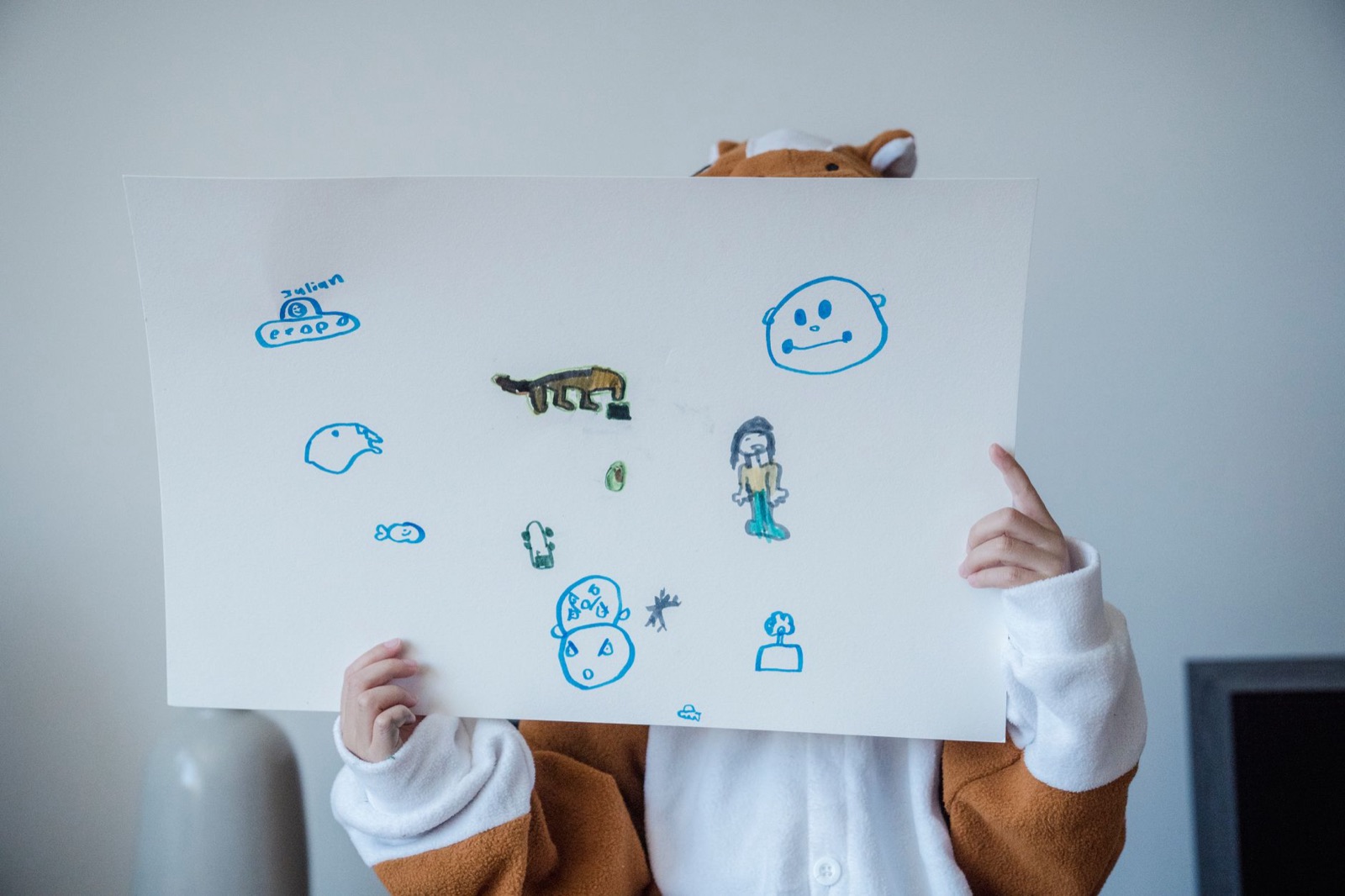
Four- and five-year-olds do best with faces on everything and the wobble line. The pattern alphabet is possible if you draw the patterns for them and let them choose which one to copy. Keep expectations loose. A patterned fish with stripes in the wrong place is a good fish.
Six to nine is the best age for the whole set. They have the control to make a pattern look like a pattern, and they love collecting. A pattern alphabet taped inside the cover of a notebook is something a child of this age is proud of, and they often invent twenty new patterns within a week.
Ten and over may think doodling is only for grown-ups or for people who are not paying attention. Take them seriously. Offer a good pen and a notebook with a plain cover, and let them develop their own style. A repeated character, a style of lettering, a way of drawing eyes: these become a signature. They may not want to show you any of it, and that is fine.
Doodles that turn into something
Some doodles deserve a second life. A page of patterns is the start of wrapping paper if you photocopy or draw it across a big sheet. A face-covered street can become a card for a relative. A doodle a day over a month can be cut up and glued into a collage with a title.
Our guide on turning kids' drawings into gifts goes through how to do this without spending a lot. The main tip is to let the child choose which doodle goes on the gift. They will pick something you would never have chosen, and that is the one the grandparent will keep.
Doodle ideas by situation
Sometimes a system is more than you need, and you just want one idea. A few for particular moments.
Waiting in a queue or at a restaurant: draw the pattern alphabet on the paper placemat, or use the back of a receipt. Draw the cutlery as characters.
Rainy day boredom: fill a whole page with eyes, each looking in a different direction, and then connect them with a story. For more of this sort of thing, see rainy day drawing activities.
Homework break: draw your own hand holding a pencil, three times, each time in a different style. It is a doodle with a gentle workout for the eye.
After a bad day: draw the thing that annoyed you as a small creature wearing a ridiculous hat. This is not therapy, and we would not claim it is. It is just a nice way to take something annoying and make it silly.
Birthday party lull: a table, a sheet of paper, and the instruction "draw the birthday child as a food". See birthday party drawing activities for more along these lines.
One small rule
Keep doodles out of the judging machine. Do not praise them too loudly, do not ask them to be neat, do not frame them. A doodle is a thing that happens between the pen and the person, and it is best left alone.
Put a pen and a scrap of paper where your child will trip over them tonight. That is all the ideas you need.
Common questions
What are easy doodle ideas for kids?
Start with faces on everyday objects, a row of repeating patterns, or a thick wobbly line you fill with shapes. These need no skill and almost no thinking. Easy doodles are the ones with no correct answer.
What is the difference between doodling and drawing?
Doodling is usually quick, unplanned and done with half your attention, often in margins. Drawing tends to have a subject and some intention. The line between them is fuzzy, and a doodle that grows a plan becomes a drawing.
How do I get a bored child to start doodling?
Put a pen and scrap paper near them and start doodling yourself without comment. Or hand them a page that already has a shape on it. Boredom often turns into doodling when the first mark has been made for them.
What are cute and easy doodles ideas for older kids?
Tiny characters with big expressions, lettering with bubbles and shadows, and little scenes drawn inside a circle tend to appeal. Older kids usually like doodles with a bit of style, such as a repeated character they develop over time.
Is doodling a waste of time in class?
Opinions differ, and it depends on the teacher and the lesson. Many people find doodling a harmless way to occupy their hands while listening. If it distracts from something important, talk with the teacher about when it is okay.
What should I doodle on?
Anything flat that is not precious: scrap paper, a napkin, the back of an envelope, a cardboard box. A small notebook that is only for doodles takes the pressure off. Avoid doodling on walls or furniture unless you have permission.
Keep reading

A 30-day drawing challenge for kids (that survives day 12)
Most daily drawing challenges die around day twelve. Here is a 30-day plan designed around that, with themes by week and an exhibition at the end.
9 min read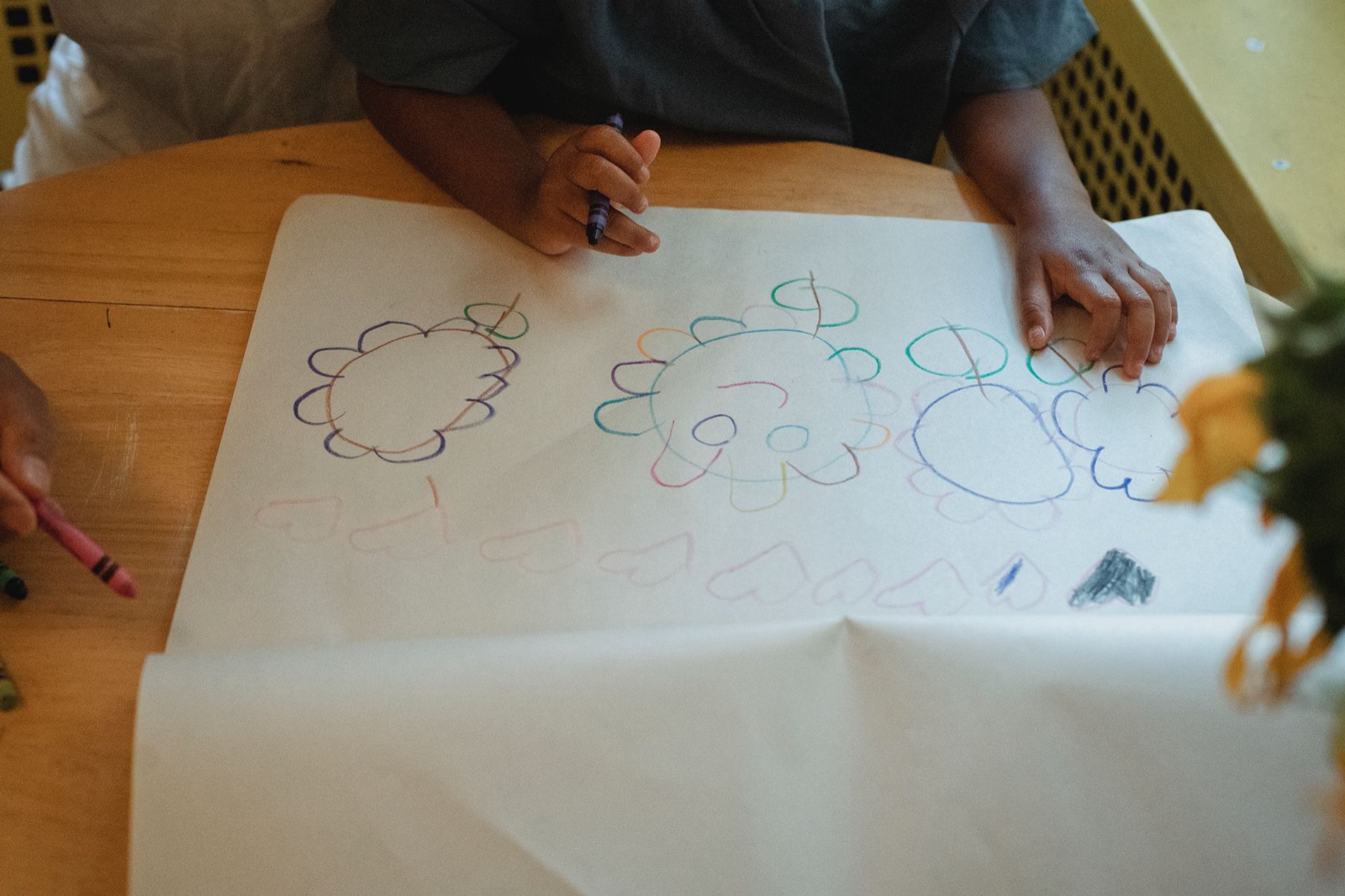
Drawing games for kids that need nothing but paper and a pencil
Seven paper-and-pencil drawing games with the rules spelled out, the usual ways they go wrong, and a fix for each.
9 min read
Rainy day drawing activities that last longer than ten minutes
A wet afternoon planned in stages, so the drawing keeps going after the first burst of enthusiasm fades.
9 min read