A 30-day drawing challenge for kids (that survives day 12)
By the Scribblie team · Published · 9 min read

In this guide
- Why challenges fail on day twelve
- The ten-minute rule
- Set up in five minutes
- Week one: look at things (days 1 to 7)
- Week two: make things up (days 8 to 14)
- Week three: stories and feelings (days 15 to 21)
- Week four: a project and a finish (days 22 to 30)
- What to do when it stalls anyway
- Adapting it by age
- Day one starts with a question
- Common questions
Most daily drawing challenges are great for about eleven days. Then the novelty fades, the prompts feel like homework, someone is ill, and the notebook disappears under the sofa. If you have started one of these with a child before, you know the pattern. This plan is built around that dip.
It runs for thirty days, though you can cut it to fifteen or ten, and it comes with a ten-minute rule, a theme for each week, a pass for days you skip, and a small exhibition at the end. It is designed for children from about six up, and we have notes on adapting it for younger and older ones.
Why challenges fail on day twelve
It is rarely about willpower. A challenge fails because the first week costs nothing and the second week starts costing something. By day twelve, the child has used up their ideas, the parent has used up their nagging, and the drawings have stopped being exciting. Nothing new has happened for a while.
There are three predictable causes. The task is too big, so a day with no time feels like a day of failure. The prompts are too random, so the child spends five minutes choosing and has none left to draw. And there is no finish line anyone cares about, so the thirtieth drawing feels no different from the twenty-ninth.
The plan below fixes each in turn: a task small enough to do on a bad day, themes that narrow the choice, and an ending that matters. None of it is clever. It is mostly about lowering the bar, which is the opposite of what challenges usually do.
The ten-minute rule
Every drawing takes ten minutes or less. Set a timer if your child likes timers, and leave it off if they do not. The rule exists so that no day is too hard. A child who is tired, grumpy or behind on homework can still do ten minutes, and a child who is full of ideas can do ten minutes and then carry on if they want to.
The corollary is that a drawing is allowed to be unfinished. One line, a face, a scribble that never became a bear: all of that counts. The only failure is a blank page that was never touched, and even that can be fixed with a single mark.
Pick a time that does not compete with anything. Right after a snack tends to work. Just before bed tends not to, because everyone is tired and the drawing gets rushed. Make it the same slot every day if you can. Habit does more of the work than motivation.
Set up in five minutes
You need a notebook with plain pages, or a pile of paper held with a clip, and a pencil or a pen that your child likes. A cheap sketchbook is better than a lovely one. Children can be nervous of ruining a nice notebook, and the first page is always the hardest. For what else is worth having, our art supplies starter kit lists the basics.
Write the date at the top of each page. Let your child do it. It is a small ritual, and it turns the notebook into a record.
Then make a calendar. A sheet of paper with thirty squares is enough. Do not use stickers as rewards for each day. Instead, let the child draw a tiny version of the day's picture in the box. By the end, you will have a map of the whole month in miniature.
Finally, hand out the passes. Three free-skip tokens, each a small slip of paper. They can be used any time, no explanation needed. Children rarely use all three, and having them takes the dread out of day twelve.
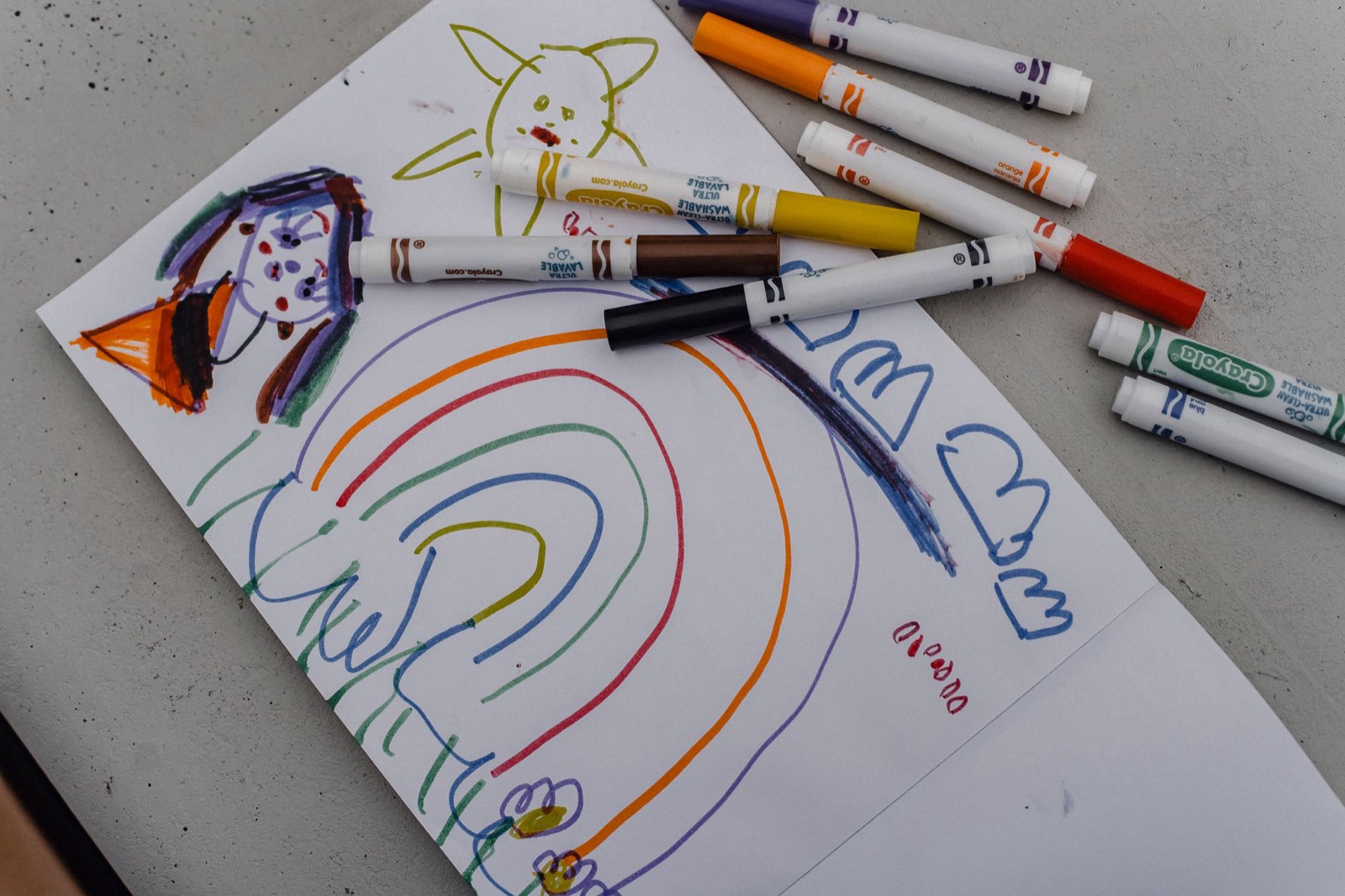
Week one: look at things (days 1 to 7)
The first week should be easy, concrete and a little bit funny. Choose objects, and let your child pick one for each day. The themes are about looking and not about inventing, because looking is simpler.
A week of ideas might run like this. Day one, your own shoe. Day two, something in the fridge. Day three, a plant, a leaf or a piece of fruit. Day four, your own hand holding something. Day five, a toy that has seen better days. Day six, the view from a window. Day seven, whatever you like, which is a bonus day that stops the week from feeling like a syllabus.
Do not correct anything. The aim of week one is to get the habit in place, not to improve anyone's drawing. If your child asks how to draw a shoe, say you do not know either, and suggest starting with the shape of the hole.
Week two: make things up (days 8 to 14)
This is the week that decides the challenge, and it is where the dip arrives. Week two switches to invention, which is more fun and more demanding. We suggest a lot of silliness here to counter the slump.
Run through these over the week: an animal that does not exist, a house for a very specific animal, a vehicle that does something strange, a monster with a job, a food that would be terrible for dinner, a place you would like to visit, and a creature who lives in your bag. If you like the monster idea, the draw-a-monster game has extra rules.
On day twelve, bring out a surprise. It could be a new colour, a different size of paper, a drawing you do alongside them, or a day where you swap notebooks and each draw in the other's. Do not wait for the slump to arrive. Plan the surprise in advance.
If a day is missed, use a pass without comment. If two days are missed, shrink the next one: draw one thing, in one colour, in two minutes.
Week three: stories and feelings (days 15 to 21)
By now the habit is working, or it is not, and either way you have learned something. Week three is about telling stories and putting feelings on paper.
Prompts for this week: draw the best moment of your day, draw a character who is nervous, draw what is under the stairs, draw the same face with three different moods, draw something that happened yesterday as if it were a movie poster, draw a place where you feel calm, and draw the start of a story, with the next page left blank.
A drawing is not a reliable window into how a child feels, so we would not try to analyse these. Treat them as conversation starters. "Tell me about the nervous one" is much more useful than any guess. Our guide to conversation starters about a child's drawing can help if you get stuck, and the page on story-starter drawing prompts has the follow-up questions.
You may find that week three is where your child gets most attached to the notebook. Children often like to look back over the earlier pages, and that is a good moment to say nothing and let them.
Week four: a project and a finish (days 22 to 30)
The last stretch is for one larger idea. Let your child choose: a comic strip, a map of an invented island, a set of five animals that live together, a poster for a made-up film. They work on it a little each day, adding pieces, so by day twenty-eight it has a size and a shape.
Days twenty-nine and thirty are for the exhibition, which is the finish line the whole plan hangs on.
Spread the notebook pages on the floor, or tape them to a wall at your child's eye level. Let them choose their five favourites and write a title for each. Invite whoever is around: a grandparent on a video call, a neighbour, a sibling. Our guide for kids and grandparents drawing together has a few ideas for the remote version.
The exhibition does not need a cake, but a cake is a good idea. Give the child a role: guide, curator, the person who says "please do not touch". Many children take this part with enormous seriousness.
After the party, decide together what happens to the notebook. Some families keep it on a shelf as a record of one particular month. Others cut out the best pages for the wall and recycle the rest, which is also fine. If you want to keep the pages properly, our guides on photographing kids' drawings and storing kids' artwork cover both.
Then ask: would you do it again, and what would you change? Children give astonishingly practical answers. "Shorter. And no shoes." is a complete review, and a good plan for next time.
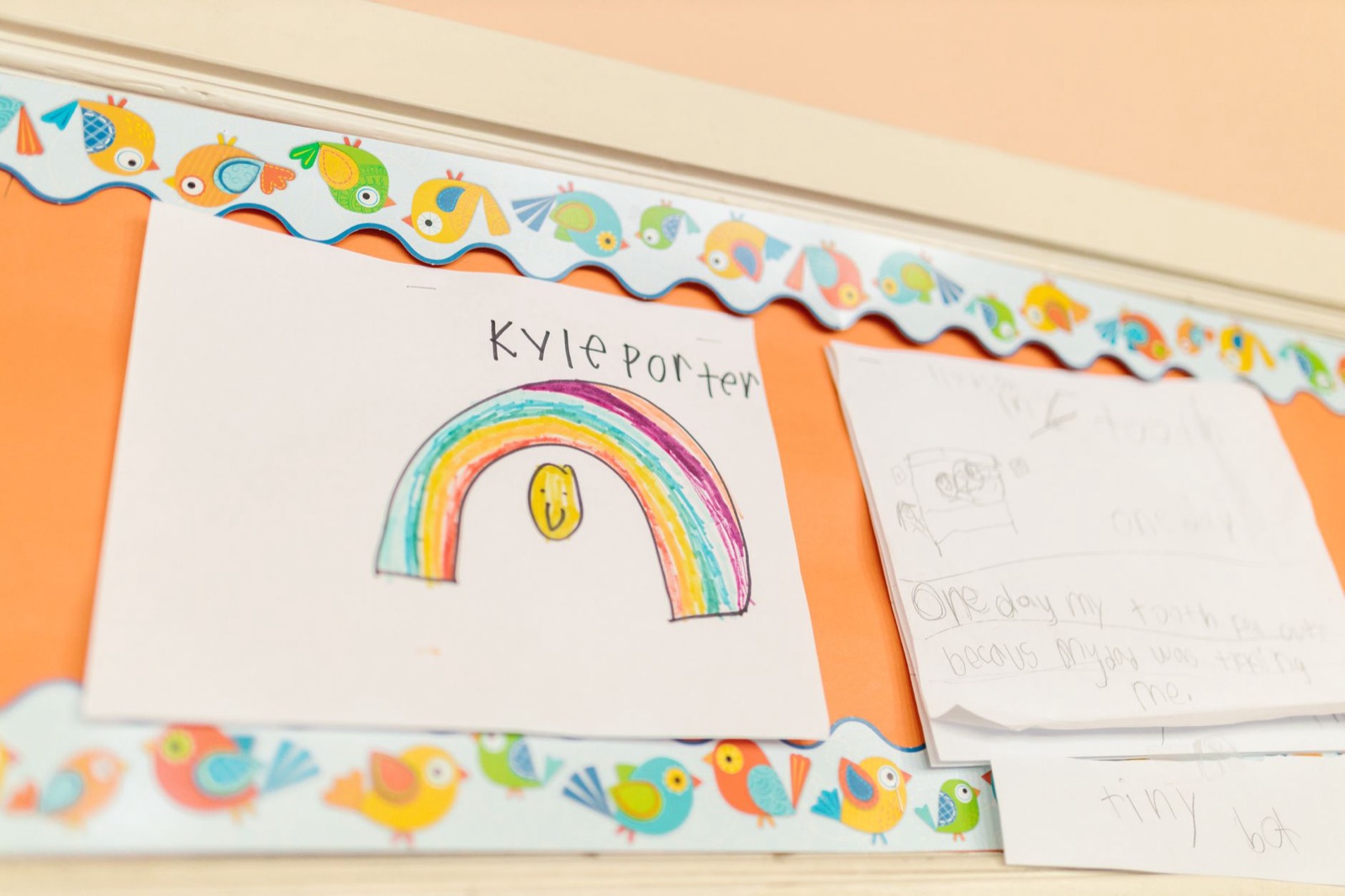
What to do when it stalls anyway
Even a good plan stalls sometimes.
Shrink it. Two minutes, one line, one colour. A tiny drawing still counts, and a tiny success is more useful than a big failure.
Change the tool. A felt tip instead of a pencil, a pen on the back of an envelope, chalk on the pavement. A new tool is often all that is needed.
Change the company. Draw with a sibling, a friend, or on a video call with a relative. Children are far more willing to keep going when someone else is doing it too.
Pause it. If it has been a week since the last drawing, call a rest day and mean it. Come back with a new theme, or start a fresh notebook. The challenge is a tool for the child, and not the other way around.
And if your child does not want to continue, accept it. A challenge that was fun for twelve days has done its job. We would rather a child leave with a good feeling about drawing than finish with a grudge.
Adapting it by age
For five and six year olds, make it a fortnight, with three or four short prompts a week. The calendar becomes the main attraction. They may prefer big paper, thick crayons and a grown-up who sits alongside. See our easy drawing ideas for 3 to 5 year olds for a lighter touch.
For seven to nine, the plan is about right as it stands. Add a few prompts that give a reason to look carefully, and some where they can invent freely.
For ten and over, let them design their own prompts, or run the challenge as a series of constraints: three colours only, no straight lines, drawn in under a minute. Many children of this age want ownership of the plan, and the exhibition can become a homemade zine, a folder or a small display on a shelf. If they want to share with friends, a printed sheet works fine.
Day one starts with a question
You do not need to start on the first of the month. Tonight, ask your child what they would like to draw for ten minutes tomorrow, and write down the answer on a scrap of paper. That scrap is day one's prompt.
Put the notebook where they can see it and leave it there.
Common questions
How do I start a drawing challenge for my child?
Pick a start date, one notebook and one rule: ten minutes or less. Choose the first week's theme together and let your child decide where in the house the notebook lives. Keep the first few days small and the mood light.
What if my child misses a day of the challenge?
Nothing happens. Build in two or three free passes at the start so that skipping is part of the plan instead of a failure. Many children come back the next day with more enthusiasm than before.
Are there daily drawing prompts for kids I can use?
Yes, and the four weekly themes below give you a prompt for every day. You can also use a jar of folded prompts, or let your child pick a word from a book. Our age-sorted prompt guide has more if you run out.
Should the challenge be 30 days, or is that too long for a child?
Thirty days is a lot for a six-year-old and often fine for a ten-year-old. Shorten it to a fortnight or a week for younger children, or run it as three days a week. The point is a finished set of drawings, not a streak.
Should I reward my child for finishing a drawing challenge?
We would keep rewards small and about the work, such as an exhibition or a new pencil, and avoid prizes tied to a streak. A streak punishes the day someone is ill or busy. The satisfaction of a finished set is usually enough.
How do I help my child who loses interest halfway through?
Change something small: the paper, the pen, the place, or the theme. A mid-challenge slump is common and not a sign that the child dislikes drawing. Let them skip, take a new direction, or simply stop.
Keep reading

The draw-a-monster game: rules, variations and why kids love it
Three ways to play draw-a-monster, why children return to it again and again, and how to turn a scribble with eleven eyes into a story.
9 min read
Easy drawing ideas for 3 to 5 year olds that need almost no setup
Drawing activities for little kids at home that start in under a minute, with notes on what to say, what to skip and when to stop.
9 min read
Story-starter drawing prompts: draw first, tell the story after
Five questions, a six-line story spine and some illustrative scripts for turning a finished drawing into a story, without hijacking it.
9 min read