Family drawing games for a long evening (ages 4 to adult)
By the Scribblie team · Published · 9 min read

In this guide
A good family drawing game lets a four-year-old, a nine-year-old and a grandfather who says he cannot draw all play at the same table, and nobody finishes feeling bad. That is harder than it sounds. Most games either bore the adults or flatten the little ones.
Each game below has its rules, a note on how to handicap or help, and the usual way it goes wrong. A suggested running order at the end covers a whole evening.
Rules for the whole evening
Before anything starts, agree three things. First, bad drawing is the goal. If the adults draw well, the children stop. If everyone draws badly on purpose, the youngest feel brave. Say it out loud: "the worse, the better".
Second, nobody judges seriously. You can laugh at a drawing, but not at a person. A four-year-old who has just drawn a shape with great concentration and is told it looks like a potato will not forget the potato.
Third, stopping is allowed. Anyone can sit out a round without explanation. People who are tired or shy often rejoin later, sometimes as the loudest participant.
You do not need anything beyond paper and pencils. Thicker markers are good for the youngest. Scrap paper, the backs of envelopes and the clean side of old printouts all work. If you want to know what else to keep around, our art supplies starter kit has a short list.
Telephone pictionary: the one to start with
Rules: Everyone has a sheet of paper, or a small stack folded in half. Each person writes a short sentence at the top of the sheet, such as "a dog riding a bicycle to the moon". Pass the sheet to the left. The next person folds the sentence out of sight and draws what it said. Pass again. The next person looks only at the drawing, folds it away, and writes what they think it shows. Keep alternating until the sheets come back to their owners. Then unfold each stack and read it aloud, one page at a time.
Why it works: it is a game of mistakes. A dog on a bicycle becomes a horse in a boat, then a fish wearing a hat, and finally "an unhappy chicken". Everyone has contributed to the confusion, so nobody takes the blame, and the final reveal is reliably the loudest moment of the evening.
Making it work for mixed ages: pre-readers can draw but not write, so pair them with a grown-up who does the writing for them. Or let them only draw, with an adult as the interpreter who whispers what they think it is. The youngest child's contribution tends to be the one everyone remembers.
What goes wrong: sentences that are too long or too cryptic. Keep them short and concrete. "A giraffe in the bath" is better than "the feeling of nostalgia". If a round drags, stop after four people, and use smaller groups.
The shared landscape
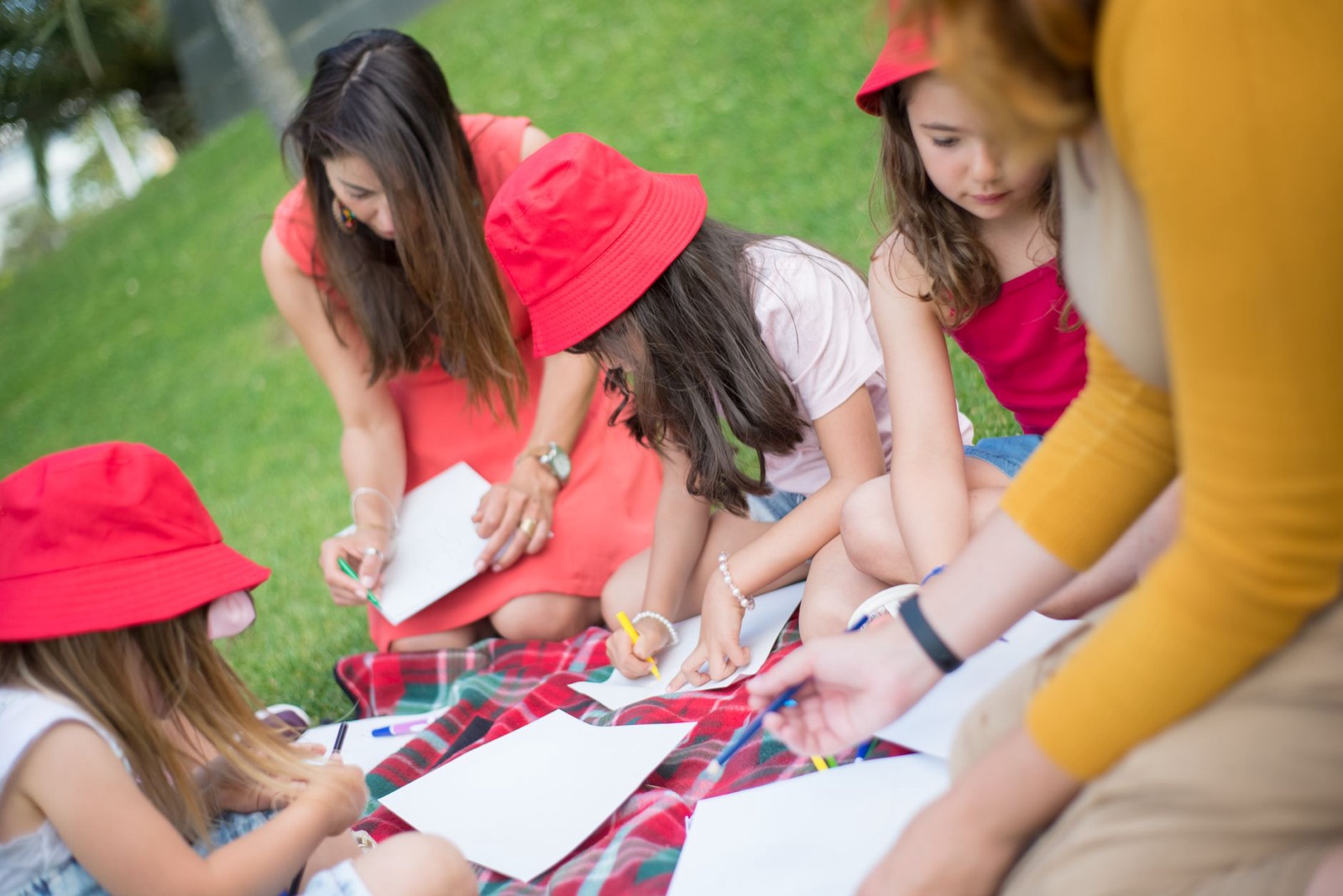
Rules: Take a large sheet, or tape four sheets together. Everyone gets a patch of it, drawn with a thin line at the start so you know where the borders are. Each person draws something in their patch, but it has to connect to their neighbours' patches. A road crosses the border, a river continues, the dragon's tail wanders into the next patch.
Why it works: nobody needs to be good at drawing. They need to look at what the next person is doing, and react. It is a collaboration game in which the connections become the joke. A shy child who draws one small tree at the edge of the page is as important as the nine-year-old who draws a castle, because without the tree, the road has nowhere to go.
Making it work for mixed ages: give the youngest a central patch, because they will enjoy being the middle of the world. Adults take the edges, where they can quietly sort out what has been left undone.
What goes wrong: a hungry artist takes over. Set a timer for a few minutes per patch, and rotate. For a bigger version with a theme, our rainy day drawing activities describes a long-paper mural in detail, and the same rules apply.
One pencil, two people
Rules: Pair up. Each pair shares one pencil and holds it together, one hand on top of the other, or one hand each on the same pencil. A third person calls out a subject: a house, a cat, a king, a bicycle. The pair draws it, neither one in sole control. After a minute, show everybody.
Why it works: it is physically ridiculous. The two of you pull in different directions, and the drawing is a compromise, which is both the game and a small lesson in cooperation. It pairs adults and children surprisingly well, since both are equally unsure of what the pencil is going to do.
What goes wrong: the stronger player drags the weaker. Remind the grown-ups that they are not leading, they are following. A small trick is to ask the adult to close their eyes so they cannot cheat.
Mystery bag drawing
Rules: Put a small object in a bag or a sock: a spoon, a key, a toy, a lemon. One person feels it without looking and draws what they feel. Everybody else guesses what the object is. Then reveal it and compare.
Why it works: touch makes drawing strange, and children are often better than adults at it because they pay closer attention. It is a good game for a quieter part of the evening, when the loud rounds have finished.
Make it work for mixed ages: the youngest can describe aloud what they feel while an adult draws their words, which reverses the usual roles. This is a good way to get a four-year-old to find words like "bumpy" and "cold".
What goes wrong: choosing something too obvious. A ball is a circle. A pair of scissors, or a peeler, would be a better test. Do not use sharp objects. Choose blunt, safe items, and keep anything that might be a choking hazard out of reach of small children.
Handicapping the grown-ups
A family game has a fairness problem. The adults can draw, and the children know it. You can fix this without being patronising.
Use non-dominant hands. This levels the field, and the sight of a father drawing a cat with his left hand is worth the price of paper. Give adults shorter time limits, such as twenty seconds against a child's minute. Hand them thick markers, or a pen with the lid on. Make them draw with the paper on their head, or on a wall at arm's length.
You can also give children special powers. A child can veto any one word, or a child's guess counts double. A younger sibling can ask for a hint. These are not charity. They make the game more interesting for everyone, because the grown-ups must work harder to get their ideas across.
Whatever you decide, say it as a game rule and not an apology. "In this game, the adults draw with their left hands" is a perfectly good sentence. "Because you are small, we are going easy on you" is not.
When siblings turn it into a war
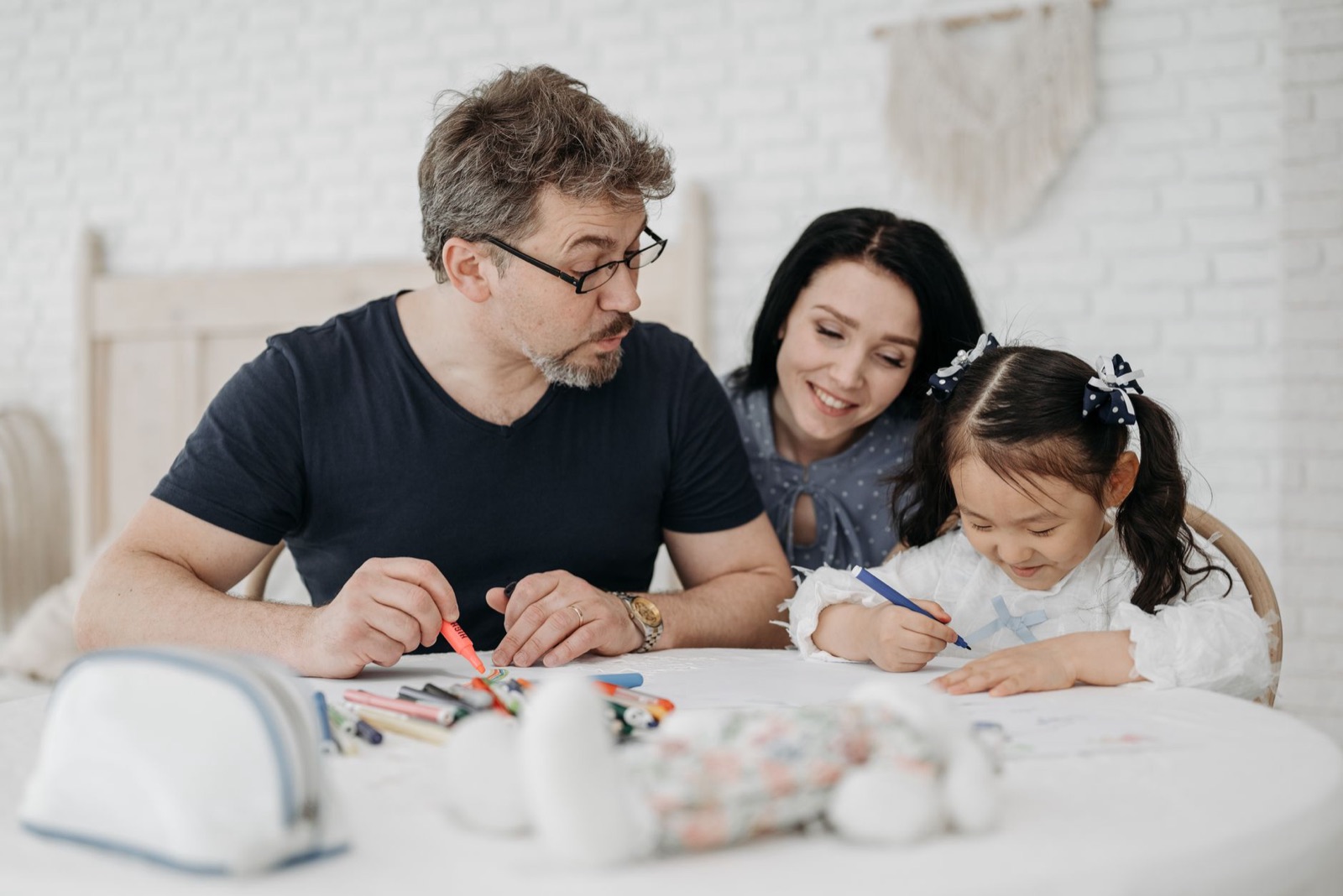
Put two children of different ages at one table with a competitive game, and sooner or later one of them will cry. It is almost never about the drawing. It is about the older one being faster, or the younger one being allowed a do-over, or someone's elbow.
A few moves help. Swap competition for collaboration wherever you can: the landscape and the one-pencil game have no winners at all. When you do play a game with guessing, put the siblings on the same team, so that the older child's cleverness works for the younger one. A nine-year-old who has to get a five-year-old to guess "elephant" learns quickly how to draw something that a five-year-old will recognise.
If a quarrel starts, do not referee the details. Say "this round is paused" and fetch a drink. Five minutes later, nobody remembers what it was about, and the game usually resumes in a better mood.
And accept that some nights it will not work. A child who is hungry, ill or overtired will find fault with every rule you invent. That is a night for the sofa, not for pictionary.
Drawing charades with teams
For a bigger group, try a team version. Split into two teams. One person from team A draws a subject on a sheet, and their team has sixty seconds to guess it. No words, no letters, no numbers. Then team B takes a turn. Keep it moving, and let the youngest member pick the subject cards if you have them.
Subjects should include a mix: easy ones such as a cat or a sun, medium ones such as a birthday party, and silly ones such as "a very tired octopus". A hat with slips of paper in it works well, with adults and children both contributing.
The usual problem is competitiveness. A scoreboard is optional, and for a family with small children we would often skip it. If scoring seems unavoidable, give half a point for creative wrong answers. A game where "a spaghetti hurricane" earns points is a happier one than one where it does not.
If you like this one, our broader list of drawing games without screens has more that are easy to run with two or three people.
A running order for the night
If you want to fill a long evening, an arc helps. Begin with something short and silly to get people holding pencils: a one-minute draw-a-monster, maybe, following the rules in our monster game guide. Then play telephone pictionary, which is the loudest one, while everyone has energy.
After a snack or a short break, move to the shared landscape. It is gentler and gives the quieter players more room. Follow with the mystery bag, and finish with a round of one-pencil-two-people, which is such a silly way to end that people leave laughing.
Keep a rest period in the middle. Younger children flag first, and a four-year-old at nine o'clock is not at their best. If they are ready for bed, let them take their favourite drawing from the night to put on the fridge. For bedtime, our guide to bedtime stories from your child's drawing turns one of those pictures into a story.
A word for the reluctant adult
Some grown-ups dislike drawing. They tell you they cannot do it, they were told so at school, and they would rather wash up. We would not force them. Give them the job of reading out the telephone pictionary chain, which needs a good voice and timing, or ask them to be the one who decides what counts as a correct guess.
Sooner or later, they will pick up a pencil, usually because the game has gone badly wrong in an entertaining way. Children are watching how the adults handle being bad at something. The grown-up who laughs at their own terrible giraffe is doing the most useful thing in the room.

Next family night
Pick two games, not seven. Telephone pictionary plus one quiet game is plenty for an hour. Put paper and a few markers on the table before anyone sits down, and say nothing about it.
Someone will start drawing. Let them.
Common questions
What are good family drawing games for different ages?
Telephone pictionary, the shared landscape and the pencil-in-two-hands game all work for a four-year-old and an adult at the same table. The trick is a role or handicap for each age so nobody is bored or overwhelmed. Games where bad drawings are funny work best.
How do you play telephone pictionary?
Everyone writes a sentence on a sheet, passes it on, and the next person draws it. The next person looks only at the drawing and writes what they think it shows, and so on around the table. At the end you unfold the stack and read the chain aloud.
How do you make drawing games fair for little kids and adults?
Handicap the grown-ups. Use non-dominant hands, shorter times, or an awkward tool such as a thick marker. Let the youngest decide a rule and count their scribbles as legitimate answers.
What if one family member refuses to draw?
Give them a job: timekeeper, judge, or the person who reads the final chain aloud. Many reluctant drawers join in once they see the standard is low. Do not force it.
How many people do you need for family drawing games?
Two is enough for some, but telephone pictionary and shared landscapes get better with four to eight. For bigger groups, split into teams and give each team a sheet.
Do you need to score family drawing games?
You do not, and we would often skip it. If you do, award silly prizes for categories like most improved nose. A scoreboard can make the youngest feel left out.
Keep reading
The draw-a-monster game: rules, variations and why kids love it
Three ways to play draw-a-monster, why children return to it again and again, and how to turn a scribble with eleven eyes into a story.
9 min read
Drawing games for kids that need nothing but paper and a pencil
Seven paper-and-pencil drawing games with the rules spelled out, the usual ways they go wrong, and a fix for each.
9 min read
Rainy day drawing activities that last longer than ten minutes
A wet afternoon planned in stages, so the drawing keeps going after the first burst of enthusiasm fades.
9 min read