Imaginary friends: why they happen and when parents should (not) worry
By the Scribblie team · Published · 9 min read

In this guide
- What an imaginary friend actually is
- Why they tend to show up when they do
- How to respond when the friend comes to dinner
- When the friend takes the blame
- Talking to a friend versus talking to a toy
- Drawing the friend
- The few things worth mentioning to a doctor or teacher
- When the friend outstays its welcome
- What the friend can tell you, if you let it
- A gentle, optional extra for children who love their friend
- Tonight, try this
- Common questions
If your child has started talking to someone you cannot see, the short answer is that this is very often ordinary pretend play, and it is usually nothing to worry about. Many children invent a companion at some point, a person, an animal or something that has no name in any dictionary. What helps most is being curious and relaxed. What is worth a quiet word with your child's doctor or teacher is a short list of things we will get to below, and none of them is "my child has a friend named Boris."
What an imaginary friend actually is
Picture a four-year-old who sets a second plate at the table, then gets cross when you sit on the empty chair. That is the classic scene, and it is more complicated than it looks. The child knows, somewhere, that the friend is made up. But the friend still has opinions, a favourite colour and a very strong feeling about crusts.
Imaginary companions come in all shapes. Some are people, some are animals, some are a particular toy that has been promoted to a person. Some are invisible and live in the car. Some are shared with a sibling, which is when things get interesting, because now there are two witnesses and they do not always agree.
We are not psychologists, and we are careful about claiming what research has proved about why children do this. What we can say is that this kind of pretending is widely described as a normal part of childhood, that it tends to show up when children are getting good at make-believe, and that nothing about having a friend you invented marks a child as lonely or unusual. Plenty of very sociable children have one. Plenty of children never do, and that is fine too.
Why they tend to show up when they do
There is no single reason, and anyone who tells you there is has overreached. A few things often seem to be going on at once.
A child between roughly three and seven is discovering that they can hold a whole character in their head and make it say things. That is a big skill. An imaginary friend is a place to practise it every day.
The friend is also someone who does exactly what the child wants, or occasionally refuses to, which can be handy. A child who is bossed around all day by clocks, shoes and school gates might enjoy being the boss of Zorp.
And sometimes the friend appears around a change: a move, a new sibling, starting nursery. We would treat that as a loose pattern, not a rule. Children also invent friends during perfectly calm months, for no reason an adult will ever discover.
How to respond when the friend comes to dinner
You do not need a script, but a few habits make life easier.
Ask the kind of questions you would ask about a real person. "What's Zorp like?" "Does Zorp like peas?" Resist the urge to quiz the child about whether the friend is really there. A child who is asked "is it real?" often feels caught out, and the game goes quiet.
You can neither feed the fantasy nor smash it. Try "I can't see Zorp, but I can tell you're having a great time with him." That is true, and it is warm. You do not have to move seats, though a quick shuffle over costs nothing and tends to be appreciated.
Keep your own rules. If the friend wants a third bedtime story, the answer is still "it's bedtime, and Zorp will be here tomorrow." The friend does not outrank the household.
Treat the friend as a guest. Set a place if you like, but you are not obliged to cook for two. Most children find the idea of a small portion for an invisible guest hilarious and are happy with a quick gesture.
A line that works for most families: "I can't see Zorp, but I'd love to hear what he thinks about this."
When the friend takes the blame
This is the part parents tend to ask about at three in the morning. The milk is on the floor. The child says Zorp did it.
Nearly every parent who has lived through an imaginary friend has met this. It is not lying in the sense we worry about when a ten-year-old does it. It is a four-year-old using the tools they have, in this case a character who is conveniently always nearby.
So skip the argument about who spilled it and go straight to the fix. "Okay, the milk is on the floor. Let's get the cloth." You can add, lightly, "Zorp can help too." That keeps the rule clear (spills get cleaned up) and does not require you to rule on the friend's existence. If the habit seems to be getting out of hand, ordinary honesty talk applies, the same as it would without the friend.
Talking to a friend versus talking to a toy
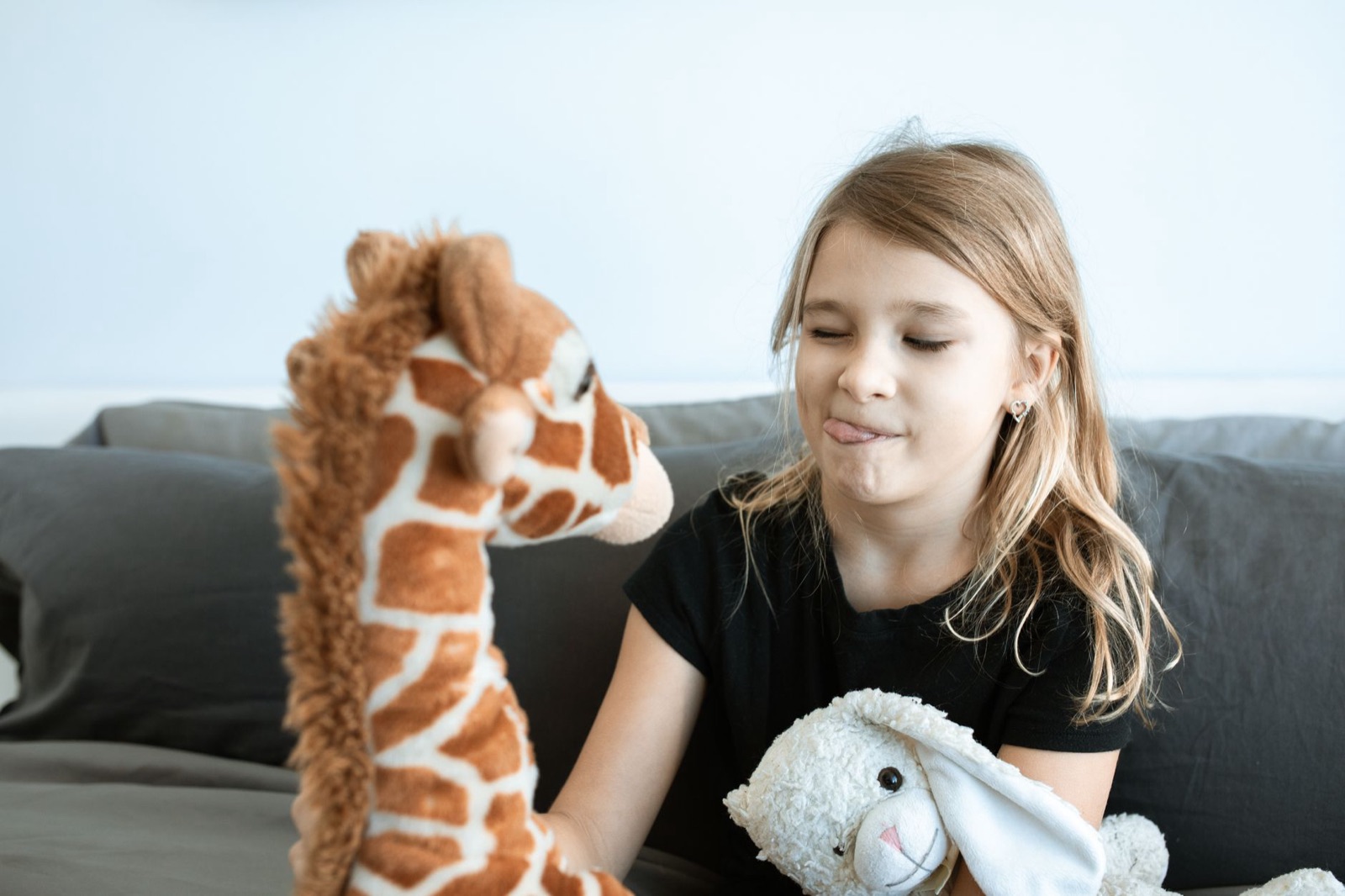
Many families notice that a stuffed rabbit or a figure also gets promoted to a talking character. That is a close cousin of the imaginary friend, and the same approach works. The child is doing the voices, you are being a good audience.
The difference is that a toy gives the child something to hold. If your child is shy about speaking to adults but happy to let the rabbit do the talking, that is a gentle way to find out what is on their mind. We write more about that in our guide on shy kids and creative play.
Some parents wonder whether the child is "too attached." A rough, non-clinical rule of thumb: if the friend adds fun and the child can still stop when it is time to leave the house, it is play. If you are curious about anything beyond that, the next section is for you.
Drawing the friend
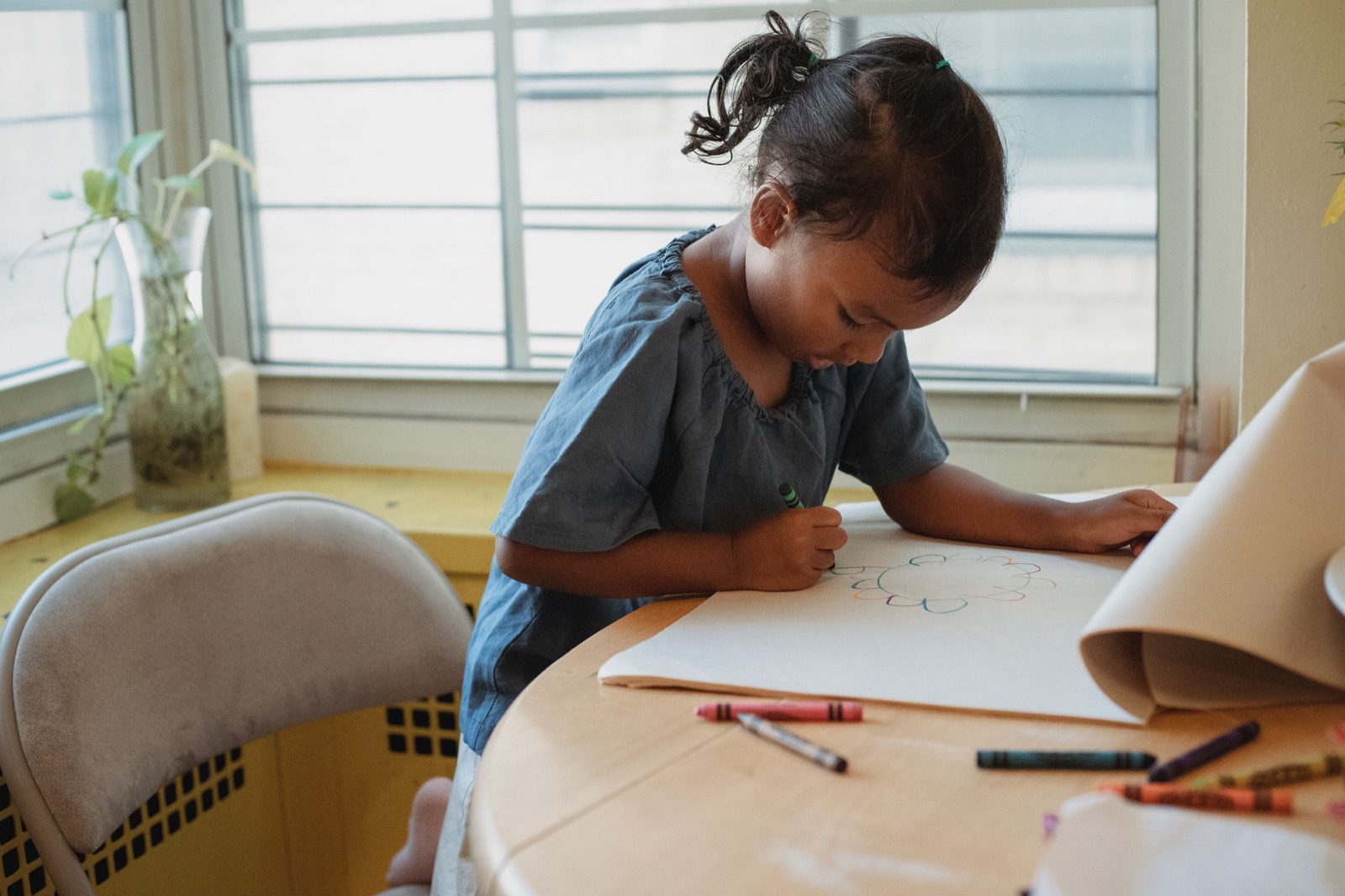
This is where we think a drawing helps, and it is a good moment to offer paper. Invisible friends tend to be vague about what they look like until someone asks, and then there is suddenly a great deal of detail. Zorp has four arms. Zorp is green on Tuesdays.
Offer the pencils and say nothing clever. Try "Would you like to show me what he looks like?" Then let the child direct. Some children will say the friend cannot be drawn, and that is a perfectly good answer.
When the drawing is done, ask about the character, not the picture. "What does Zorp do when he's not at our house?" is a better question than "what's that?". For more of the same, see our list of questions to ask about a child's drawing, and our short guide to how kids name their characters.
We would not read the drawing as a clue to anything. A drawing alone cannot tell you how a child is feeling, and we would be wary of anyone who says otherwise.
The few things worth mentioning to a doctor or teacher
Most of this guide is reassurance, but a few things would make us want a second opinion from someone who knows your child:
- the child seems frightened of the friend, or the friend says scary or upsetting things the child cannot shake
- the child is withdrawing from real children or real activities and the friend seems to be taking all the space
- the play looks stuck and joyless, the same sad scene repeated, rather than lively and changing
- you are noticing other changes at the same time, such as sleep, appetite or mood, that worry you
None of these is a diagnosis, and a friend plus one of them does not mean something is wrong. They are simply the kind of thing a paediatrician or a class teacher is well placed to put in context. A teacher in particular sees your child with other children, which you cannot. If you are worried, say so plainly and ask. You will not be wasting anyone's time.
When the friend outstays its welcome
Some children keep a friend for years, and some friends are loud. A few practical thoughts for the tricky bits.
If the friend is causing problems at school, for example a child who will not line up without Zorp, a word with the teacher is usually all it takes. Teachers have met imaginary friends before.
If the friend only appears when the child is cross or tired, that is useful to know, and worth gently noticing without making a drama of it.
If a younger sibling is being roped in, you might need a house rule such as "Zorp does not get a vote at breakfast."
And if the friend simply fades, do not be surprised if your child cannot say when it happened. Some children announce a funeral, and some just stop mentioning the name. Either is normal.
What the friend can tell you, if you let it
Children often say through a character what they would never say straight. A friend who is "scared of the dark" may be a child who is a bit scared of the dark. A friend who "does not want to go to school today" may be reporting for duty on behalf of the owner.
We would not treat this as evidence of anything, and we would not interrogate. But it is a useful side door. You can answer the friend and, in doing so, answer the child. "Zorp doesn't like the dark? Maybe we could leave the hall light on for him." The child hears that the feeling was taken seriously, and nobody had to admit to it.
The same trick works for good news. A friend who is proud of a tower built out of cushions is, nearly always, a child who is proud of a tower built out of cushions. Say something to the friend, and watch the child's face.
Grown-ups sometimes feel a small pang at all this, as if they have been replaced as the confidant. You have not. The friend is one more voice in a busy head, and you are still the one who gets asked for the plaster, the story and the glass of water.
A gentle, optional extra for children who love their friend
Scribblie, the app we are building, is one way some families may want to keep a drawn friend company: a child draws a character, and it wakes up, says hello and asks for its name. The child talks to it out loud, and the replies are generated by AI models, so they can occasionally be imperfect. It is made for roughly ages five to eight and is not yet in the stores. We would be the first to say it does not replace the imaginary friend your child invented, and it is not designed to. Read how it works, including the limits, in how Scribblie works.
If you are not sure about screens at all, that is a fair position, and our notes on creative screen time versus passive screen time might help you decide.
Tonight, try this
Ask one question at bedtime and then listen without fixing anything. "What did Zorp do today?" Whatever comes back, write it on a sticky note and keep it. In a year it will be one of those scraps you are very glad you did not throw away.
Common questions
Is it normal for a child to have an imaginary friend?
Many children have one at some point, most often in the preschool and early school years, and it is generally thought of as an ordinary part of pretend play. Every child differs, and having no imaginary friend is just as ordinary.
Should I play along with my child's imaginary friend?
Playing along lightly is usually fine and keeps the door open between you. You do not have to pretend you can see the friend, just treat them with the same courtesy you would give a toy that matters to your child.
What if my child blames the imaginary friend for mess or rules broken?
It is a very common move, and it works best to deal with the mess, not the friend. Something like "Zorp can't be here right now, but you and I can fix the milk" keeps the rule clear and the game intact.
When should I worry about an imaginary friend?
The friend itself is rarely the worry. If your child seems frightened or distressed by the friend, pulls away from real children, or the play seems stuck and joyless, mention it to your child's doctor or teacher. A drawing or a game alone proves nothing either way.
Is a child drawing an imaginary friend a good sign?
Drawing the friend is a natural thing to do, because a drawing gives an invisible character a face. It is a lovely way to learn more about the character, and it is not a test of anything.
How long do imaginary friends last?
There is no fixed timeline. Some friends visit for a few weeks, some stay for a couple of years, and many simply drift away as school and real friendships take up more room.
Keep reading
Shy kids and creative play: easing a quiet child into talking about their work
A quiet child is not a problem to solve. Here are gentle, low-pressure ways to share creative time, from parallel drawing to puppet voices, without ever calling them shy.
9 min read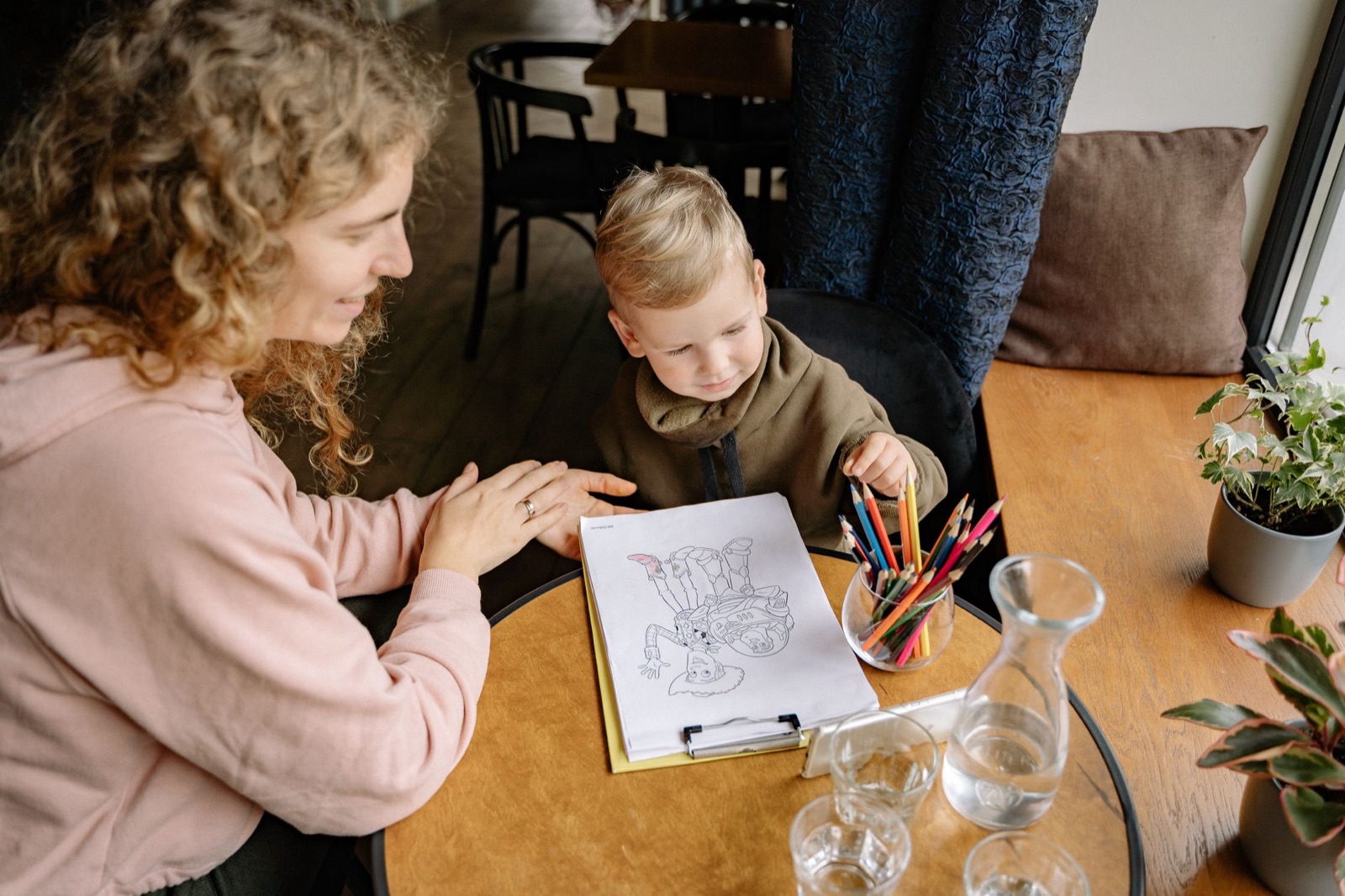
20 questions to ask about your child's drawing instead of "what is it?"
"What is it?" ends more conversations than it starts. Here are twenty better questions, sorted by purpose, with notes on how to listen once your child starts talking.
9 min read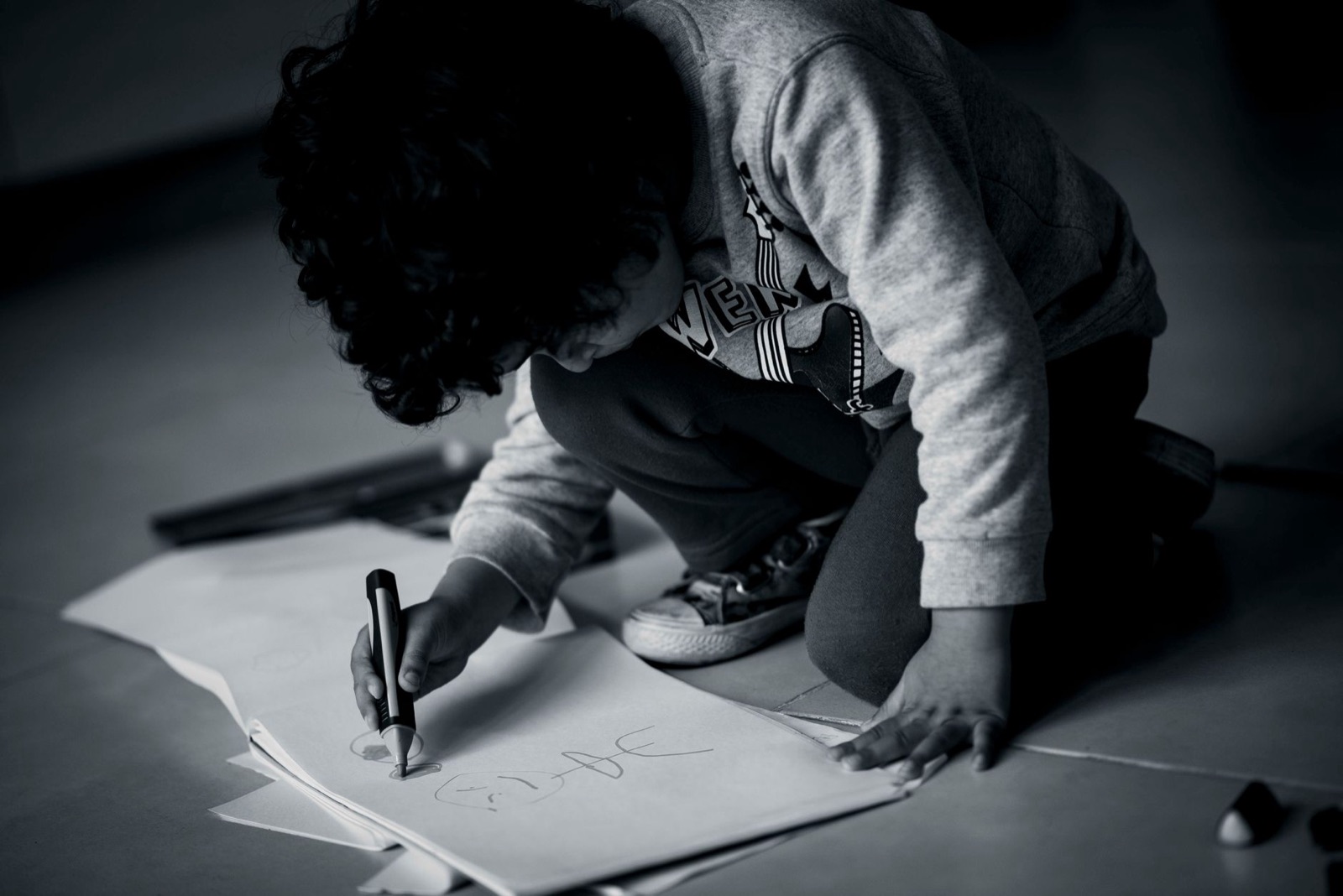
Kids naming characters: why you should always ask what their drawing is called
Your child's creature is called Splonk, or Mr Toast, or Nothing. Why asking for the name is one of the nicest questions you can put to a young artist, and what to do with the answer.
8 min read