Are talking toys good for kids? What we know, what we don't, and how to choose
By the Scribblie team · Published · 8 min read
In this guide
- First, what we cannot tell you
- What children seem to need, broadly
- Different kinds of talking toy
- The real risk is what it replaces
- A checklist for choosing one
- Microphones, accounts and where the voice goes
- How to play so the toy helps
- When speech seems slow
- Where Scribblie sits in all this
- Before you buy
- Common questions
A talking toy can be perfectly good fun, but nobody can promise that one will make your child talk sooner or better. What we can say is that babies and toddlers pick up language mainly from people who talk, wait and listen, and a toy that talks to a child is doing a different job from a person who talks with them. So the useful question is how a toy will fit into the talking we already do. This guide covers what is known, what is not, and how to choose.
First, what we cannot tell you
We are not aware of solid, well-replicated evidence showing that any particular talking toy improves speech or language in babies or toddlers. We are also not aware of strong evidence that they harm it. There may be studies we do not know about, and the products change faster than research can follow them.
That is an unsatisfying answer, and it is the true one. If a box says "boosts vocabulary", ask what that is based on. Often it is a claim about what the toy is designed to do, not a result anyone has measured in children like yours.
Be a little suspicious of anyone, including us, who sounds very sure about this topic in either direction.
What children seem to need, broadly
Here is the part that is widely agreed in general terms. Young children learn to talk by being around people who talk to them and respond to what they do. A baby babbles, you answer. A toddler points at a dog, you say "dog, a big brown dog." That back-and-forth, sometimes called "serve and return" by people who write about early childhood, is the ordinary engine of early language.
A toy can join in. But a toy has limits that a person does not. It does not look where the child is looking. It does not notice that the child is tired, or has just said a word for the first time. It says the same thing the same way, which can be soothing and can also be a bit dull.
A toy is a fine thing to have near, and you are the thing that matters.
Different kinds of talking toy
"Talking toy" covers a lot, and the differences matter more than the label.
Press-a-button toys. A button, a song, a phrase. Predictable, cheap, and loved by many toddlers precisely because it does the same thing every time. They can also be loud, which is a parent's problem more than a child's.
Toys that respond to touch or movement. A plush that giggles when squeezed, or a ball that says "roll!" These can be nice for cause and effect: I did a thing, the toy did a thing.
Toys with a recorded voice. A plush that plays a family member's recording is a different animal. It carries a familiar voice, and some families use it for travel or bedtime.
Toys that listen and answer. Some now include a microphone, an internet connection and software that generates replies. These raise more questions than the others, about privacy and about what the toy might say. We come back to that below.
The real risk is what it replaces
If there is a worry here, we would put it in one place: the toy ends up doing all the talking while the grown-up gets on with something else.
That is an entirely human thing to do. Everyone needs ten minutes to cook dinner. A toy that keeps a toddler happy while you chop onions is a reasonable tool, and we are not going to scold anyone for using it.
The thing to watch is the pattern. If most of a child's talking time is with toys and screens, and little is with people, it is worth adjusting the balance where you can. That does not need to be dramatic. A song in the car, a running commentary while you put the shopping away, a few minutes of floor play.
If you are interested in how this overlaps with screens, our guides on screen time for toddlers and how much screen time by age are the next stops. The WHO's 2019 guidance on screen time for children under five is worth reading in its current version, since guidance changes.

A checklist for choosing one
If you do want one, here is what we would look at in the shop or on the product page.
- Is there an off switch that is actually off, and a volume control you can reach?
- Does it wait for the child, or does it keep talking and prompting?
- Can the child play without it? A good toy is still fun when the batteries die.
- Does it have small parts or button batteries? Check the age label, and that the battery door is screwed shut. Button batteries are dangerous if swallowed, so keep them out of reach and seek medical help straight away if one is ever swallowed.
- Does it need an app, an account or the internet? If so, what is collected?
- Is the voice pleasant to you? You will hear it a thousand times.
The last one is not a joke. A toy whose voice drives you up the wall will end up in a cupboard, and you will have wasted your money.
Gifts and grandparents
Talking toys are the classic present from someone who loves your child and has not seen the inside of your house at 6 a.m. If a loud one arrives, you are allowed to take the batteries out "to save them for later." Many parents do, and many toddlers never notice.
It is kinder, and more useful, to tell relatives what you would actually like. A plain request for books, art supplies or a time to video call does the job. A recorded message from a grandparent, played at bedtime, may turn out to be the best talking toy of all.
Parents often feel guilty about a toy that talks while they are busy. We would put the guilt down. A toy on a busy morning is not a failure, and nobody's child was ever undone by a singing duck. The thing to keep an eye on is the overall balance, which you are already doing by reading this.
Babies and toddlers are not the same audience
A young baby gets most from faces, singing and rhythm, and a rattle will do. A toddler of two or three often loves the toy that responds to a push, because they are in love with cause and effect. A child nearer five may start to find simple talking toys babyish and prefer to make their own voices up. That is a sensible reason to spend modestly and not to buy for the age your child will be next year.
Microphones, accounts and where the voice goes
Toys that listen and reply are not the same as toys that play a recording. If a toy has a microphone and a connection, a few questions are worth asking before it comes home.
Where does the child's voice go, and is it kept? Can you switch listening off? Can you see and delete what was stored? What does the maker say it does with the data? Is there advertising?
You will not always get clear answers, and a vague answer is also an answer. Our general guide to how kids' apps use your child's data lists the same questions in more detail, and the piece on voice assistants and kids covers the speaker-in-the-kitchen version of the same problem.
If a toy produces its own replies using AI, it may also say something odd. That is not a reason to panic, but it is a reason to stay in earshot, especially at first. We go through the general questions in is AI safe for kids.
How to play so the toy helps
Used well, a talking toy can be a prop in a conversation, a bit like a puppet. A few habits make that more likely.
Sit down and join in. Say what the toy says, and then say something about it. "It said moo. What does the cow like to eat?"
Let the toy be wrong. Toys say funny things, and a toy that gets things wrong is a chance for a toddler to correct it, which they adore.
Keep sessions short and switch off. A toy that is on all day becomes wallpaper, and children stop hearing it, which is a shame for you and for the toy.
Narrate your own day. It sounds odd, but telling a toddler "I'm chopping the onion, it's making my eyes water" is language, delivered by the one voice that matters most.
For children who are beginning to make up stories, a talking toy can become a character they do the voice for. That is a close relative of the imaginary friends many children invent.
When speech seems slow
A word on a worry that brings many people to this topic. Parents search for talking toys because a child seems late to talk, and a toy feels like something they can do.
We cannot assess any child from here, and children differ widely in when words arrive. But if you are concerned about your child's speech or hearing, please talk to their doctor, who can refer you to a speech and language therapist if it is needed. Early checks are routine, and a hearing check is often one of the first things people suggest. A toy is not a substitute for that, and no toy should be bought as treatment.
Where Scribblie sits in all this
We are building an app called Scribblie, which is not yet in the stores, and it is worth saying where it sits, since it talks. A child draws something, the drawing wakes up and says hello, and the child can talk to it by voice. It is made for roughly ages five to eight, with other settings for younger and older children, so it is not a toy for babies, and we would not suggest it for a toddler. A parent signs in and gives consent first, and can switch listening and speaking off separately. The child's voice is sent for transcription and deleted afterwards. The replies come from AI models and can be imperfect. We cannot promise it improves speech, and we do not claim it does. If you would like the details, how Scribblie works sets them out.
Before you buy
Try this before you spend anything. Spend one afternoon talking to your child as if you were the toy: the same simple phrases, a bit of singing, lots of pausing for their answer. Notice what they respond to. Then decide whether you need a toy at all, or whether you just wanted to hear your child say something back.
Common questions
Are talking toys good for babies?
Nobody can say that a particular talking toy will help or harm a baby, and we are not aware of strong evidence about specific toys. A toy can be a pleasant thing to play with, but a baby learns language mostly from people talking and listening to them.
What are the best talking toys for toddlers?
There is no single best one, and we would be wary of any list that claims otherwise. Look for toys with a volume control and an off switch, simple sounds that respond to what the child does, and nothing that pushes a child to keep playing.
Do talking toys help speech in 3 year olds?
Some children enjoy repeating phrases from a toy, and that can be fun, but it is not the same as a conversation. If you are worried about your child's speech, ask their doctor or a speech and language therapist, not a toy box.
Are talking toys bad for language development?
We do not know of good evidence that they are harmful on their own, and we would not blame a toy for a speech concern. The practical risk is that a toy takes the place of the talking and listening you would otherwise do together.
Are interactive talking toys with microphones safe?
It depends on the product, and it is worth asking where the voice goes, whether it is stored and whether you can turn the microphone off. Read the maker's privacy information before buying, and check what you can delete.
How can I use a talking toy well?
Play next to your child, talk about what the toy says, and switch it off when it becomes background noise. Treat it as a prop in your conversation, not a replacement for you.
Keep reading
Imaginary friends: why they happen and when parents should (not) worry
Your child has a friend you cannot see, and you have been asked to set a place at the table. Here is what is usually going on, how to play along, and when to check in with someone.
9 min read
How Scribblie Works: From a Drawing to a Friend Who Talks Back
A plain-English walk through Scribblie, the app we are building: how a drawing becomes a friend, what it remembers, what grown-ups control and where it can go wrong.
8 min read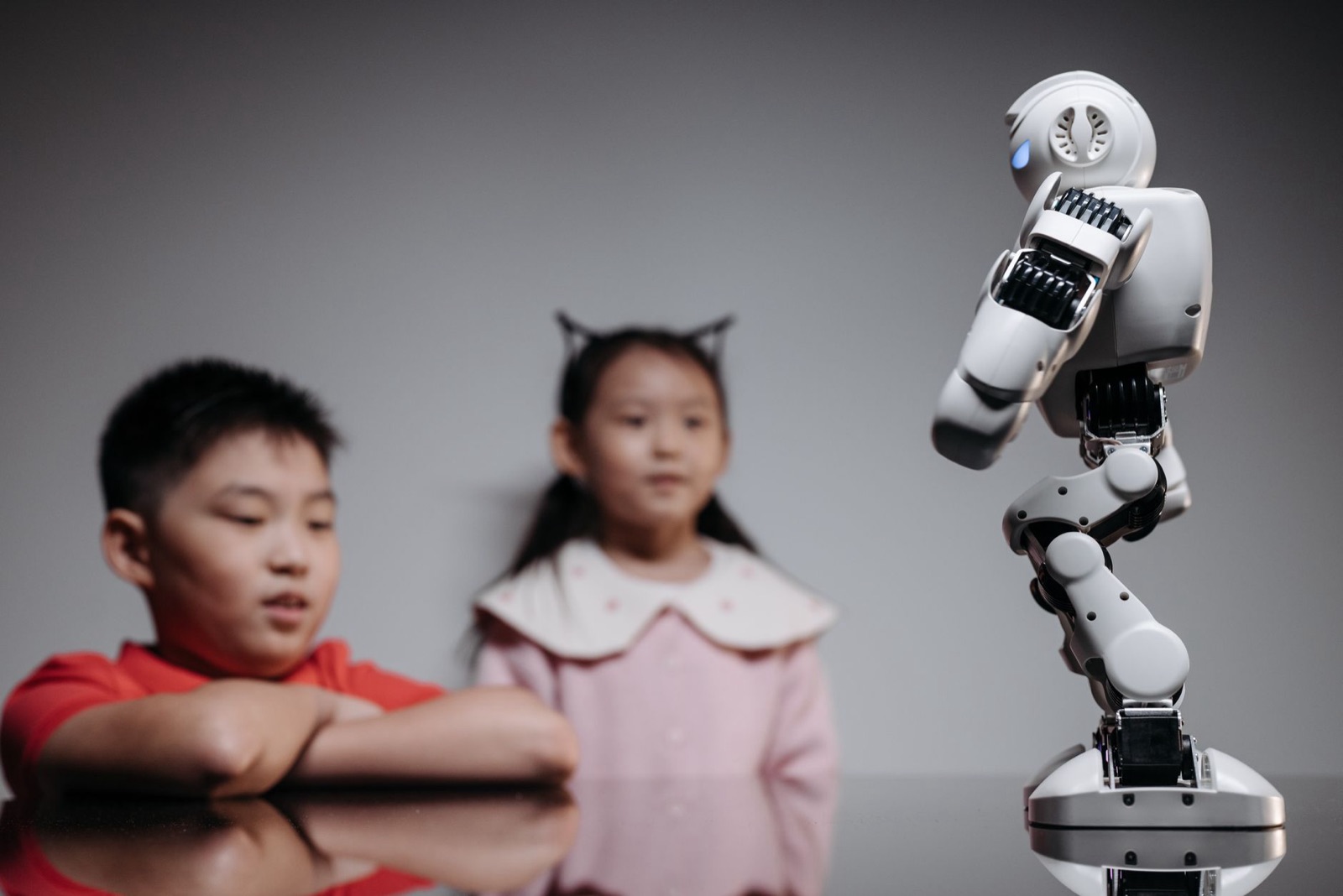
Is AI safe for kids? Questions to ask before your child talks to a chatbot
No AI app earns a blanket yes or no. These are the questions we would ask about any chatbot, talking toy or voice feature before a child uses it.
9 min read