Diwali Drawing for Kids: Rangoli, Diyas, Lanterns and Safe Crafts
By the Scribblie team · Published · 9 min read
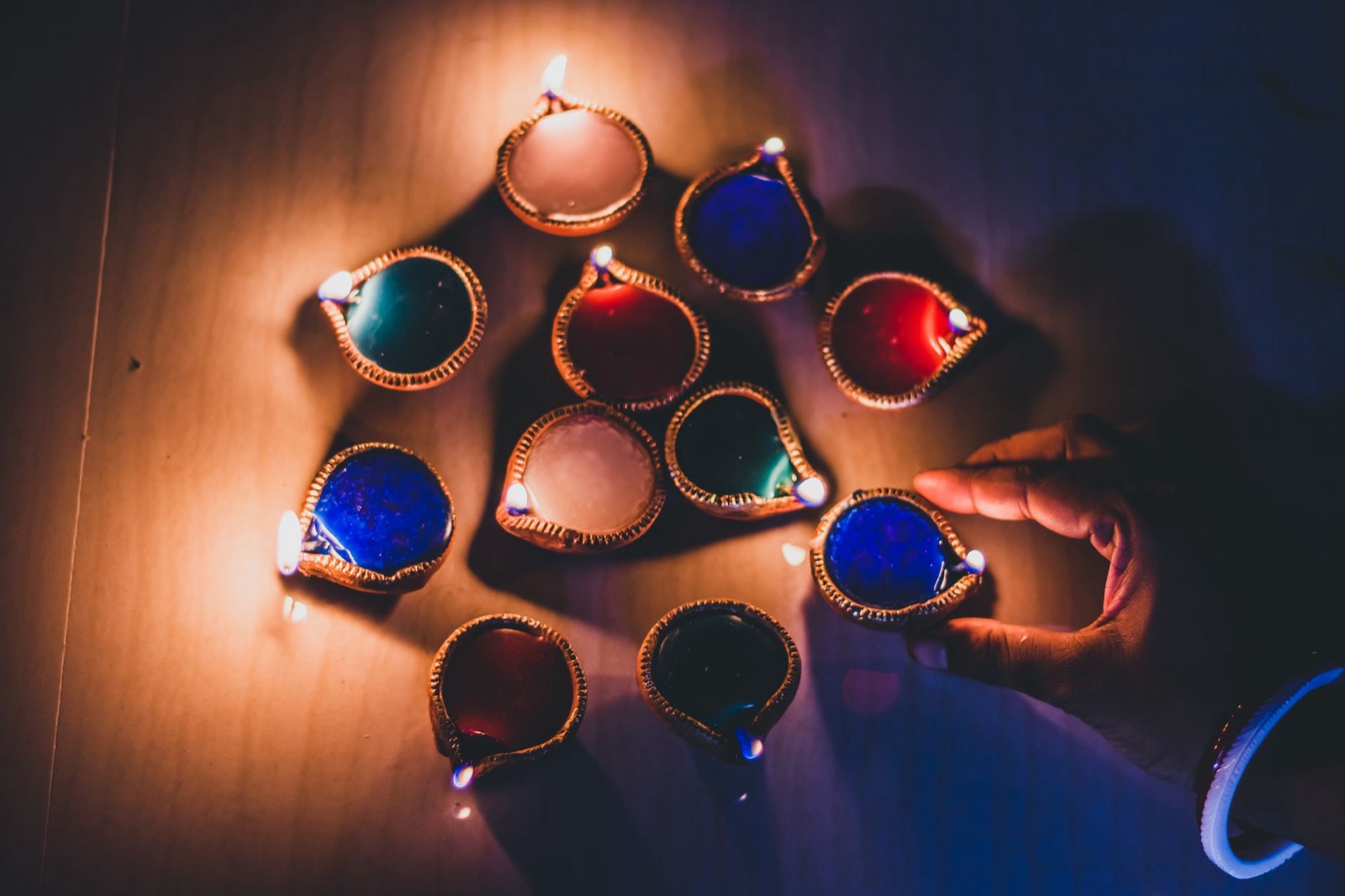
In this guide
- Start by asking what Diwali looks like in your home
- Draw a diya, then a hundred of them
- Rangoli on paper: a ten-minute lesson
- Painting clay diyas, and the flame question
- Paper lanterns and torans, with scissors rules
- Cards, thank-yous and sending light to people
- Quieter ideas for the days around the festival
- Doing it with a group of children
- Where a talking drawing might fit
- A small thing to try this week
- Common questions
If you want one idea for tonight, draw a diya together. A diya is the small clay lamp that many families light at Diwali, and its shape (a little bowl with a flame) is simple enough for a four-year-old to draw and rich enough for an eight-year-old to fill with patterns. From there, rangoli on paper, painted lamps and paper lanterns are all easy to add over the days before the festival.
This guide is practical. Diwali means different things in different homes, and your family's way is the right way for your family. We are offering things to draw and make, with notes on keeping small hands safe around flames, scissors and paint.
Start by asking what Diwali looks like in your home
Before you hand over the crayons, spend five minutes asking. What does the house look like the week before? Who cleans, who cooks, who hangs the lights? What colours are on the doorstep? Many children have never been asked to describe the festival; they just live inside it.
Diwali is celebrated across India and by many families elsewhere, and the details vary a good deal by region, family and faith. Some families tell the story of Rama's return to Ayodhya, others have different tales, and some keep it mostly as a festival of lights, sweets and new clothes. We will not tell you which version to teach. If a grandparent has a story, invite them to tell it while the child draws.
This is a good opening for the drawing itself. "Draw what our doorway looks like on the night of Diwali" gives a child something real to depict, and the pictures will be different in every house. One child draws the strings of lights, another draws a bowl of sweets they are not allowed to touch yet.
If you are not from a Diwali-celebrating family and are doing this at school or with a friend, say so plainly and let people from the tradition lead. Children are good at noticing when an adult is faking confidence.
Draw a diya, then a hundred of them
The diya is the easiest shape in the whole festival. A shallow bowl, a little curl at one edge where the wick rests, and a teardrop flame. Most children can manage this after one demonstration.
Give them a big sheet of paper and a challenge: draw a hundred diyas, or as many as fit. Do not be literal about the number. Repetition is where children start to play. By the fifth diya they have changed the colour, by the tenth they have added a face or a pattern on the rim, by the twentieth one of them is sitting on a cloud.
Ask a few open questions as they go. Where is this one? Who lit it? Is there wind? Questions like these invite a story, where a correction would end it. Our guide to conversation starters about a child's drawing has more of them.
For a younger child, give a single sheet with a simple outline already drawn and let them add patterns inside the bowl. Dots, spirals and stripes are good at this age, because they are easy to repeat and they look like decoration.
Rangoli on paper: a ten-minute lesson
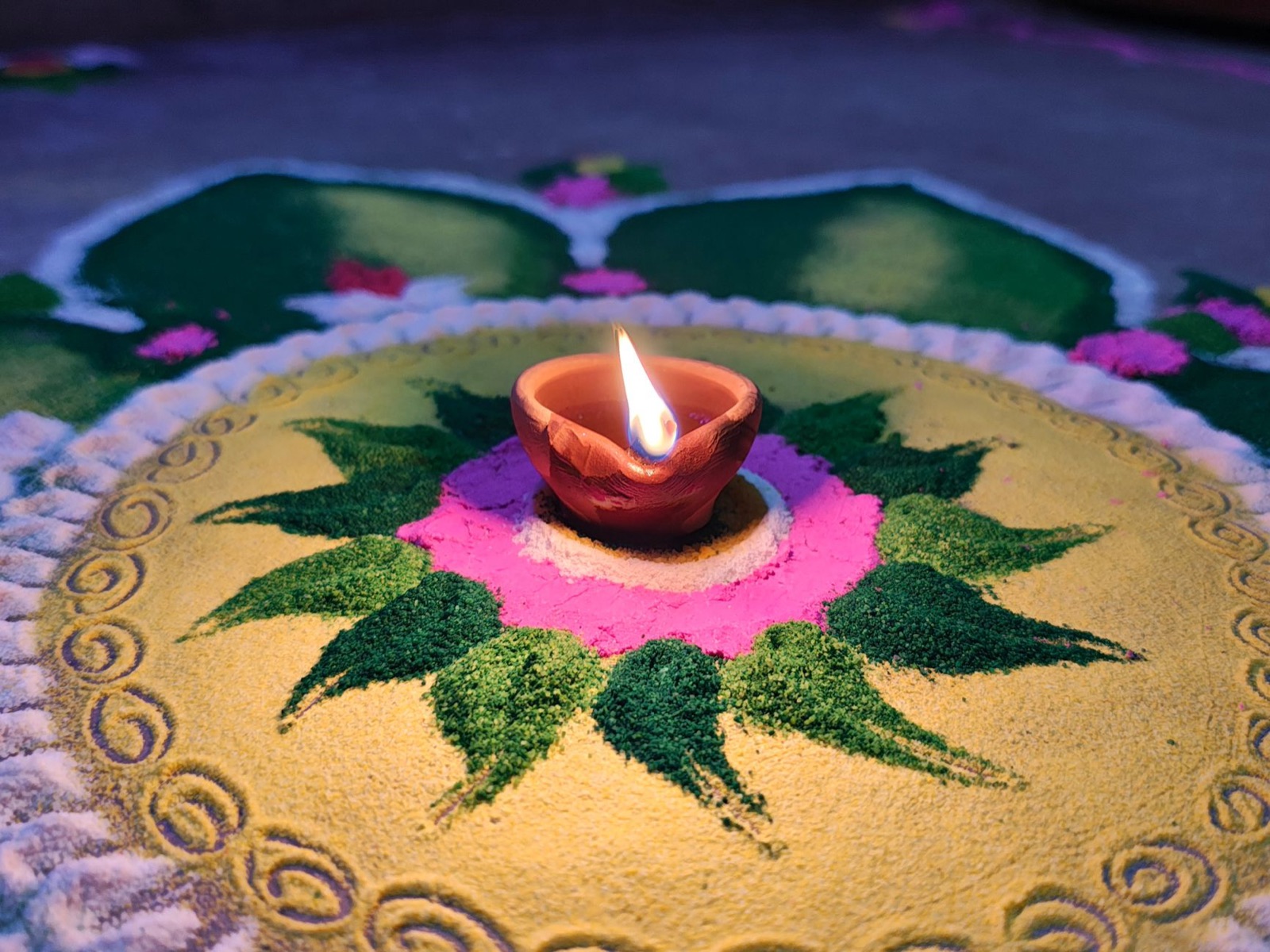
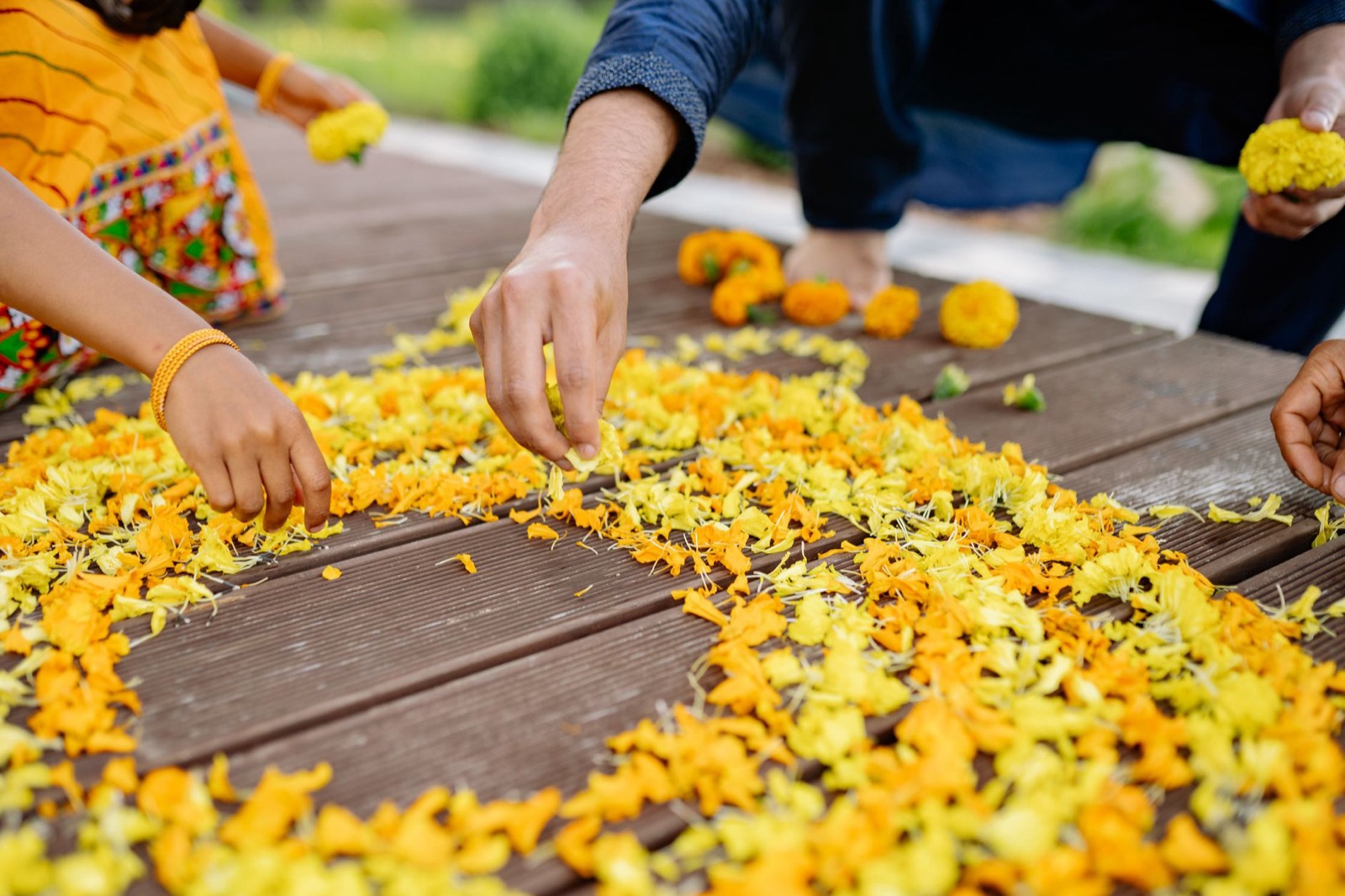
Rangoli is the pattern made at the entrance of a home, traditionally with coloured powder, rice flour or flower petals. In parts of South India, a related tradition is called kolam. Families often have their own designs and handed-down habits, which is a reason to ask a relative, if you can.
Not every home has a floor or an hour for the real thing, and a young child may find powder frustrating. A paper version is gentler.
Here is a way to do it with dots:
- Draw a grid of dots, five by five, on plain or squared paper. Use a pencil first, then go over the dots in a darker colour.
- Draw a flower shape by looping a curved line around groups of dots, like a ribbon.
- Repeat the loops in four directions so the pattern looks the same from every side.
- Fill each section with a different colour, leaving a small white gap between them.
Do not worry about getting it symmetrical. A child's rangoli with one wobbly petal is still a rangoli. For older children, try making the grid bigger or drawing a border of tiny triangles around the outside.
A word on materials: with real coloured powder, keep it away from faces and eyes, and be aware that some children are sensitive. For little ones, crayon or chalk on paper or pavement avoids the whole problem.
Painting clay diyas, and the flame question
Plain clay diyas are inexpensive in markets in the weeks before Diwali, and painting them is a popular children's activity. Use non-toxic acrylic or poster paint. Let each coat dry before the next, and add a few dots, stripes or tiny flowers on the outside. Stick to the outside only; the inside is where the oil and wick go.
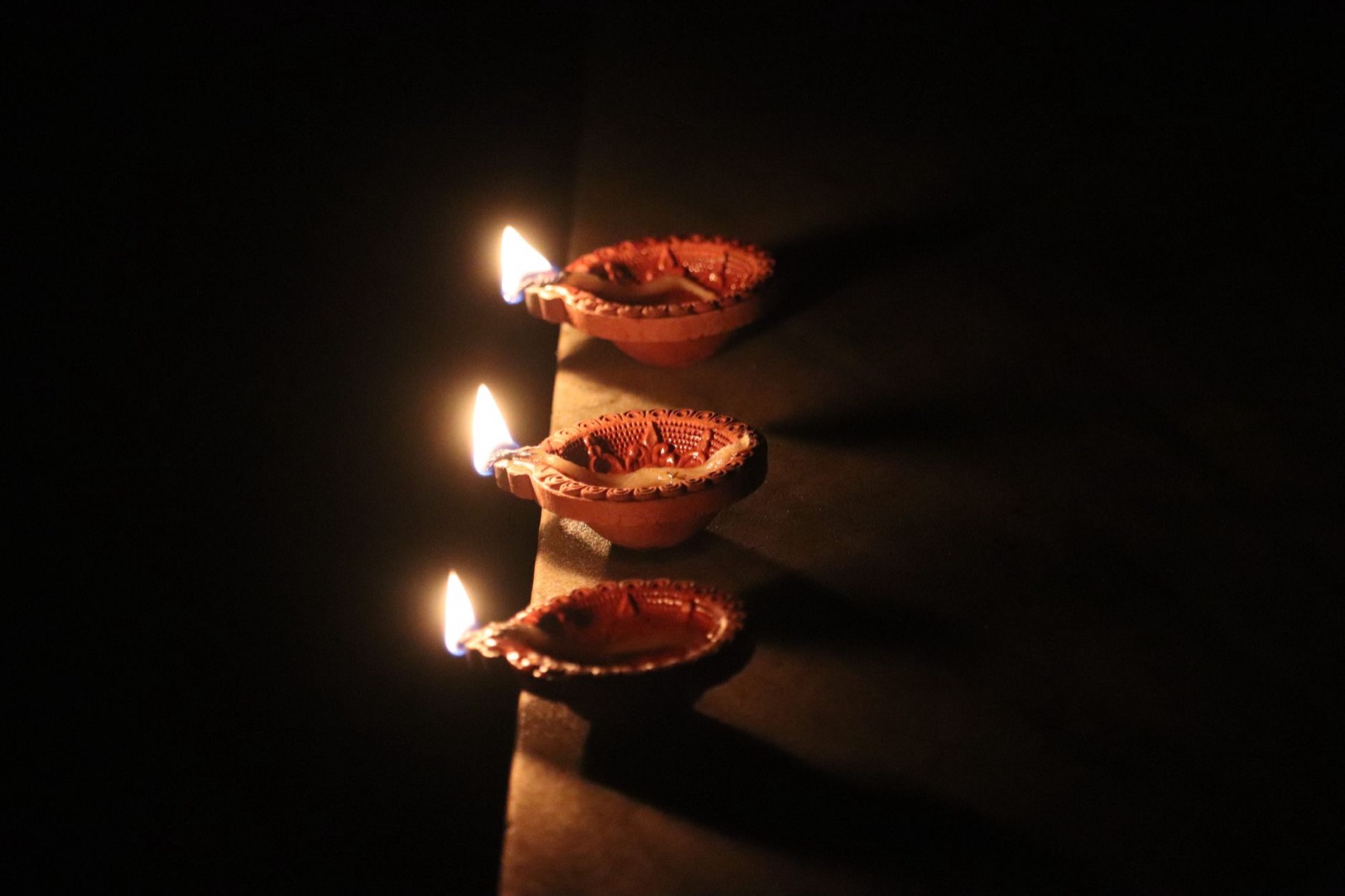
A lit diya is a real fire. Children should not carry, light or reach over one, and they should not be left alone in a room with one. Keep lamps on a stable surface away from curtains, paper decorations, loose clothing and long hair. A child's own painted diya can sit on a shelf as a decoration or hold a battery tea light, and the family's lit lamps can be an adult job.
The same goes for fireworks and sparklers, which many families enjoy but which need adult handling and plenty of distance. We are not going to offer a how-to for those, and no craft needs one.
If the paint is on clay that will later be used with oil and a wick, the finish may not be intended for that. We would keep painted diyas as decorations and buy plain ones for lighting. When in doubt, check the paint label.
Paper lanterns and torans, with scissors rules
A paper lantern is a good craft for ages six and up. You need a rectangle of coloured paper, scissors, glue or tape and a strip for the handle. Fold the paper in half lengthways. Cut slits from the fold toward the open edge, stopping about two fingers from the end. Unfold, curl the paper into a cylinder, glue the short edges together, and add the handle.
Children can decorate the paper before cutting: swirls, dots, little suns, a window pattern. The slits make the pattern open up when the lantern is rolled.
Light for a paper lantern should be a battery tea light or a string of LED fairy lights, never a real flame, because paper burns. Say so to the whole family.
A toran, the decorative hanging that goes over the door, is another idea. Cut leaf or flower shapes from paper, let the child draw patterns on each, and thread them onto string. A younger child can do the drawing while an adult cuts.
About scissors: use child-safe ones, supervise every cut, and keep sharp craft knives out of this entirely. If you have a child under about four, do the cutting yourself or tear the paper. Torn edges look charming in a collage anyway.
Cards, thank-yous and sending light to people
Diwali is also a time of greetings, so a card from a child's own drawing is a lovely thing to give. Fold a sheet of paper in half, draw a diya or a rangoli on the front, and let the child write or dictate a message. For a child who cannot write yet, they can sign it with a drawing of themselves.
A card for a grandparent who lives far away is the most natural use. Photograph it first so you have a copy, then post the original. Our guide on drawing together with grandparents has ideas for making the exchange two-way, and the guide on photographing kids' drawings will help the copy look good.
You can also make a small stack of cards for neighbours, the person who delivers the post or the security guard at the gate. Children usually like having someone to give things to. It makes the drawing matter.
Quieter ideas for the days around the festival
Not every child likes noise and crowds, and Diwali nights can be loud. A few calmer drawing ideas might suit those children:
- Draw the view from your window at dusk, with the lights coming on.
- Draw your favourite sweet in great detail, then draw the plate it sits on.
- Draw a family tree of everyone coming to dinner, with a little picture of each person.
- Make a "before and after" pair: the house before cleaning, the house before the guests arrive.
These work as small scenes with a point of view, and our guide to story starter drawing prompts offers more ways to turn a picture into a short tale.
Some children are quiet at big family gatherings, and a drawing can give them something to do with their hands and something to show a cousin. Our piece on shy kids and creative play covers that more fully.
Doing it with a group of children
If you are running this for a class, a building society celebration or a few cousins, plan the stations before anyone arrives. One table for rangoli on paper, one for lantern cutting with an adult stationed at it, one for diya painting with newspaper down. Children drift between tables, and the adult at the scissors table is the only one who has to stay put.
Keep the paint station away from the cutting one, because wet paint and paper lanterns are a poor mix. Give each child a named spot for their wet diya to dry, written on a scrap of paper, or you will spend the afternoon matching small clay bowls to small frowns.
Children of different ages will want different things. The littlest ones will probably colour in a printed diya outline and be pleased with it. Seven- and eight-year-olds can try the dot grid. Older siblings often like being put in charge of a table. Give them the job, and they usually rise to it.
Finally, leave ten minutes at the end for everyone to walk round and look. A craft afternoon with no looking at the finished things feels oddly unfinished to a child.
Where a talking drawing might fit
Scribblie is not out yet; it is coming to the App Store and Google Play. When it is, one of the little adventures a child can play with their drawn friend is a Diwali one. It is only one option among many, and the pen-and-paper version is probably more fun with relatives in the room. If you are curious about how the app works, how Scribblie works explains it plainly, including the parts that can be imperfect.
A small thing to try this week
Pick one night before Diwali, put a sheet of paper on the floor and draw one diya in the middle. Ask each person in the house to add something around it, starting with the youngest. When it fills the page, tape it to the door. Whatever the result looks like, it is the family's own.
Common questions
What is an easy Diwali drawing for a young child?
A diya is the friendliest place to start. Draw a small bowl shape with a pointed flame on top. Add a ring of dots around it and a few rays of light, and your child has a finished picture in about five minutes. Let them colour it any way they like.
How do I teach rangoli to kids?
Start with dots on paper or a slate, then join them with simple curved lines to make a flower or a leaf shape. Let your child pick the colours, and treat the first few attempts as practice. Many families have their own designs, so a grandparent or neighbour is often the best teacher.
Is it safe for kids to paint real diyas?
Painting clay diyas is generally fine with non-toxic paint and an adult nearby, but let them dry completely and keep the painting separate from any lighting of the lamp. Children should not handle lit lamps, and many families use battery tea lights for the child's own creations.
What can kids make for Diwali besides rangoli?
Paper lanterns, torans for the door, greeting cards, painted clay lamps, and a drawing of the family's own celebration are all popular. Paper garlands and cut-paper hanging stars suit older children who can use scissors safely.
How do I explain Diwali to a child without getting it wrong?
Tell them what your own family does and believes, and say that families celebrate in different ways and tell different stories. If your child is from another background, ask a friend or neighbour who celebrates to describe their traditions rather than guessing.
Are there Diwali activities without scissors or flames?
Yes. Rangoli with chalk or crayons, finger-printed light patterns, torn-paper collage lamps and drawing the family's feast all need nothing sharp or hot. These are good for under-fives.
Keep reading
How Scribblie Works: From a Drawing to a Friend Who Talks Back
A plain-English walk through Scribblie, the app we are building: how a drawing becomes a friend, what it remembers, what grown-ups control and where it can go wrong.
8 min read
Grandparents and Grandchildren Activities: Drawing Together From Far Away
Ways for grandparents and grandchildren to draw together across cities and time zones: mailed art, video-call games, a shared storybook and a few tips for the call itself.
9 min read
20 questions to ask about your child's drawing instead of "what is it?"
"What is it?" ends more conversations than it starts. Here are twenty better questions, sorted by purpose, with notes on how to listen once your child starts talking.
9 min read