Drawing to learn new words: simple vocabulary games for early readers
By the Scribblie team · Published · 9 min read
In this guide
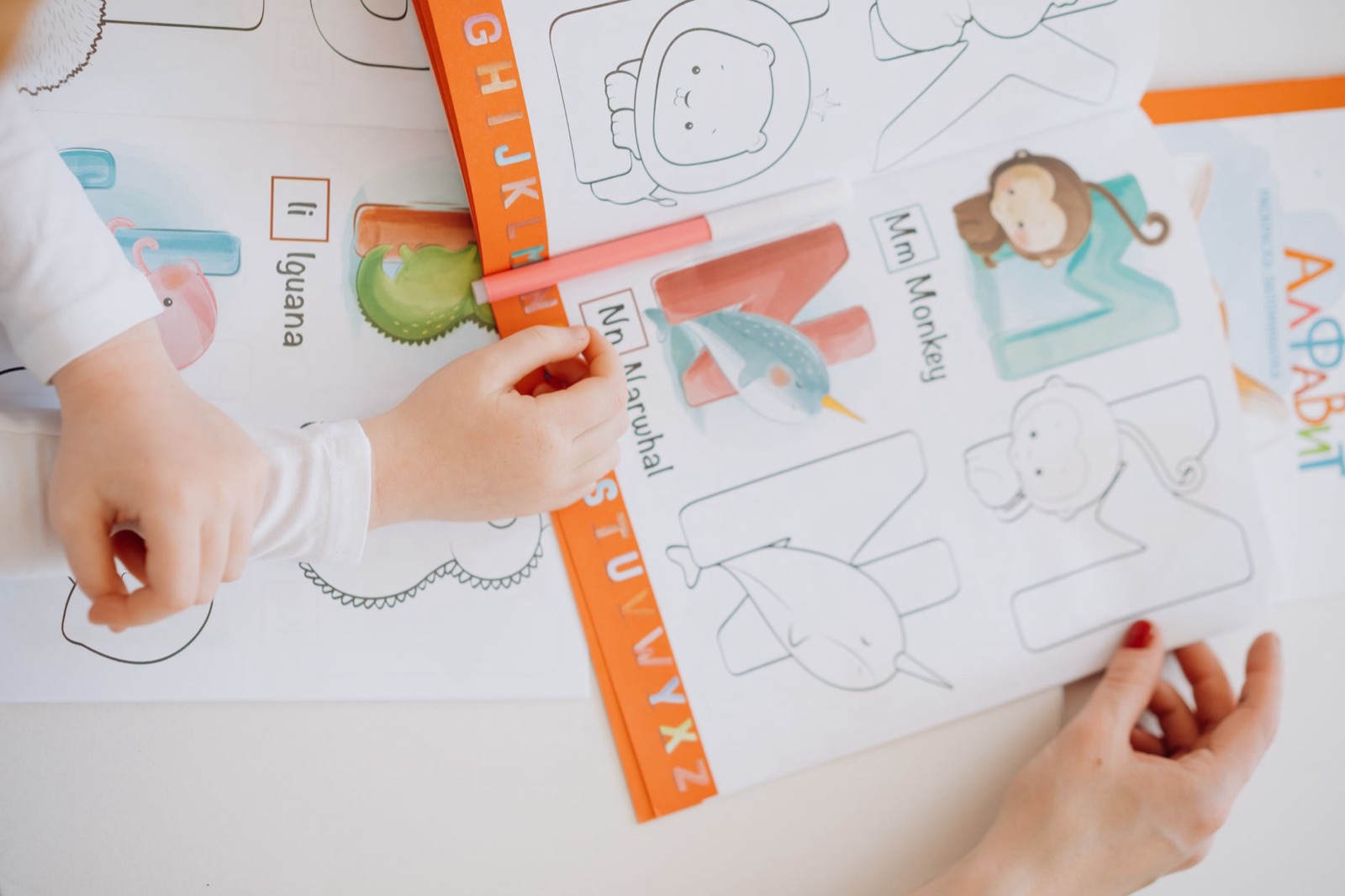
The simplest way to turn drawing into a vocabulary game is to put a word next to a picture the child made. Draw a thing, say its name, write the word beside it, and say it again. That is the whole idea, and everything below is variations. It suits early readers, around five to seven years old, who are starting to connect letters to sounds, and it carries over into more than one language. Very short bursts work best, because five happy minutes beat twenty slogging ones.
Why a drawn word tends to stick
We will keep this modest. We are not scientists, and we do not want to claim more than we know.
A word attached to something a child made is probably more memorable than a word on a flashcard. The child chose the picture, put effort into it and has a feeling about it. They may not remember "lighthouse" from a list. They are far more likely to remember it from the day they drew one with a very cross seagull on top.
Drawing also slows things down. A child drawing a "tiger" is thinking about stripes and claws, rolling the word around, perhaps asking how it is spelled. That sort of attention is half of learning.
None of this is a guaranteed method, and no game here will turn a reluctant reader into a keen one. It is simply a pleasant way to spend a few minutes with words, and it is a good deal more pleasant than a worksheet.
Seven games with a pencil and paper
Game one: the picture label
The foundation. The child draws something, and together you label it.
Ask the child what they would like to call it. Say the word slowly, stretching the sounds. Help them write it, or write it yourself in clear lower case letters and let them trace it. Some children like to add labels to parts, so a drawing of a house gets "door," "roof," "window" and "chimney."
If a child spells phonetically, "hows" for "house" or "bote" for "boat", that is a very ordinary stage and a sign of a child working out how sounds map to letters. We would say nothing at the time. Later, if the child is happy, you can write the standard spelling in another colour next to theirs, as a "grown-up version."
Game two: draw the word
Turn it round. You write a word, the child draws it.
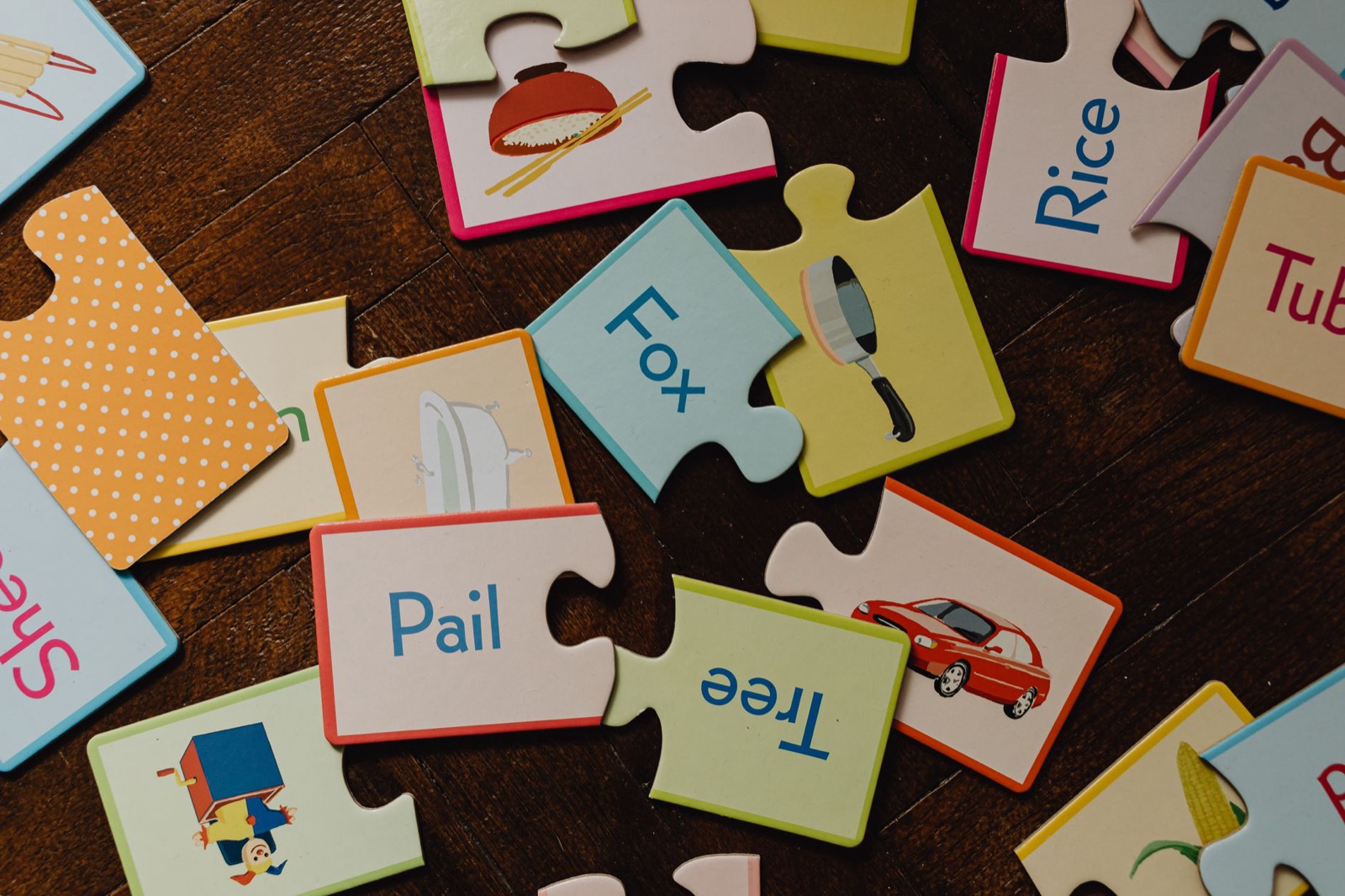
Start with words that are easy to picture: cat, sun, tree, boat. Then move to those with more going on: nest, whistle, bridge, feather. Allow any interpretation. A "bridge" that looks like a rainbow with feet is still a bridge, in the child's mind, and you can ask about it.
For words that are hard to draw, such as "because" or "around," do not force it. Switch to actions: draw an arrow going around a tree.
This game is particularly good for early readers because the child has to decode the word before they can draw it, and the picture is their reward.
Game three: the picture dictionary
Fold a few sheets of paper into a small book, or staple them. Give each page a letter, or leave them blank and fill them as you go.
Each time you come across a new word, such as when you are out at the market or reading a story, add a page. The child draws it and writes the word, and you add a short sentence if they like: "A pomegranate has lots of seeds."
Over a few weeks you will have a dictionary that is entirely theirs. It is a nice thing to keep, and, because it grows slowly, it never feels like a project. We have a few suggestions about keeping paper treasures in how to keep and store kids' artwork.
Game four: label the room
For a rainy afternoon, give the child sticky notes and a pen. They write, or you write for them, labels for things around the house: door, clock, chair, window, fridge.
The twist is that they draw a tiny picture on each label first. A door with a tiny door on it is enormously funny to a five-year-old.
Some families keep the labels up for a week and then swap them. One room at a time is plenty, and you can leave the bedroom for last.
If your family speaks more than one language, this is the moment to make two sets in different colours. We come back to that below.
Game five: draw and guess, with a word list
A variation on the old favourite. Write five or six words on slips of paper and put them in a bowl. The child picks one and draws it without speaking. You guess. Then swap.
The twist for vocabulary is that when you guess correctly, you both say the word aloud and the guesser writes it. If you guess wrong, the child can give a clue in words, which is more practice. "It lives in the sea and has eight arms."
Keep the list to words the child has met recently. If a word is too hard, it kills the game. If you want more of this kind of drawing play without the vocabulary angle, see drawing games without screens.
Game six: odd one out
Draw four things on a page, three of which belong together and one of which does not. Cat, dog, rabbit, spoon. The child says which does not belong and why.
Then they make one for you. This is a lovely game because the child decides the category, and their idea of "belonging" can be delightfully unexpected. A spoon and a rabbit might both be "things that hop," if the spoon has a story.
Keep the "why" open. There is no wrong answer if there is a reason.
Game seven: the word of the day
Choose one new word each day, perhaps from a book you are reading. Write it on a card. During the day, the child draws it once, and you both use it in conversation whenever you can.
Good words are specific and vivid: "puddle," "grumpy," "enormous," "twirl." A word of the day also gives you a small shared joke. "That's an enormous sandwich."
Do not test. The point is to meet the word a few times in a friendly way. If it fades by the weekend, that is fine, and there is always another.
Bonus: the "tell me about it" round
After any of the games above, finish with one open question about the drawing, such as "what is the best thing about this one?" It sounds like a nicety, but it is where a lot of the real talking happens, and children use their newest words in answers without noticing. We keep a list of such questions in questions to ask about your child's drawing.
Names count as vocabulary too. A child who invents a name for a creature is making up a word and deciding how it sounds, and we have a few thoughts on that in how kids name their characters.
And if a game turns into a story halfway through, let it. A "hippopotamus" that has gone to the shops is a lot more memorable than a hippopotamus on a card. Story-starter drawing prompts has ideas for what to do next.
Games in two languages
Many families live in more than one language, and drawing is a particularly friendly way to use both. We are not language experts, and families differ a great deal, so treat these as ideas to try.
Double labels. Draw a cat. Label it "cat" in one colour and "billi" in another. If your child is learning Hindi and English, or Tamil and English, or any pair, the picture is the bridge.
Choose-the-language rounds. In draw and guess, let the child say the word in whichever language they like. Some will switch halfway through, and that is part of being bilingual, so do not correct it.
Family words. Ask a grandparent for the word they used as a child for a particular thing, and draw it. Words for food and family are often the richest. "Nani," "dadi," "chai" and "roti" are the kind of words children enjoy illustrating.
Different scripts. If your child reads or is learning a second script, a label in that script beside the picture is a gentle way to practise. Trace first, and keep it short.
Do not make it a competition between languages. A child who feels one is "better" may go quiet in the other. Treat both as equally good at describing a cat.
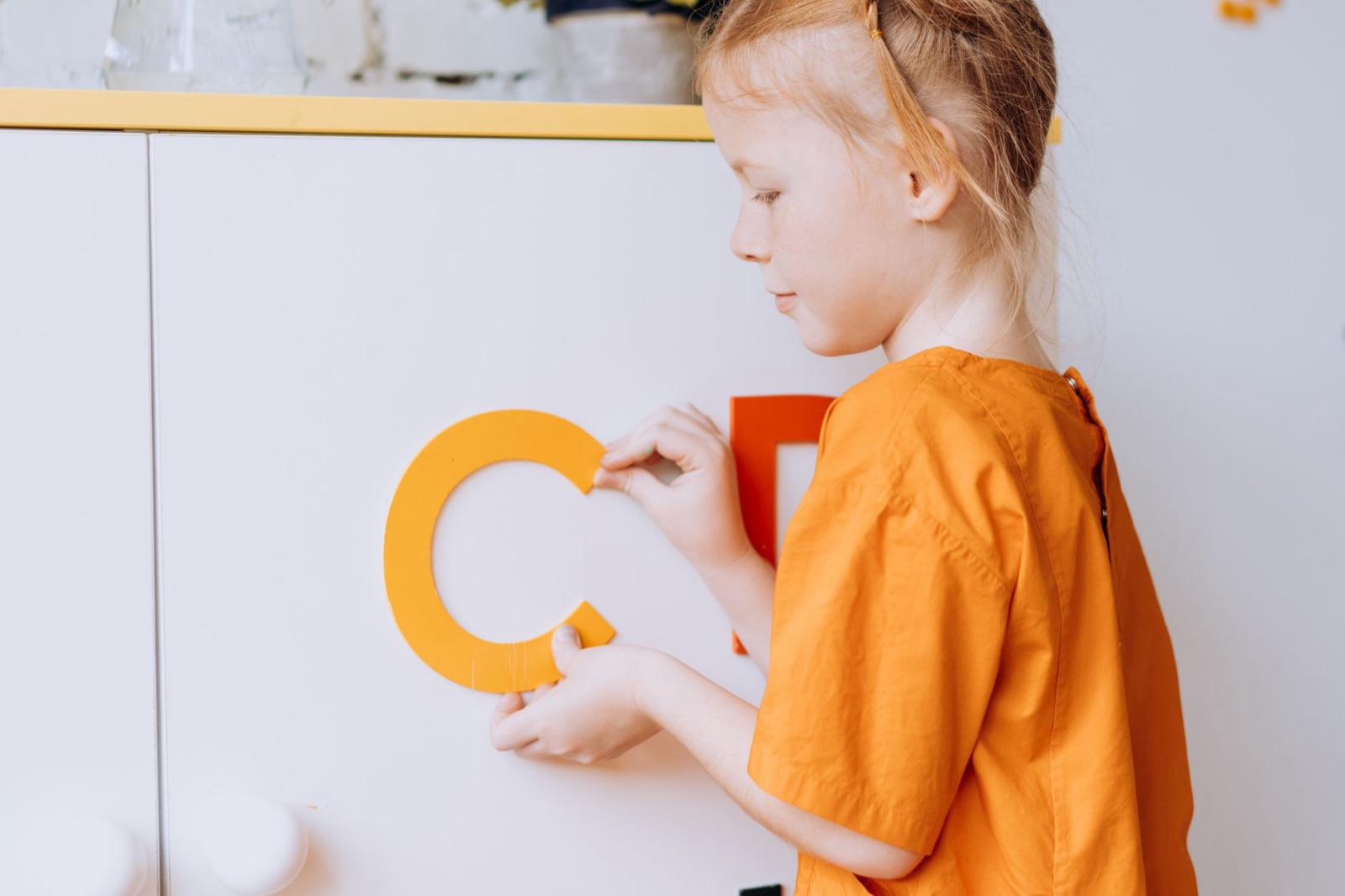
Grown-ups sometimes worry that they are not the right person to run these games, perhaps because their own spelling is shaky or because English is not their first language. You are. The child needs someone who is interested in words and willing to look things up with them, and a dictionary is allowed at the table. "I'm not sure, let's check" is one of the most useful sentences a child can hear.
Keeping it light
A few habits that tend to keep these games happy.
Keep rounds short. Five minutes is a good length, and you can do another later. Stop while the child still wants more.
Let the child lead the topic. A child who loves dinosaurs will learn "herbivore" with joy. The same child will resist "adjective."
Do not turn every drawing into a lesson. If your child draws a picture and wants to show you, it is allowed to just be a picture.
Notice effort, not accuracy. "You thought hard about that spelling" is a better thing to say than "that's wrong."
And mix in talking. A child who describes a drawing in sentences is using words, and you do not need to write anything down for that to count.
If reading or speech feels hard
Some children find early reading and spelling harder than their classmates, and some are later talkers. Differences are common, and a game from an article cannot tell you what is going on for your child.
If you are worried about your child's reading, speech or hearing, speak to their teacher or doctor, who can look at the whole picture and suggest next steps if any are needed. Word games are good fun, and they are not a replacement for that.
A small place for Scribblie
We are building an app called Scribblie, which is not yet in the stores. When a child draws something and shows it, the drawing wakes up and can chat to them, and the child can draw new objects, such as an apple or a ball, that appear in the friend's world. It is not a vocabulary tool, and we do not claim it improves language. Some families may find it a pleasant way to talk about the things a child has drawn. The friend's replies are generated by AI models and can be imperfect. See how Scribblie works for what it does and does not do.
Start with five minutes
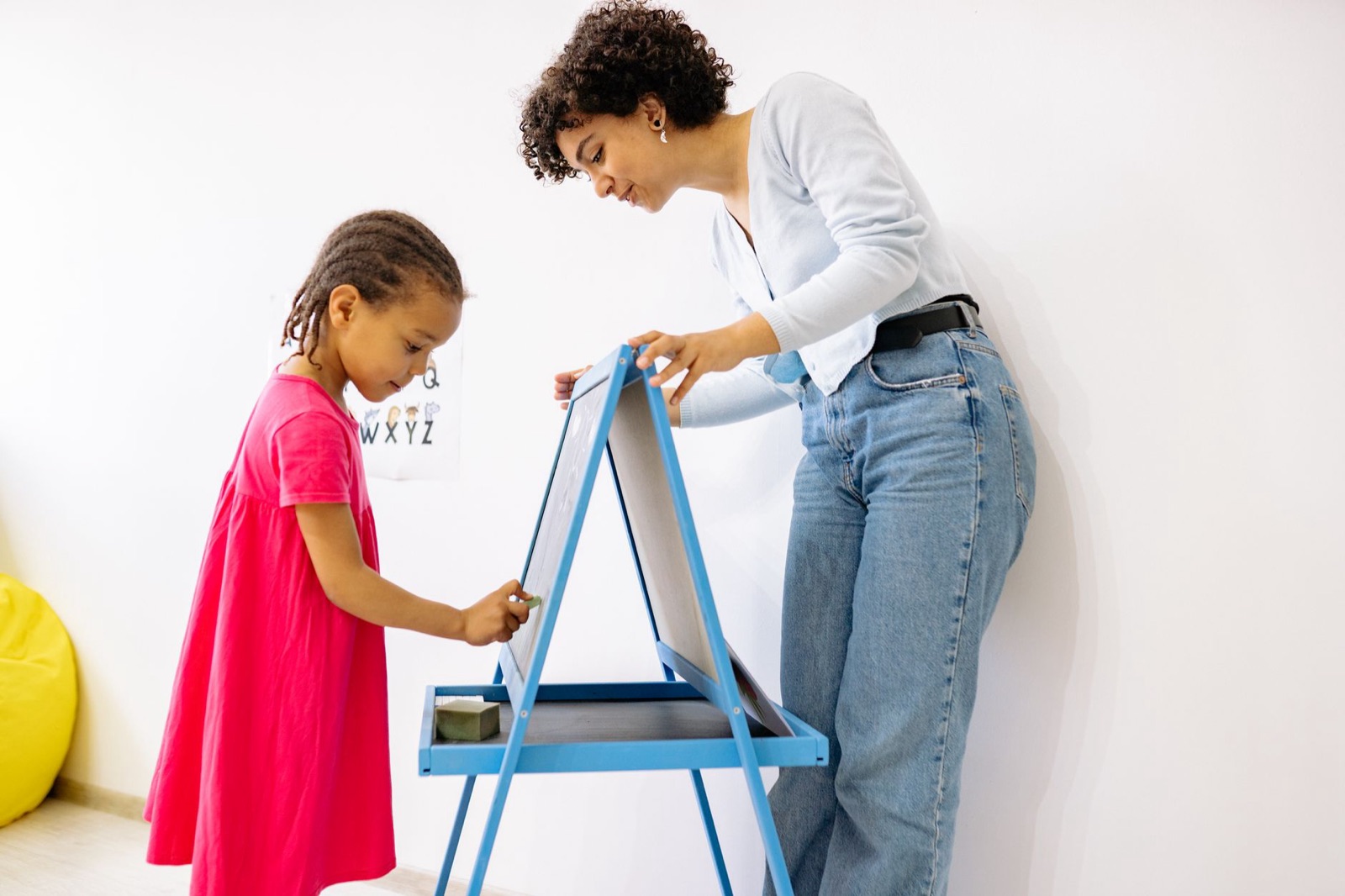
Tonight, draw one thing together and give it a label in each language you use. Say the words aloud, and leave the page on the table. Tomorrow, see which word your child says first.
Common questions
How can drawing help my child learn new words?
Drawing gives a word a picture and a bit of effort, which many children find helps it stick. We would not promise a specific result, but pairing a word with something the child made is an enjoyable way to practise.
What are some simple vocabulary games for kids?
Label the picture, draw the word, picture dictionary pages, odd one out and draw-and-guess are all easy to run with only paper and pens. Short rounds of five minutes work better than long sessions.
Does drawing help with language development in kids?
Talking about a drawing is a natural way to use words, and children often pick up new ones when an adult names things as they draw. If you have any concern about your child's language, their doctor or teacher can advise, and a game is no substitute.
How do I use drawing to teach words in two languages?
Make labels in both, such as "cat" and "billi", and let the child choose which to say. Keep it playful and don't correct mixing, since many bilingual children naturally move between languages.
Should I correct my child's spelling on their labels?
Not in the middle of the game. Early spelling is often phonetic and that is a normal stage, and you can add the standard spelling in your own colour beside it, if the child agrees.
How often should we do word games with drawing?
A few short rounds a week is plenty. Stop while it is still fun.
Keep reading
Kids naming characters: why you should always ask what their drawing is called
Your child's creature is called Splonk, or Mr Toast, or Nothing. Why asking for the name is one of the nicest questions you can put to a young artist, and what to do with the answer.
8 min read
20 questions to ask about your child's drawing instead of "what is it?"
"What is it?" ends more conversations than it starts. Here are twenty better questions, sorted by purpose, with notes on how to listen once your child starts talking.
9 min read
Drawing games for kids that need nothing but paper and a pencil
Seven paper-and-pencil drawing games with the rules spelled out, the usual ways they go wrong, and a fix for each.
9 min read