Christmas Drawing Ideas for Kids That Are Not Just a Tree
By the Scribblie team · Published · 9 min read
In this guide
- Draw what is under the tree, not the tree
- Cards that look like the person who made them
- A small advent: one tiny drawing a day
- Ornaments that survive being handled
- Winter scenes, and December scenes for warm places
- Wrapping paper and gifts made from drawings
- The quiet week between the day and the new year
- Draw the story, not just the symbols
- A cosy group activity: the long window mural
- One thing to do on a dull December afternoon
- Common questions
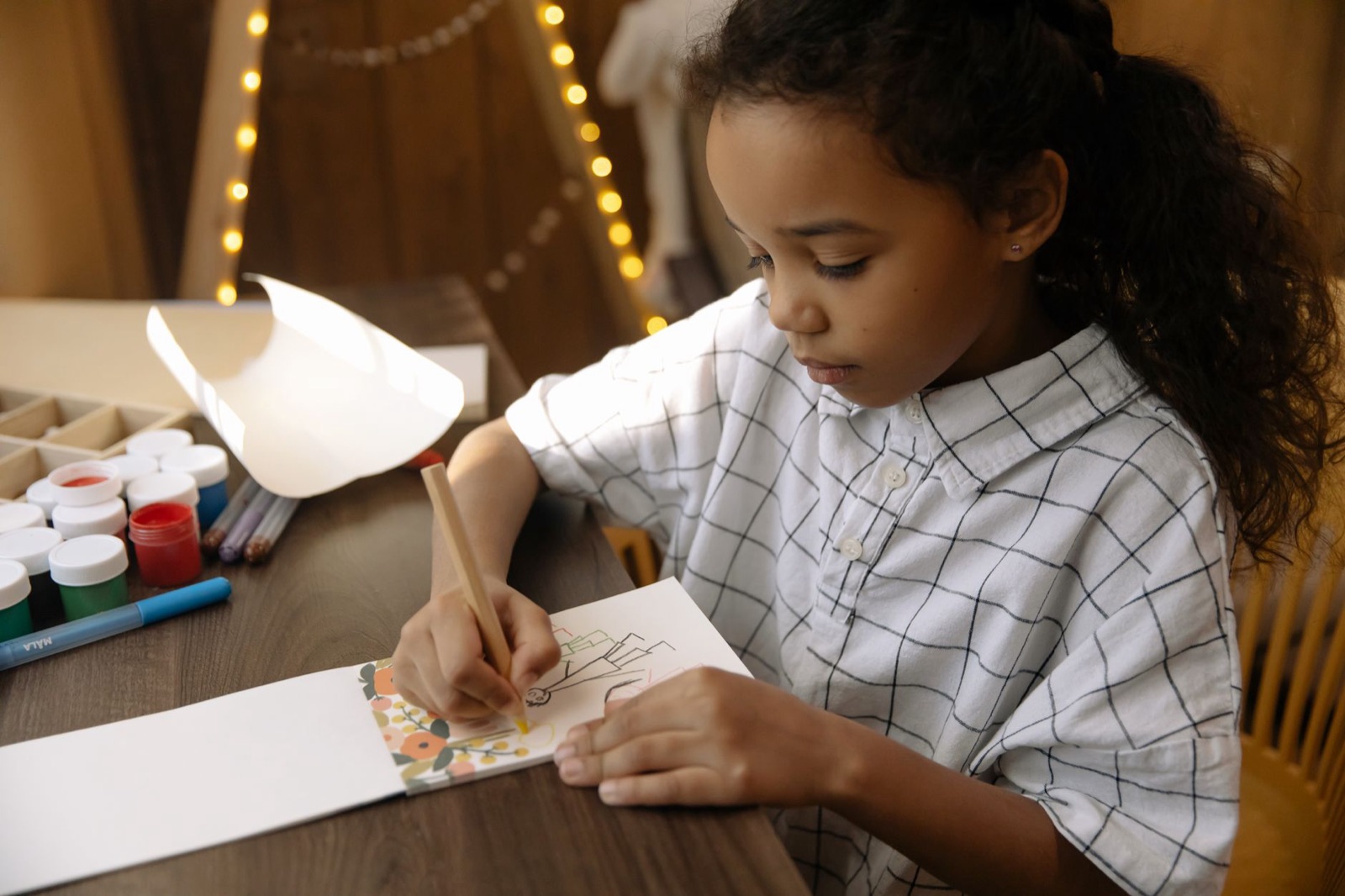
A tree is lovely, but a child who has drawn the same triangle with a star for four years running might be ready for a different December. This guide has ten ideas that begin with something other than a tree: cards, a tiny advent of drawings, ornaments, winter scenes (and warm-weather ones), and a few story-shaped prompts for the quiet week between the day itself and the new year.
Nothing here needs special supplies. A pen, plain paper, a few coloured pencils and whatever is in the recycling box will do.
Draw what is under the tree, not the tree
The easiest way to get something new from a familiar subject is to move the viewpoint. Ask your child to lie on the floor and draw what they see from under the tree: the underside of the branches, a lost sock, the legs of the nearest chair, a parcel with an interesting shape.
Children who have drawn the standard tree many times often have a surprisingly good eye for oddities when you ask them to look at it differently. The result is usually a funny little picture that has nothing to do with a triangle.
Other angle ideas to try:
- The tree as a cat or a toddler sees it.
- The tree through the window, from the street.
- A single ornament, so large it fills the page.
Keep it casual. The point is to change where the eyes land, not to teach perspective. If your child gets frustrated, let them go back to the classic tree, and then suggest adding one weird thing on the side.
Cards that look like the person who made them
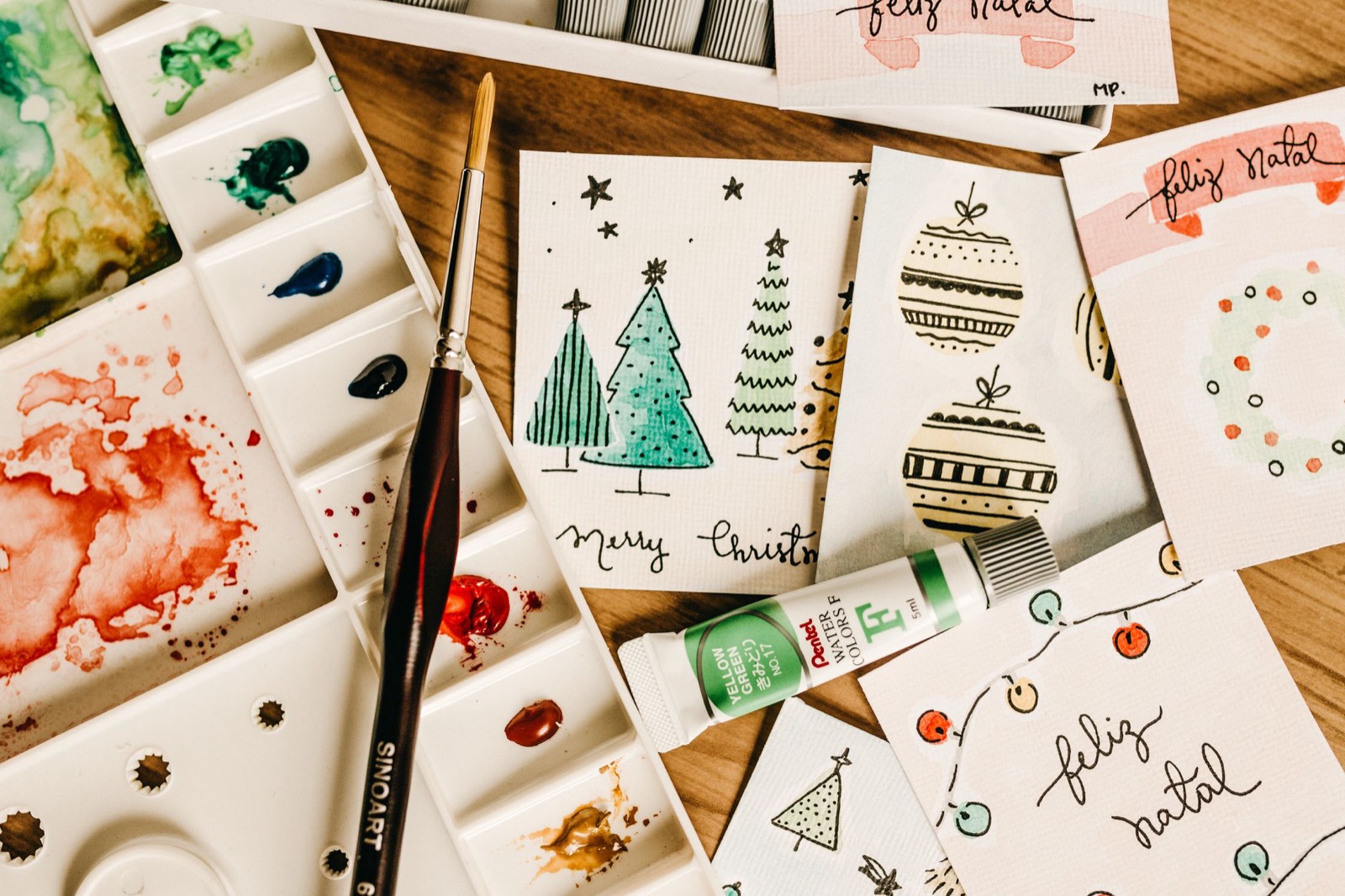
Handmade cards are the most practical Christmas drawing because they have somewhere to go. Fold a sheet of paper in half and let your child decide who gets which one.
A few card ideas that feel personal:
- A drawing of the recipient's pet, house or favourite chair.
- A "wanted" poster for Santa, with a description of what he might look like.
- A tiny comic strip of three panels, where the card starts with a problem and ends with a surprise.
- A picture that continues onto the inside, such as a window on the front and the room behind it inside.
For a child who cannot write yet, ask what the card should say and write it in pencil for them to trace over, or just have them sign it with a drawing of their own face. The child's name matters more than your handwriting.
If the card is going to a faraway relative, photograph it before you post it. Our guide to photographing kids' drawings covers the small tricks of light and angle. For ideas on keeping distant family in the loop all year, see drawing together with grandparents.
A small advent: one tiny drawing a day
Many families count down to Christmas with an advent calendar. A drawing version does not need chocolate, windows or a cardboard box. It needs twenty-four small squares of paper, or a long strip folded into a concertina, and a prompt for each day.
Start the prompts yourself, and let your child suggest some later. Here are a few to begin with: a candle, mittens, a window with something glowing behind it, a footprint, a bird in a bad mood, a gift nobody wants to open, an animal who has not been invited, a place you went this year.
Do not worry if a few days slip. Children cheerfully catch up on three squares in one sitting, and it still counts. If twenty-four is too many, do twelve, or one drawing per Sunday.
By the end you have a thin book or a row of squares to pin along a window. Our 30-day drawing challenge uses the same one-small-thing-a-day idea outside the festive season, so it is a good follow-up in January.
Ornaments that survive being handled
The simplest ornament is a cardboard circle or star with a hole punched near the top and a loop of ribbon. Your child draws on both sides, because a hanging ornament turns around. Cereal-box cardboard works well and costs nothing.
Salt dough is another popular choice: flour, salt and water, rolled out and cut into shapes, then baked slowly by an adult until hard. The ornaments are not edible, and pets should be kept away from them. Painted and varnished, they can last for years, though they are fragile and children sometimes cry when one breaks. Have a spare on hand.
Things to watch around ornaments and young children:
- Glitter and tiny beads are easy to swallow or breathe in. Skip them under about four, or use a thick marker for sparkle.
- Wire hooks are sharp. Use ribbon or string.
- Real candles and paper decorations do not mix. Use battery lights.
A child's first ornament, with their name and the year on the back, becomes something you hang for decades. That is more than most things at the shop manage.
Winter scenes, and December scenes for warm places
Plenty of children celebrate Christmas where there is no snow at all. In parts of India, Australia, Africa and Latin America, December is warm or humid, and a child asked to draw a snowman might never have seen one. They might still enjoy it, since imagined places are fun, but their own December is often more interesting.
So offer both. A snow scene needs only a few things: a white or pale blue sky, round shapes for drifts, a pair of mittens, a house with one yellow window. For the warm version: a rooftop with a star, a beach with lights strung between palms, a market with paper stars hanging above the stalls, a cake being carried carefully across a courtyard.
A fun trick for snow: draw with a white wax crayon on white paper, then paint over it with thin blue watercolour. The crayon resists the paint and the snow appears. It is cheap magic, and children of five and up tend to love it. Supervise the paint and keep the brushes out of mouths.
Ask your child to add one thing that is out of place. A flamingo in the snow, a snowman on a beach, a penguin in a sari shop. Silly details make a picture feel like theirs.
Wrapping paper and gifts made from drawings
A big sheet of plain brown or newspaper paper becomes wrapping paper the moment a child draws on it. Hand them a stamp pad or a marker, set a rule (only stars, or only the recipient's favourite animals) and let them cover a parcel. A grandparent opening a gift wrapped in their grandchild's drawings often keeps the paper.
A drawing can also become the gift. Our guide on turning kids' drawings into gifts covers the practical side: mugs, calendars, printed cards, and what to check before sending a drawing to be printed. Keep the original safe either way, and make the copy the gift.
For the child who wants to give something and has no budget, a "coupon" drawing is an old favourite: a picture of a promised hug, a tidy room, or a drawing on demand. Adults tend to remember these long after the shop-bought things have gone.
The quiet week between the day and the new year
Once the parcels are open and the visitors have gone, there is often a flat patch where the children are restless and the grown-ups are full of leftovers. This is a good moment for looser prompts, because nothing is due and no one is watching.
A few tend to work. Draw your favourite present and then draw what it would do if it were alive. Draw the messiest moment from the day. Draw next year's December, as you hope it will be. Draw the person who was most tired at dinner.
Another idea is a "year in pictures" strip. Fold a long sheet into twelve boxes, one per month, and let the child fill each with one thing they remember. They will forget some, and you can help with prompts like birthdays, holidays or a new tooth. It is a good record, and it costs nothing.
If the day was hard for any reason, and for some families it is, a drawing can be a quiet way for a child to be near the grown-ups without having to talk. You do not need to analyse it. A drawing on its own does not tell you how a child feels, and if you are worried about a child, their doctor or teacher is the right person to talk to.
Draw the story, not just the symbols
Some families mark Christmas with the nativity story, others with Santa and stockings, others with a mix of both and a big meal. We will not tell you which is right for your home. Whatever your own tradition, ask your child to draw one moment from it that they find the most interesting, not the most important.
You may be surprised. A child might skip the main scene and draw the donkey, the sheep waiting outside, the snow on the roof of a house nobody mentions. These side characters are often where children bring their own ideas.
If your child asks a hard question about a story from a faith tradition, say "I don't know, shall we ask someone?" when you do not. Drawings tend to bring such questions up sideways, over a bowl of crayons, which is often a better setting than a formal talk.
Our guide to helping your child tell stories has some questions that keep a child talking without steering them.
A cosy group activity: the long window mural
If you have several children, cousins or neighbours around over the holidays, tape a long roll of paper to a wall or window at child height. Draw a simple horizon line along the bottom, and give each child a patch to fill: one does the sky, one does the houses, one does the animals, one does the lights. After an hour or so you have a village.
Make sure each child has a clear patch and a clear job. Otherwise the quickest or loudest child fills the whole thing, and the others quietly drift off. A small label with each name at the bottom helps everyone feel part of the picture.
More ideas for mixed groups are in family drawing games, including a few that work when the grown-ups are tired and the children are not.
The slack week after Christmas is also when tablets get a lot of use. If your child enjoys drawing apps, no harm done, but it helps to have a few paper options in reach too. Our guide to creative versus passive screen time offers a way to think about it without guilt.
Scribblie, the app we are building, is not in the stores yet. When it is, a child will be able to play a small Christmas adventure with their own drawn friend, one of several seasonal ones. You can read about it in how Scribblie works, including its limits: the friend's replies are generated by AI models and can sometimes be imperfect, so a grown-up should always set it up first.
One thing to do on a dull December afternoon
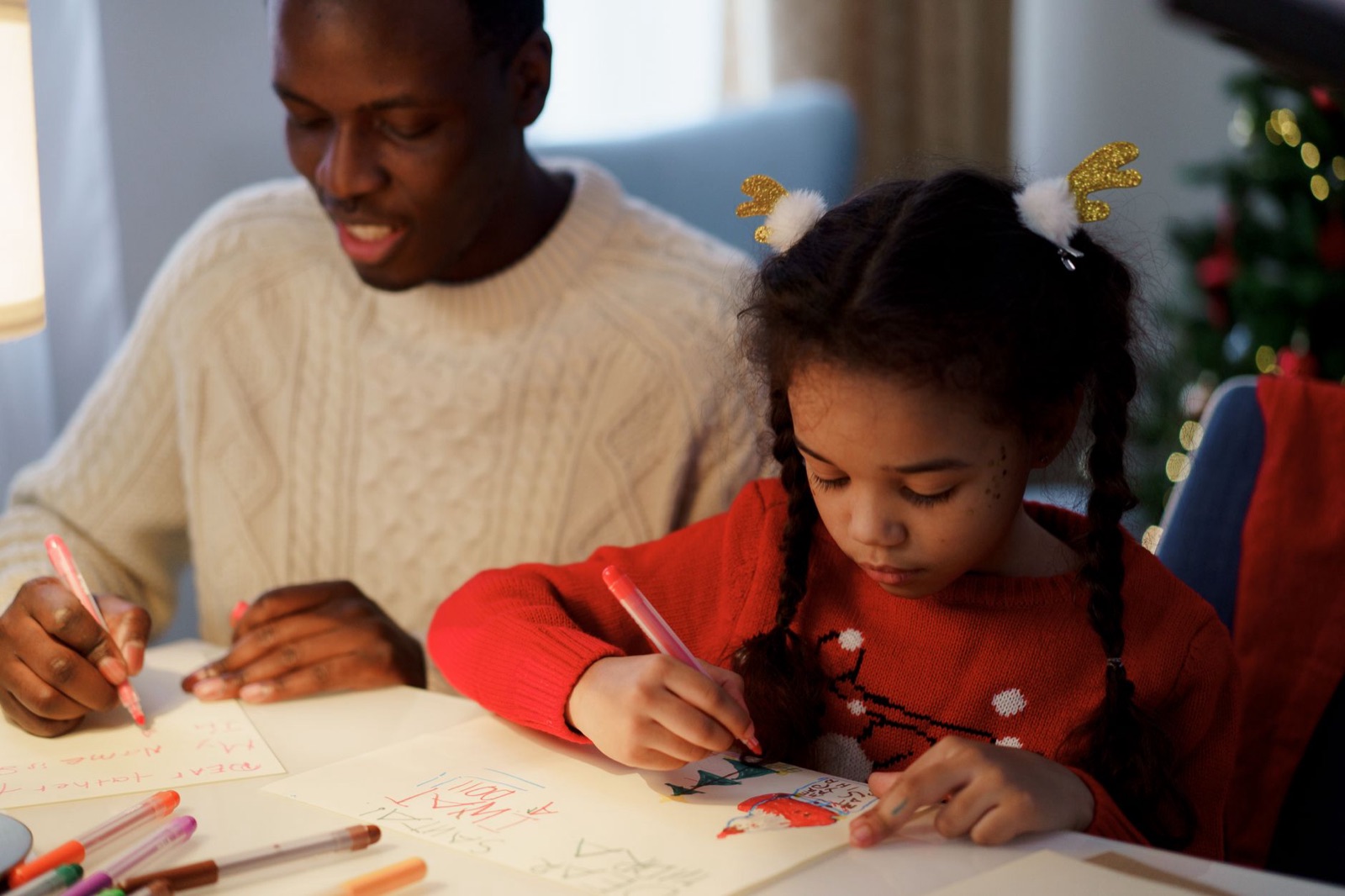
Put out a sheet of paper and ask: "What would the house look like if it were cold outside and warm inside?" Then draw nothing yourself for ten minutes. Let your child fill the page, and ask one question about the thing in the corner.
Common questions
What are easy Christmas drawing ideas for kids?
A star, a stocking, a snowman made of three circles, a present with a ribbon and a simple angel are all quick. For something less common, ask your child to draw what is happening outside the house on Christmas Eve, or the view from Santa's sleigh.
What Christmas art activities work for a group?
A shared winter mural on a long sheet of paper, a card-making table and an ornament swap all work well. Give each child one job on the mural so they are not all drawing snow at the same time.
How do I make Christmas ornaments with kids safely?
Cardboard shapes with a punched hole, drawn on and hung with ribbon, are the lowest-risk option. Salt dough ornaments involve baking, so an adult should handle the oven, and they are not food. Keep glitter, beads and small decorations away from children who still put things in their mouths.
Can children who celebrate Christmas somewhere warm draw winter scenes?
Of course, and they might like drawing their own December just as much: palm trees with lights, a beach at sunset, a rooftop with kites. A scene from the place a child actually lives often turns out more interesting than a copied snowman.
How do I get my child to draw something other than a tree?
Give them a smaller question, such as what is under the tree, who is standing next to it or what the tree sees from the corner of the room. A new viewpoint often works better than a new subject.
What if we do not celebrate Christmas but my child wants to join in?
Winter scenes, stars, lights and cards are open to anyone. If a friend's family celebrates, ask how they mark it, and let your child draw what they saw. Children often enjoy learning how other families do things.
Keep reading

How Scribblie Works: From a Drawing to a Friend Who Talks Back
A plain-English walk through Scribblie, the app we are building: how a drawing becomes a friend, what it remembers, what grown-ups control and where it can go wrong.
8 min read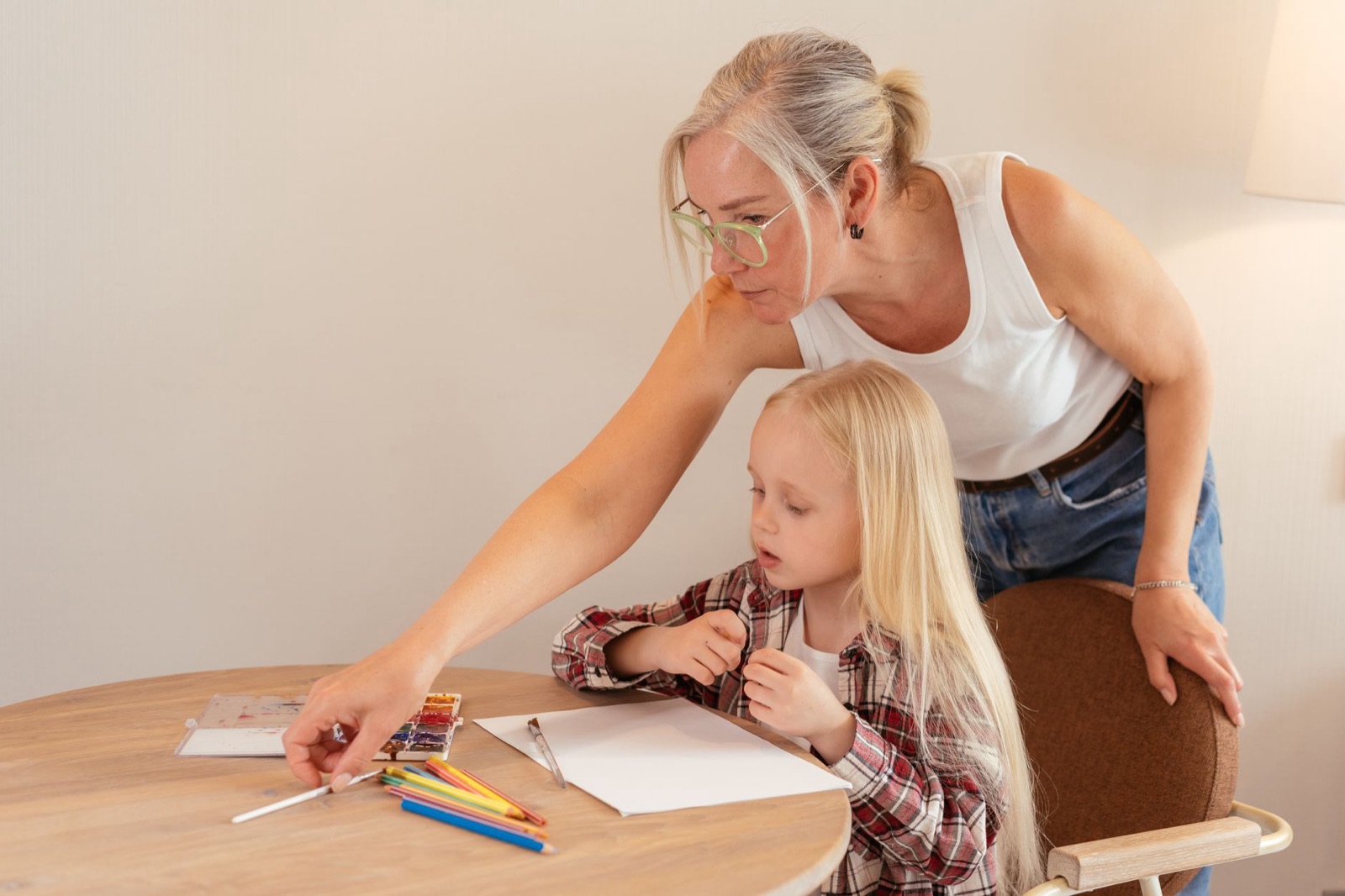
Grandparents and Grandchildren Activities: Drawing Together From Far Away
Ways for grandparents and grandchildren to draw together across cities and time zones: mailed art, video-call games, a shared storybook and a few tips for the call itself.
9 min read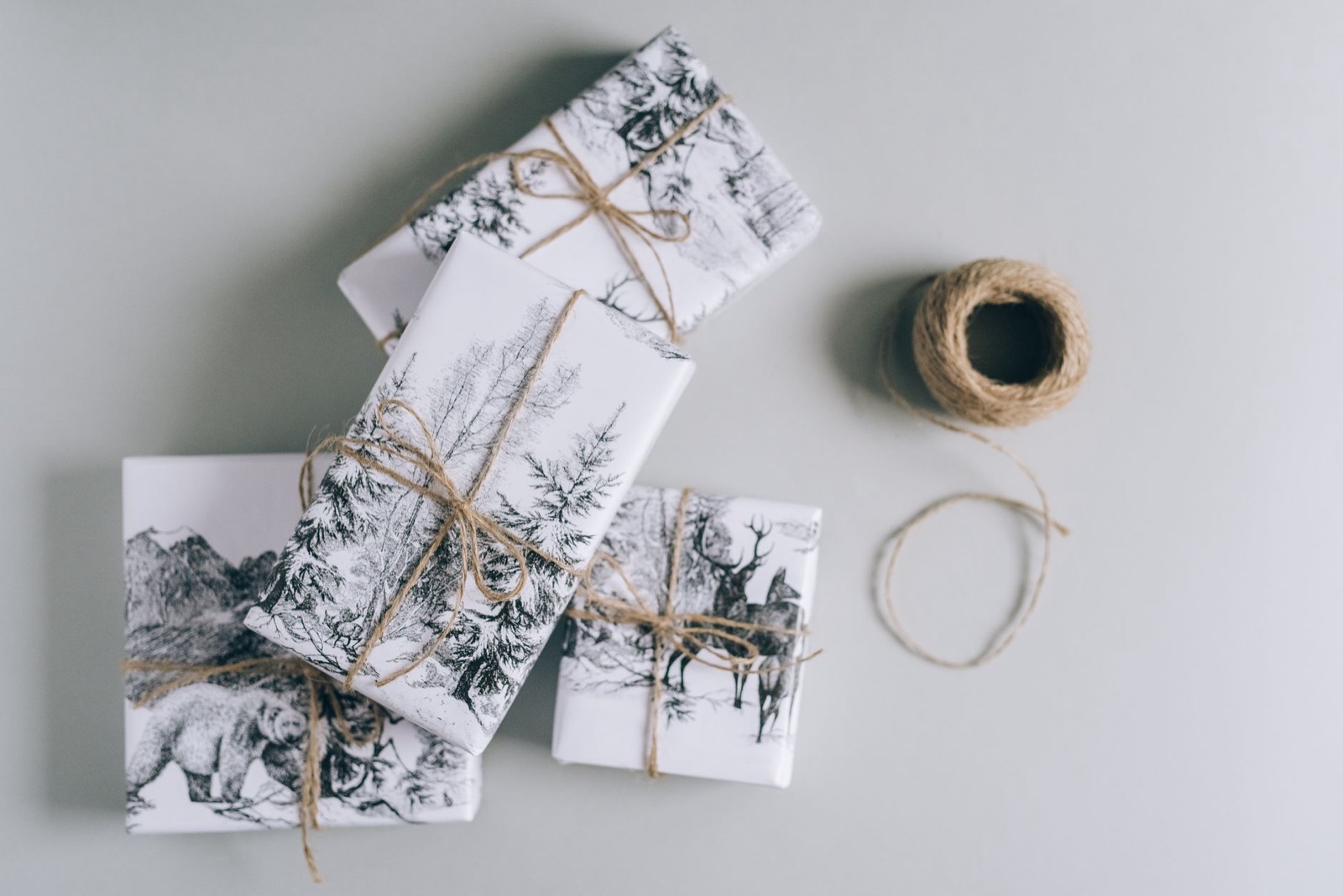
Turn a Child's Drawing Into a Gift Grandparents Will Keep
A child's drawing makes a gift nobody can buy. Here is what suits each format, how to prepare the file, and what to check before you order.
9 min read