Homeschool Art for Kids: Routines That Fit Around Everything Else
By the Scribblie team · Published · 8 min read
In this guide
- Pick a rhythm you can keep on a bad week
- What a daily slot actually looks like
- Mixing ages around one table
- Shared supplies without a fight
- A weekly rhythm that bends
- Looking at art, without turning it into a lecture
- A simple portfolio that does not take over the house
- When one adult is doing everything
- When the week falls apart
- Try this on Monday
- Common questions
Homeschool art tends to start with a full shelf of supplies and a grand plan, and end up as a drawer nobody opens. The families who keep it going usually do something smaller: a fixed time, a table that stays set up, one shared theme for children of different ages, and a very low bar for what counts as a session. This guide describes that smaller version.
We have never homeschooled your children and cannot know your rules, your space or your temperament. So take what helps, and ignore the rest without guilt.
Pick a rhythm you can keep on a bad week
A routine that works only when everyone is rested and the house is quiet is a wish, not a routine. A better test: can you still do it on a day when someone is sick, the post has arrived with a bill and the baby has not slept?
For most families we can imagine, that means something like this:
- A short daily slot, ten to twenty minutes, at the same point of the day. After breakfast tends to work, before everyone's energy sinks.
- One longer slot each week, maybe forty-five minutes to an hour, for a project that carries on from the last one.
- One "look" session each week: a picture book, a postcard, a photograph, or something outdoors that you look at together and talk about.
That is it. Three pieces. If you do only the daily slot for a month, that is still a respectable amount of art for a child under ten. If you skip a week, you pick it up again on Monday.
Fix the slot to something that already happens, such as "after the morning reading" or "when the little one naps", so it does not need remembering.
What a daily slot actually looks like
A daily slot is a small, open invitation rather than a lesson. It can take a few shapes:
- A prompt on a card, pulled from a jar: "a very tall animal", "the inside of a shell", "a door to somewhere".
- A continuing story, one picture a day, as in the week-by-week plan in our summer holiday drawing guide.
- A copy-and-change, where you draw one of last week's pictures again with one thing different.
- A free draw with a timer, and no instruction.
Do not correct the drawing. If your child asks how to draw a horse's leg, show them quickly on a scrap of paper, and put the scrap away. Parents often fall into the trap of "teaching" and end up taking the drawing over.
For a bank of prompts, our drawing prompts by age page has plenty to rotate through.
Mixing ages around one table
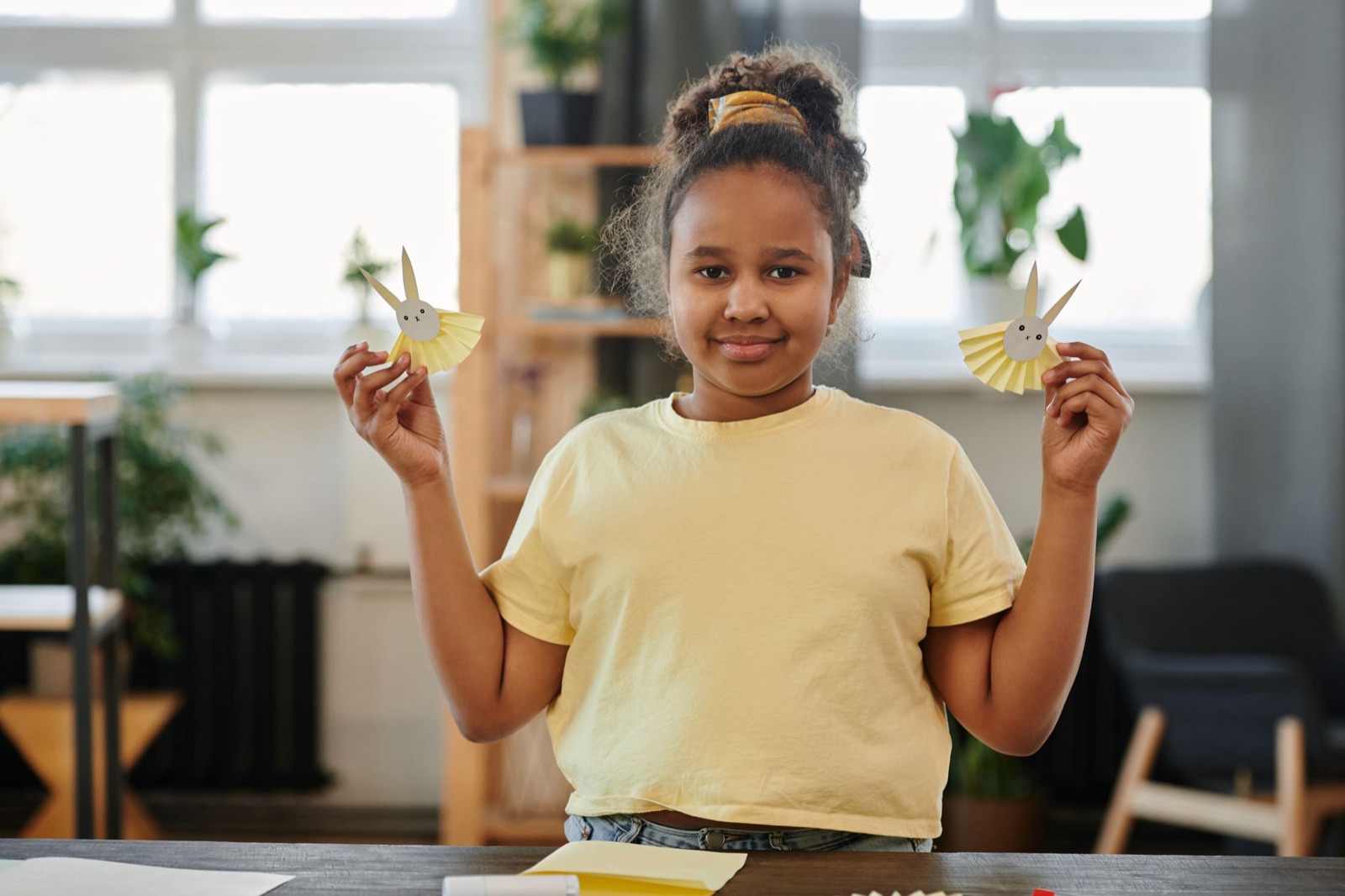
A table with a nine-year-old, a six-year-old and a toddler is a recipe for noise, but it is also the best thing about homeschooling. Children learn from each other, and you plan once.
The method is simple. Everyone gets the same theme, and each child gets a different level of challenge.
- The toddler gets big crayons, a large sheet and no instructions. A single mark is a success. Supervise any small items.
- The five- to seven-year-olds get the theme plus one extra, such as a background or a character with a name.
- The older child gets the theme plus a technique or a constraint, such as using only three colours or drawing from a real object.
The older child sometimes resents being at the same table. Give them a role: helper, curator of the gallery wall, keeper of the supply box. If they would rather work alone, let them take their paper to another room, as long as they come back for the "show" part.
Younger children copy older ones, and that is fine. It is how most of us learn. It becomes a problem only when the younger one decides they cannot draw because their picture does not look like their sibling's. Our guide for that moment is when a child says they can't draw.
Shared supplies without a fight
Supplies are where sibling wars start. A few small rules help.
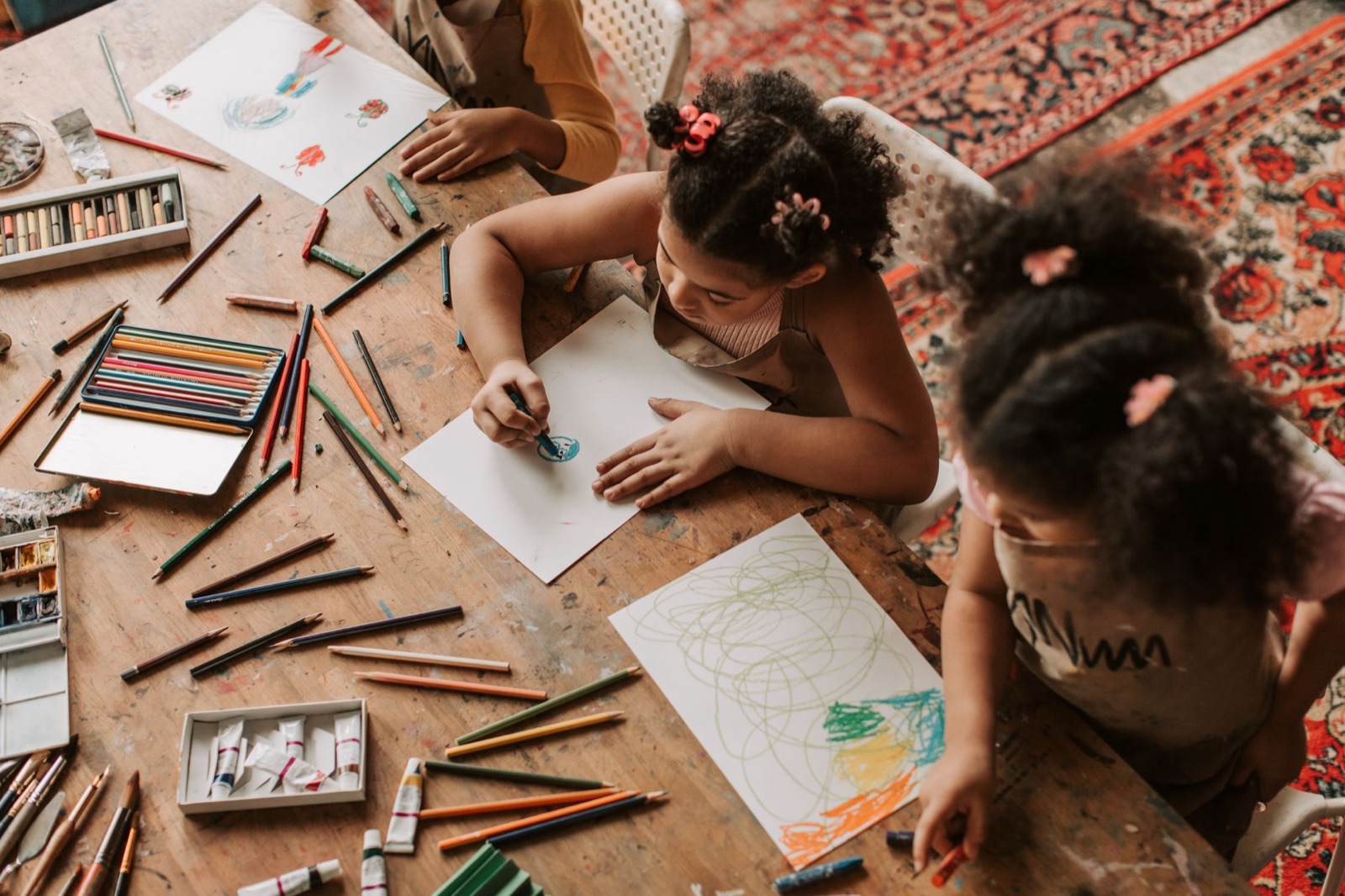
Keep one communal box and one personal pencil case each. The communal box holds the good things, such as watercolours, the nice scissors and the proper eraser. The personal case holds a few favourites that nobody else may touch. This keeps most arguments from starting.
Decide on a "return rule" and enforce it with kindness: the lid goes on the marker before the next one comes out, and the scissors go back in their place. Children are surprisingly good at this when it is a game with a visible reward, such as a clean table at the end.
Label and limit. A long list of materials overwhelms children. Show only three or four choices at a time, rotate them every couple of weeks, and keep the rest on a high shelf. A child who sees five types of paper each time will drift towards the one they know.
If you are buying, our starter art kit guide covers what is worth the money and what you can skip entirely. Washable materials make everything easier in a house where the table is also the dinner table.
A weekly rhythm that bends
Here is one possible week. It is not a template, and you should change it ruthlessly.
Monday: a ten-minute daily draw from the prompt jar. Tuesday: the same, with a different sibling choosing the prompt. Wednesday: the longer slot, working on a project that continues for a few weeks, such as a comic, a map or a series of postcards. Thursday: a daily draw outdoors, or at the window. Friday: look at something, talk about it for ten minutes, then draw one thing it made you think of.
If a day falls out, do not double up. Just move on.
A rotating project is useful because it gives a child something to come back to, and homeschooled children often enjoy that continuity. A map of an imaginary island, built up over a month, is a good example. So is a long accordion book where each fold is a day.
Looking at art, without turning it into a lecture
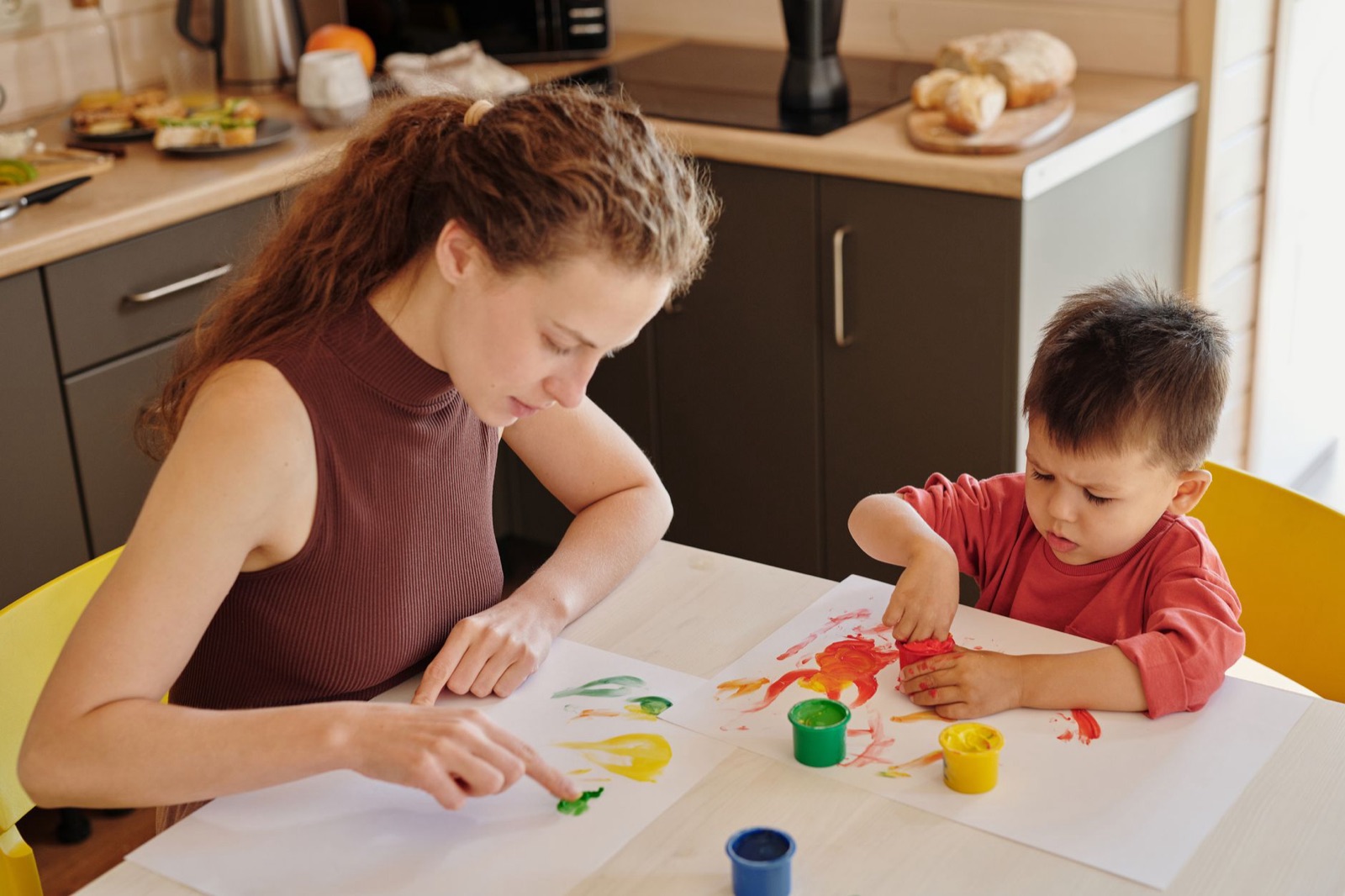
A "look" session can be as simple as turning the pages of a library picture book, or choosing a painting from a postcard. Say very little at first. Let the child look for a minute. Then ask one or two open questions: What is happening here? What would you hear if you stepped inside? What do you think the painter did first?
Avoid trying to explain what the artist meant. Children are quite happy to make up their own readings, and they enjoy being asked. Afterwards, a drawing in response keeps the session active: draw what happens one minute later, or draw the same scene from the other side.
Local life is also full of art. Signs, murals, rangoli on a doorstep, a decorated truck, a bakery window. A walk where each person looks for the most interesting shape counts as a look session.
A simple portfolio that does not take over the house
Many homeschool families are asked, or simply want, to keep a record. A portfolio does not need to be grand.
Each month, ask your child to choose three or four pieces they like. Write the date and a few words from the child on the back, in their own phrasing. Slide them into a folder, binder or box. Photograph anything else, and recycle it, or keep a few favourites on the fridge for a while before they go.
A phone folder with photographs sorted by month is enough for a lot of families. Our guide to photographing kids' drawings helps the photos look like the originals, and the guide on keeping and storing kids' artwork has some practical suggestions for the physical pieces.
If you need to show progress to anyone, a simple set of dated samples across a year tells the story. Do not rank the drawings against each other. Children change in leaps and plateaus, and the earlier art is not worse, just earlier. If you want an overview of what to expect at different ages, our guide on the stages of child art development outlines the broad pattern, which is a rough guide and not a checklist.
If your local education authority asks for particular records, check what they actually require. We cannot advise on rules that differ by place and change over time.
When one adult is doing everything
Many homeschooling households have one adult who is also cooking, working and answering the door. Art is a good subject for this, because it can run with very little supervision once it is started. Set the table before you begin another task. Give the instruction in one sentence. Say when you will come back to look, and keep that promise, because children can tell when the "I'll look later" is empty.
Use a visible timer for the slot, so you are not the clock. When it rings, everyone says one thing about a neighbour's picture, and you listen from the kitchen if you must. Even a distracted response ("Ah, a tiger with stripes on the inside") tells a child that the work was seen.
If a morning has gone badly, a pad and a pencil at the lunch table is a perfectly respectable art lesson. Children draw while they eat more often than you might think, and they tend to talk while they do it. Keep the paper clear of the food, and wipe the pencils.
When the week falls apart
Weeks will fall apart. A cough goes round, a relative visits, you spend three days on fractions. When that happens, resist the urge to plan a big catch-up session. A single twenty-minute picture on Friday, with a cup of something warm, is enough to restart the habit.
If your child starts avoiding art, look for the reason before you push. Is it tiredness? A sibling's teasing? A feeling that their drawings are not good enough? Take away any marks or comments for a week and leave the supplies out. Often, the pencil is picked up again on a day when nobody is looking.
And if you are the one who is avoiding it, you are allowed to simplify further. Paper and pencil, once a week, is still art.
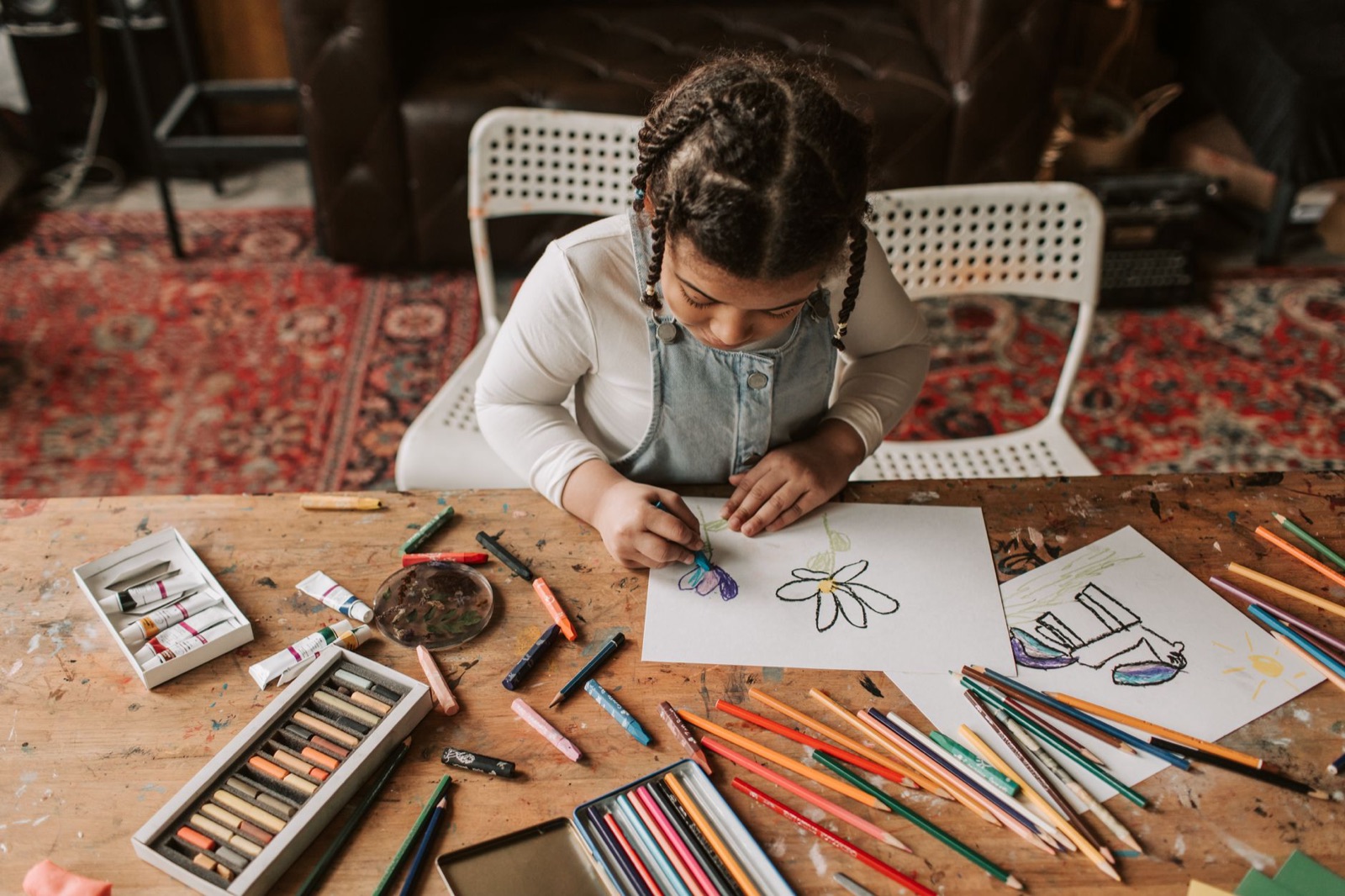
Some homeschool families use a tablet for art at times, and some prefer paper only. If you are weighing it, our guide to creative versus passive screen time gives a way to think about it without panic.
Try this on Monday
Write ten prompts on ten scraps of paper and fold them into a jar. At the next art slot, let the youngest child draw one out. Everyone draws it for ten minutes, at their own level. When the timer goes, put the pictures on the wall and move on to maths.
Common questions
How often should homeschoolers do art?
Many families do something small most days and one longer session a week. Short and regular tends to be easier to keep going than a big weekly block that gets skipped when things are busy. Choose a rhythm you can keep on a bad week.
What do I need to start homeschool art at home?
Paper, pencils, a box of crayons or markers, scissors, glue and a basic watercolour set will cover most of what you need. Our starter kit guide lists what is worth buying and what to skip. Add more only when a project asks for it.
How do I teach art to children of different ages at the same time?
Give everyone the same prompt and different expectations. The youngest might scribble and name it, the middle child adds a background, the oldest works on a detail or a technique. Sharing one theme keeps the table calm and means you only plan once.
Do I need an art curriculum?
You do not have to use one. Some families like a structured programme, and others prefer a simple pattern of drawing, looking at art and making things. Choose what you will actually keep doing. If your area requires records, check what your local rules ask for.
How do I keep a portfolio of my child's art?
Choose a few pieces each month, write the date and a short note from the child on the back, and photograph the rest before recycling them. A box, a binder or a folder on your phone is enough. Our guide to storing kids' artwork has more detail.
What if my child refuses to do art?
Drop the demand for a week and leave materials out without comment. Many children come back when nobody is watching. If the refusal is about not liking the result, try a task with no wrong answer, such as scribble-to-creature.
Keep reading
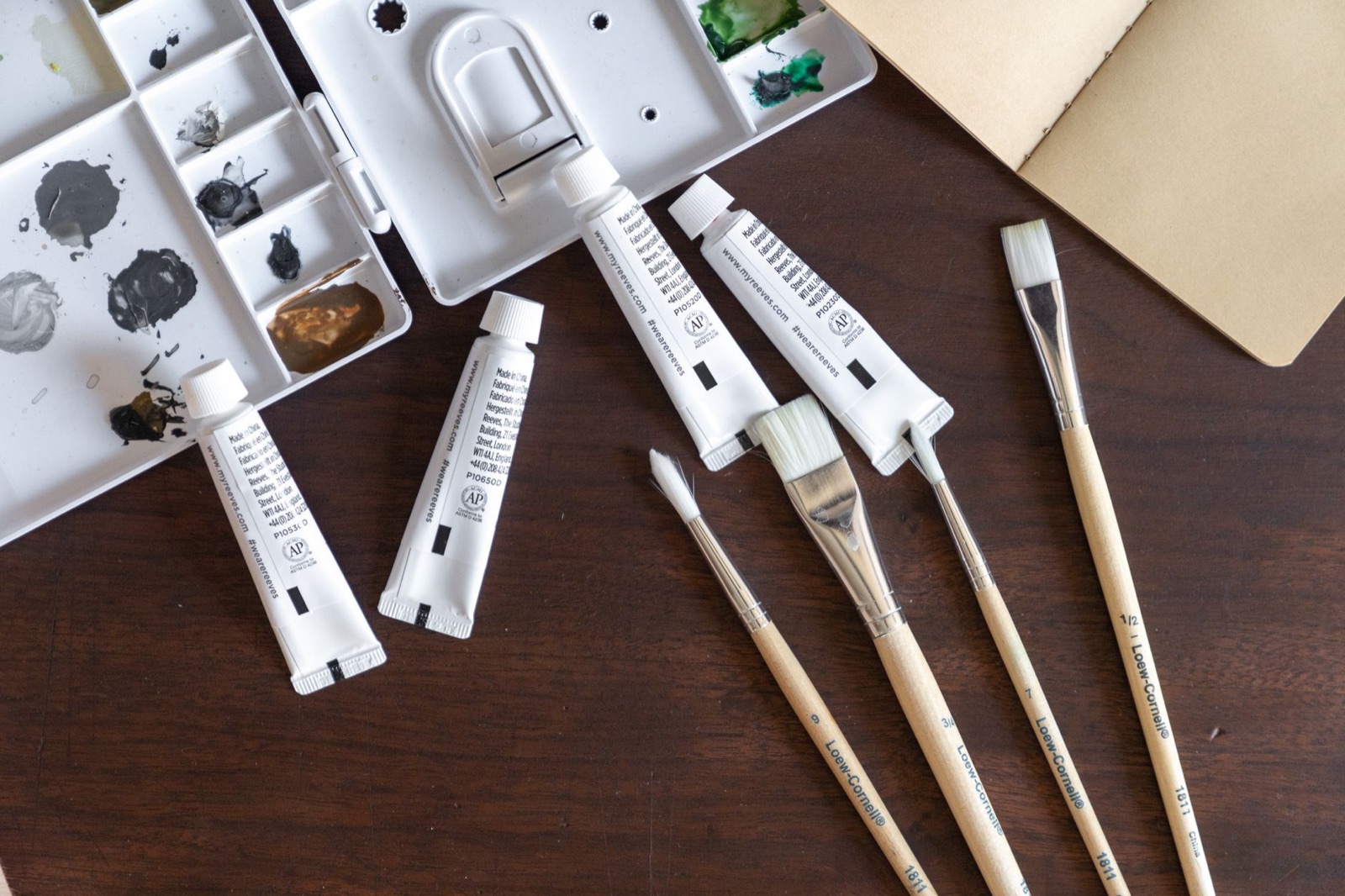
Art Supplies for Kids: A Starter Kit Under ₹2000 or $25
A starter art kit in order of priority, with what to skip, what to look for on the label, and a way to store it so the supplies actually get used.
8 min read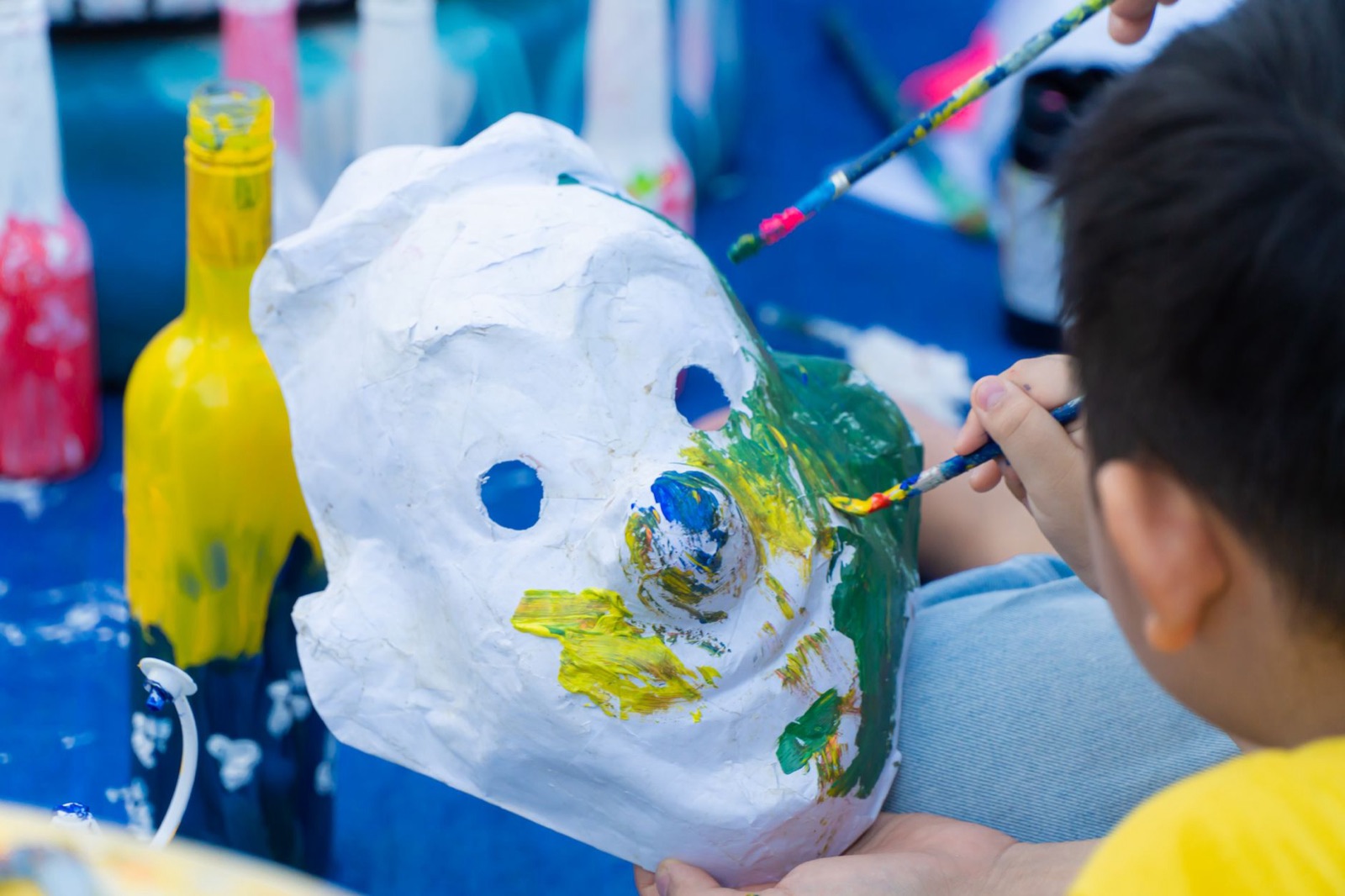
Summer Holiday Activities for Kids Who Love Drawing: A Week-by-Week Plan
Six to eight weeks of summer break is long. Here is a loose weekly plan built around drawing, with outdoor weeks, rainy-day backups and a small exhibition at the end.
9 min read
When your child says "I can't draw"
The sentence that stops a happy drawer in their tracks. Why it shows up, what to say that actually helps, and a few tricks that take the pressure off realism.
8 min read