Art Activities for Kids at School: Ten-Minute Drawing Ideas for Teachers
By the Scribblie team · Published · 9 min read
In this guide
- The ten-minute shape: three beats
- Warm-ups that need no skill and no talent
- Art games for a whole class
- Pairing drawing with reading and writing
- The child who finishes in forty seconds, and the one who never starts
- Feedback without marks
- Managing thirty children, one set of pencils and a bell
- A week of ten-minute lessons, laid out
- Where does a screen fit in a drawing lesson?
- Try this on Monday morning
- Common questions
You have ten minutes, thirty children, one box of pencils per table and a bell that will ring whether you finish or not. The good news is that drawing is one of the few classroom activities that needs almost nothing and works at almost any age. This guide has warm-ups, quick games, ways to link drawing to reading and writing, and a gentler approach to feedback, all built for a real timetable.
We are an app team, not a school, so treat this as a menu of simple ideas rather than a curriculum. Adapt freely. You know your room and your children far better than we do.
The ten-minute shape: three beats
Most of these activities fit the same rhythm. One minute to explain, six or seven to draw, two or three to share. It sounds tight, and it is. The sharing is what people drop, and it is the part children value most.
If you can only keep one beat, keep the share. It does not have to be public. A turn-and-show with a neighbour takes under two minutes and gives every child an audience of at least one. Choose a different pairing each week, so children meet different partners.
Prepare the paper before the lesson, since folding and handing out can easily take five minutes of the ten. A pile of A4 sheets folded in half gives you two small pages per sheet, and children are less daunted by a half-page. Give each table a "paper monitor" and a "pencil monitor", and rotate the roles.
Finally, decide where finished work goes. A tray at the front, a line on the wall, a folder for each child. Without a destination, drawings end up on the floor.
Warm-ups that need no skill and no talent
A warm-up loosens hands and relaxes the class. Nobody has to make anything good.
Scribble transformation. Each child draws a scribble for ten seconds, with the pencil never leaving the paper. Then they turn it into a creature, a vehicle or a place. Children who say they cannot draw often do well at this, because the scribble is not their fault.
Eyes-closed drawing. Say "draw your pet, your lunch or your teacher with your eyes closed". Open them at the end. The results are hilarious, and the exercise takes the pressure off, because no one expects it to look right.
Non-dominant hand. Draw the same thing with the opposite hand. This is a good leveller, since everyone is bad at it together.
Ten-second sketches. Say a word (cat, hat, rain, bus) and give ten seconds. Repeat six times. By the third word children stop worrying and start doing. This one works with any class size.
For a left-handed child, a few extra thoughts about smudging and paper angle are in our guide on left-handed kids and drawing.
Art games for a whole class
Games keep a large group engaged, and a few of them need no supplies beyond paper.
Describe and draw. Pair children back to back. One has a simple picture (a house with a door, a sun and a tree) and describes it in words. The other draws what they hear, without seeing. After three minutes, compare. The comparison is where the real work happens, because that is where you find what was clear, what was missing and what was misheard. It is also a decent exercise in giving instructions.
Pass-the-paper monsters. Each child draws a head, folds the paper to hide it and passes it on. The next draws a body, folds and passes. A third draws legs. Then everyone unfolds. This is the old consequences game, and it still gets laughs from seven-year-olds. Our draw-a-monster game has a few variants.
Draw the sound. Play a short sound (a dropped book, a clap, a bell, a squeak) and ask children to draw what the sound looks like. There is no right answer. Share and notice how different the same sound looks to different children.
Mystery object. Put a familiar object in a bag, such as a shoe or a spoon. Children feel it without looking and draw what they think it is. Then reveal it.
More low-prep ideas for groups are collected in drawing games without screens and in the list of doodle ideas for bored kids, which also works for the five minutes when a child finishes early.
Pairing drawing with reading and writing
Drawing and literacy pair easily, and many teachers already do this. A few practical routines follow.
Draw before you write. Before a writing task, children draw the scene or the idea. Then they write a sentence or three about what they drew. Many children, especially young ones, find a picture easier to start with than a blank line. The picture also holds the idea while they struggle with spelling.
Label it. Children draw a picture and label parts with words they know or are learning. A drawing of a classroom with labels on the door, board and window is a neat way to practise vocabulary. Our guide to drawing to learn new words goes into this in more depth, including for children learning an additional language.
Four-box comic. Fold a sheet into four. Children draw the beginning, middle and end of a story they have read, with a fourth box for "what happens next". You will see at a glance who has understood the order of events.
Character study. After reading a story, children draw a character and add three speech bubbles. What would they say at the start, the middle and the end? This brings out inferences that a worksheet rarely does.
We would avoid making the drawing a reward for finishing the writing. A child who is behind in writing is often the one who most needs the drawing time.
The child who finishes in forty seconds, and the one who never starts
Every class has both. The fast finisher needs a next step that is not "do it again neater". Offer a standing extension: add a background, draw the same thing from above, draw what happens one minute later, or draw the object's owner. These keep the child thinking, and they do not feel like extra homework.
The slow starter is a different matter. Often they are waiting for the perfect idea, or they have decided the picture will not be good enough. Sit beside them for one minute rather than hovering. Ask them to draw only the thing they would pick up first if the room were on fire (a small joke is allowed), or the thing they ate this morning. Narrowing the question helps more than widening it.
Noise is the other usual worry. A drawing session is rarely silent, and a hum of chatter is generally a good sign. If it gets out of hand, switch to a silent round, such as drawing a partner's hands, for two minutes and then return to talking.
Feedback without marks
Grades and ranks tend to flatten drawing. A child who gets a poor mark for a picture often stops trying, and a child who gets a high one often stops taking risks. A different approach is to respond to what you can see.
Try a three-step routine for any piece of work. First, say what you notice: "You used a very dark blue here." Second, ask a question: "Where is this place?" Third, listen to the answer. That is all. It takes under thirty seconds per child, and it tells the child that someone looked.
Our guide on how to praise a child's drawing covers this in detail and applies in the classroom as well as at home.
If you need records, keep one or two dated samples per child per term in a folder, and a short sentence on each: what the task was, what the child chose to do. This is a light form of evidence, and you can add a photo of work that cannot be kept. If you are unsure how to take a good photo of a drawing, see how to photograph kids' drawings.
One caution. A drawing alone cannot tell you about a child's feelings, home life or abilities, and it is easy to over-read. If you are worried about a child, follow your school's pastoral procedures and speak to the right colleague. A picture is a starting point for a conversation, not a diagnosis.
Managing thirty children, one set of pencils and a bell
Practical points, in no particular order.
Sharpen pencils before school, or have a "sharpener monitor". Keep a labelled bin for broken crayons, which children love to turn into rainbow crayons later. Pre-fold paper. Have a rule for "I'm finished": go to the "extras" table where there is one standing prompt, such as "draw the same thing from a different angle". Put a time limit on the board and a timer on the wall.
For wet materials such as paint or glue, plan the cleaning as part of the activity. Aprons or old shirts, newspaper on tables, a bucket for water, and a clear signal for the last two minutes. Use only paint and glue that are non-toxic and suited to the children's ages, check for allergies, and keep scissors to a minimum with younger groups. Small items such as beads and sequins are a hazard for the youngest.
For children with additional needs, offer thicker crayons, a slanted board, larger paper or a choice of tools, and ask the specialist staff who know the child. The aim is to remove obstacles, not to lower expectations.
If a child sits stuck with a blank page, start by asking them to make one mark and name it. Our guide to what to say when a child says they can't draw has gentle things to try.
A week of ten-minute lessons, laid out
Monday: ten-second sketches, then a turn-and-show. Tuesday: describe and draw in pairs. Wednesday: draw before you write, linked to whatever you are teaching. Thursday: pass-the-paper monsters, loud and silly. Friday: gallery walk, where children quietly walk past the week's drawings and each chooses one thing they liked.
Notice that nothing here needs a template. If a week goes wrong, repeat the one that worked.
For kindergarten, shrink every task by half. Use a single large piece of paper per child, fewer instructions, lots of tactile materials, and let them tell you about the drawing rather than write about it. Our easy drawing ideas for 3 to 5 year olds is a good companion list.
Where does a screen fit in a drawing lesson?
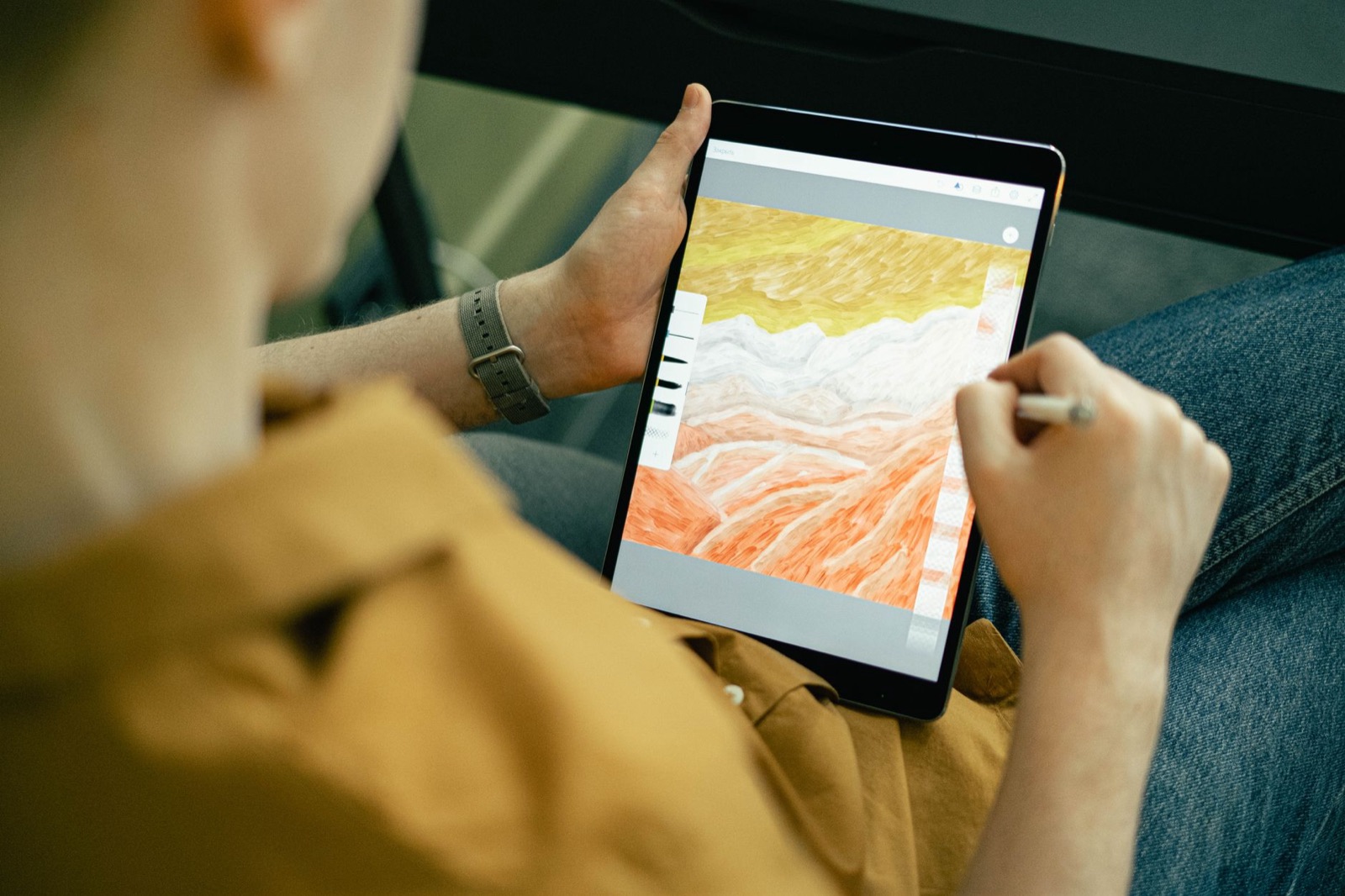
Some schools use tablets for drawing, and some do not. We have no view on what your school should do. If you do use them, it may help to follow the same principles as on paper: short, open-ended and followed by a share. Our guide to what to check in drawing apps for kids lists the questions worth asking about any app a school considers.
Try this on Monday morning
Pass out half-sheets. Say: "Draw a scribble without lifting your pencil, for ten seconds. Go." Then: "Now turn it into something." Then: "Show a neighbour." That is the whole lesson. Notice who laughs, and who needs a nudge, and write nothing down.
Common questions
What are quick art activities for kids in a classroom?
A one-line drawing, a pass-the-paper game, a draw-it-from-the-description exercise and a ten-second sketch round all fit into ten minutes and need only paper and pencils. They work with large groups because every child draws at once.
What art project ideas work for kindergarten?
Keep it open and tactile: a big scribble turned into an animal, finger-painted weather, a collage from torn paper or a drawing of a favourite thing in a circle. Short, sensory tasks suit young children better than long, detailed ones.
How can I use drawing to support reading and writing?
Ask children to draw a scene from a story before writing about it, label a picture with words they know, or make a four-box comic of what happened. Drawing first gives many children something to write about, and the pictures show you what they understood.
How do I assess drawings without grading children?
Respond to what you see rather than rating it. Note one detail the child chose, ask a question about it, and keep a dated sample or two in a folder. A simple written comment and a conversation are usually more useful than a mark.
How do I manage supplies for 30 or more children?
Pre-pack small trays or pencil boxes per table, and give one child per table the job of collecting them. Use cheap paper, make half-sheets by folding, and keep a rule that everything goes back before the bell.
What if some children say they cannot draw?
Start with activities where there is no wrong answer, such as scribble transformations, drawing with the non-dominant hand or drawing with eyes closed. Say aloud that the goal is ideas, not accuracy. Our guide on children who say they cannot draw has more.
Keep reading
Choosing a drawing app for kids: a parent's checklist
A practical checklist for judging any drawing app for children, plus a ten-minute test you can run on the sofa before your child ever touches it.
9 min read
When your child says "I can't draw"
The sentence that stops a happy drawer in their tracks. Why it shows up, what to say that actually helps, and a few tricks that take the pressure off realism.
8 min read
Doodle ideas for bored kids (and bored grown-ups)
Instead of a list of things to doodle, four doodle systems that let a bored child generate endless ideas on the back of anything.
8 min read